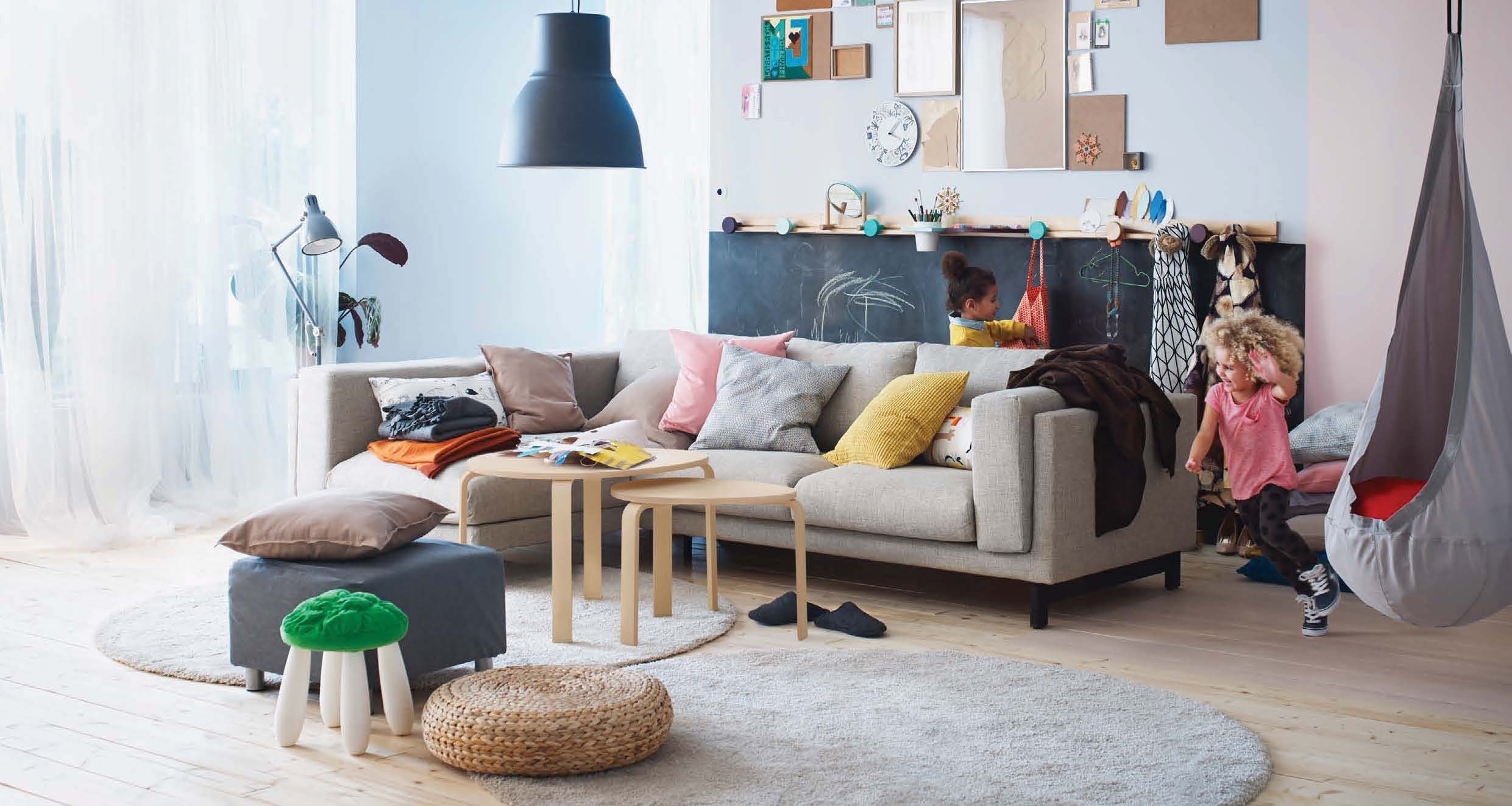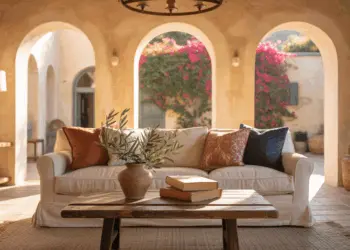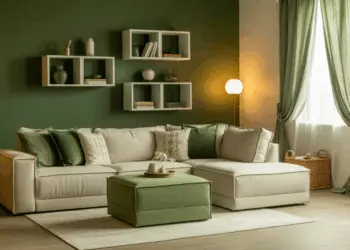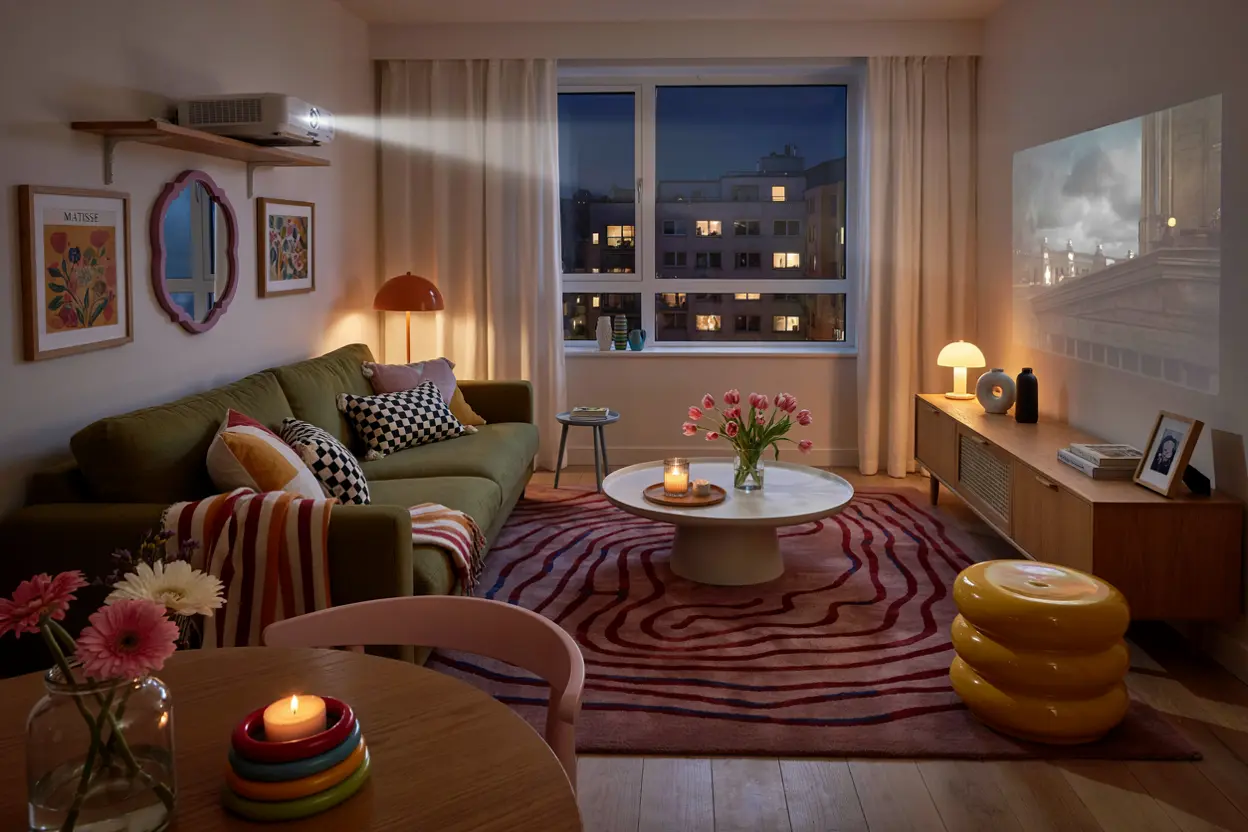
A small living room can be surprisingly difficult to arrange. You may have the perfect sofa, a beautiful rug, and a coffee table you love, yet the room can still feel crowded. In a compact space, sofa layouts affect how people move, where the eye travels, and how comfortable the room feels.
The good news is that a small living room does not need tiny furniture or a boring wall-to-wall arrangement. With the right placement, even a compact room can feel open, comfortable, and stylish.
So, before you start moving your sofa around for the tenth time, let’s look at 11 small living room sofa layouts that actually work. Each idea solves a different problem, from narrow rooms and awkward corners to TV placement and open-plan spaces.
For more Small Living Room Ideas.
Table of Contents
1. The Classic Sofa-Facing-TV Layout
The classic sofa-facing-TV arrangement is one of the easiest small living room sofa layouts to create. Place the sofa directly opposite the television and add a compact coffee table or ottoman between them.
If space allows, one lightweight accent chair can complete the arrangement. Keep the furniture simple rather than trying to fill every available corner.
This layout works particularly well in rectangular apartments where one wall naturally becomes the entertainment wall. A sofa, small coffee table, rug, and one chair may be all you need.
Avoid using a large entertainment center that takes up too much floor space. A wall-mounted TV or slim media console can make the room feel lighter.
A rug can also help connect the sofa and coffee table. It makes the seating area feel like one intentional zone instead of several pieces scattered around the room.
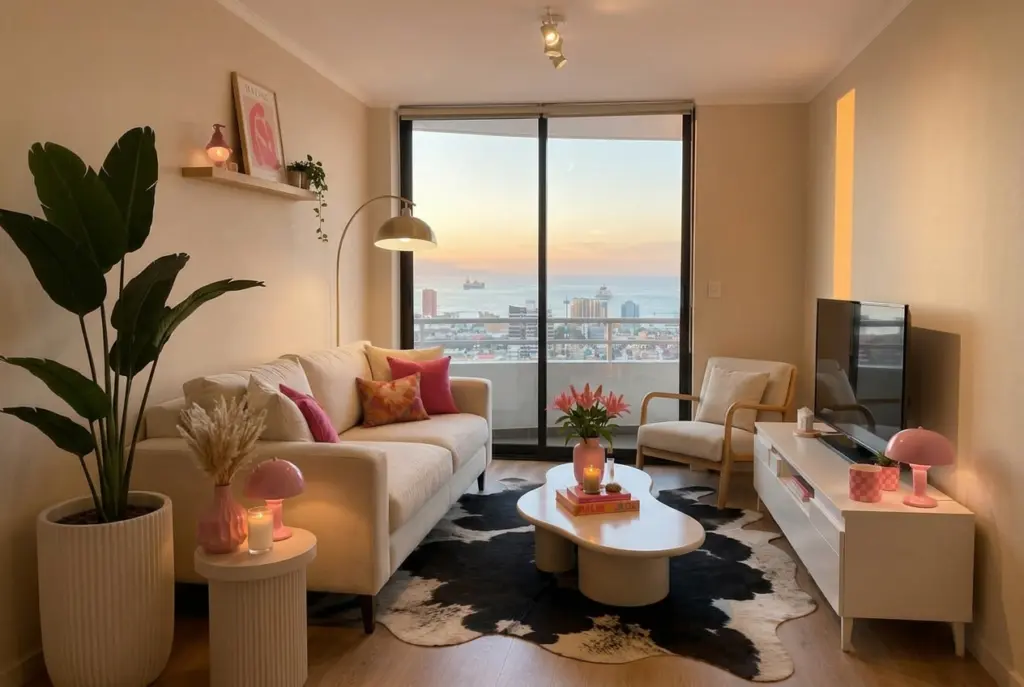
2. The Floating Sofa Layout
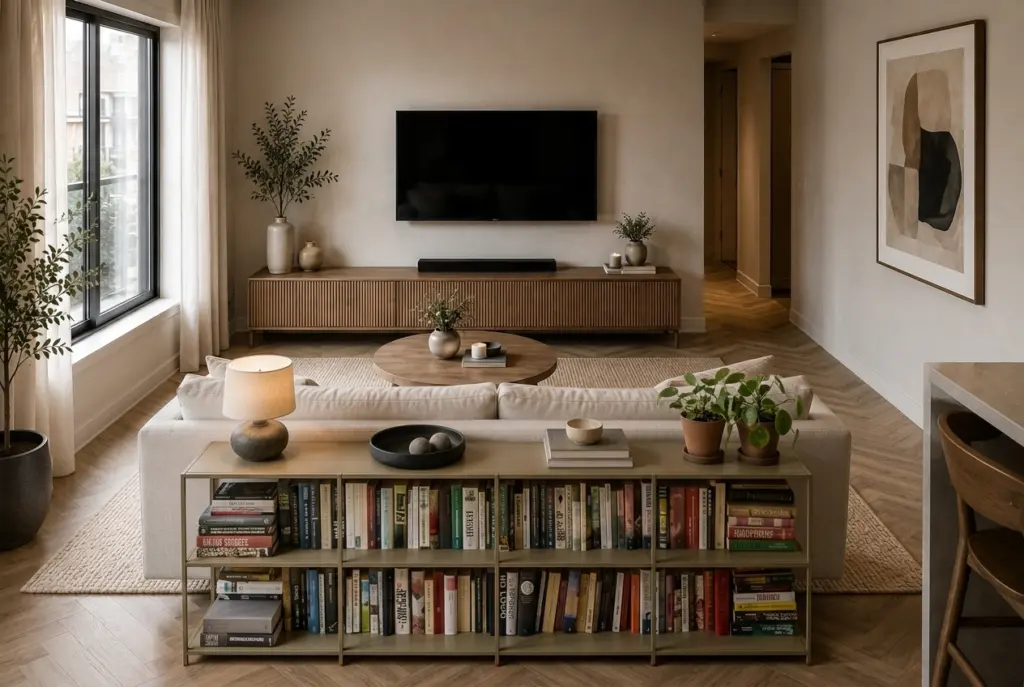
A floating sofa layout may sound strange when space is limited. After all, pushing the sofa against the wall seems like it would create more floor space. However, floating the sofa can sometimes create better circulation and a stronger seating area.
You do not need to place the sofa in the exact center of the room. Even moving it slightly away from the wall can make a difference.
A narrow console behind the sofa can provide space for a lamp, books, plants, or decorative accessories. This keeps the area functional without adding another large piece of furniture.
The floating sofa layout is especially useful in open-plan apartments. The sofa can separate the living room from the dining area or kitchen without requiring an actual wall.
How to Make a Floating Sofa Work
The secret to a successful floating sofa is proportion. A deep sofa may leave too little walking space in a narrow room, while a slimmer apartment-size sofa can work beautifully.
Think about the space behind the sofa before choosing this layout. If it becomes a walkway, keep it clear. If it becomes unused space, add a slim console, plant, or floor lamp.
The goal is not simply to move the sofa away from the wall. The goal is to create useful space while improving the overall flow of the room.
3. The Small L-Shaped Sectional Layout
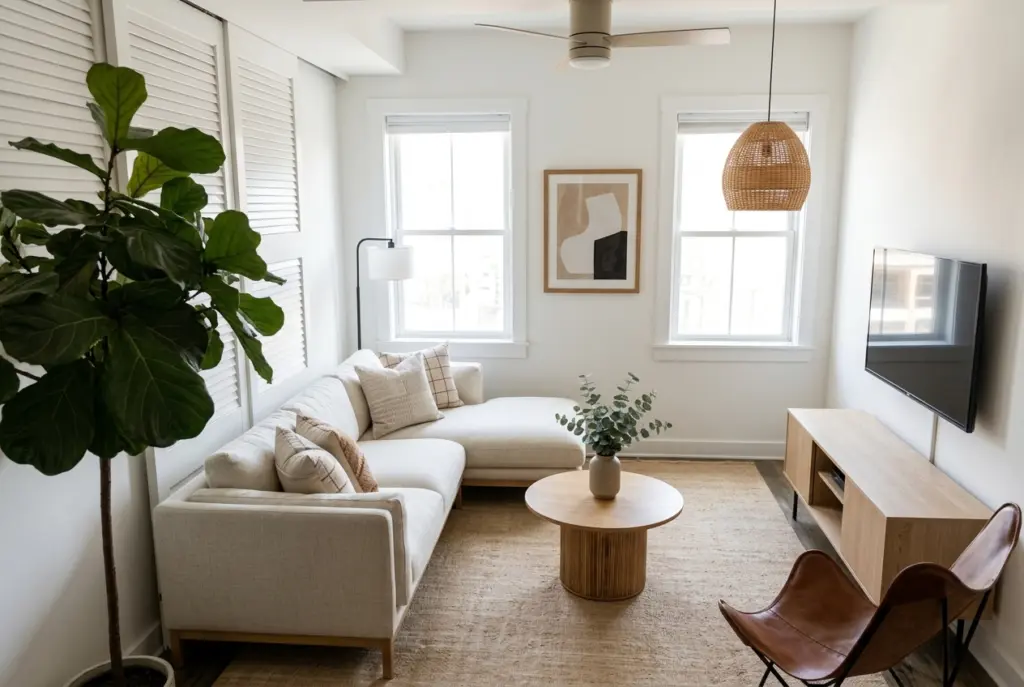
A small L-shaped sectional can be a smart choice for a compact living room. It combines several seats into one piece, reducing the need for multiple chairs.
This layout works especially well in square rooms or spaces with an unused corner. Place the longer side along the longest wall and let the shorter section occupy the adjacent wall.
The result is a cozy seating area that naturally creates a comfortable corner. It can also provide more seating without making the room feel filled with separate furniture.
The most important word is small. A huge sectional that technically fits may still make the room feel cramped.
Choose a shallow sectional if your room is narrow. A sofa with visible legs can also reveal more floor underneath, helping the space feel visually lighter.
4. The Sofa and Two Chairs Layout
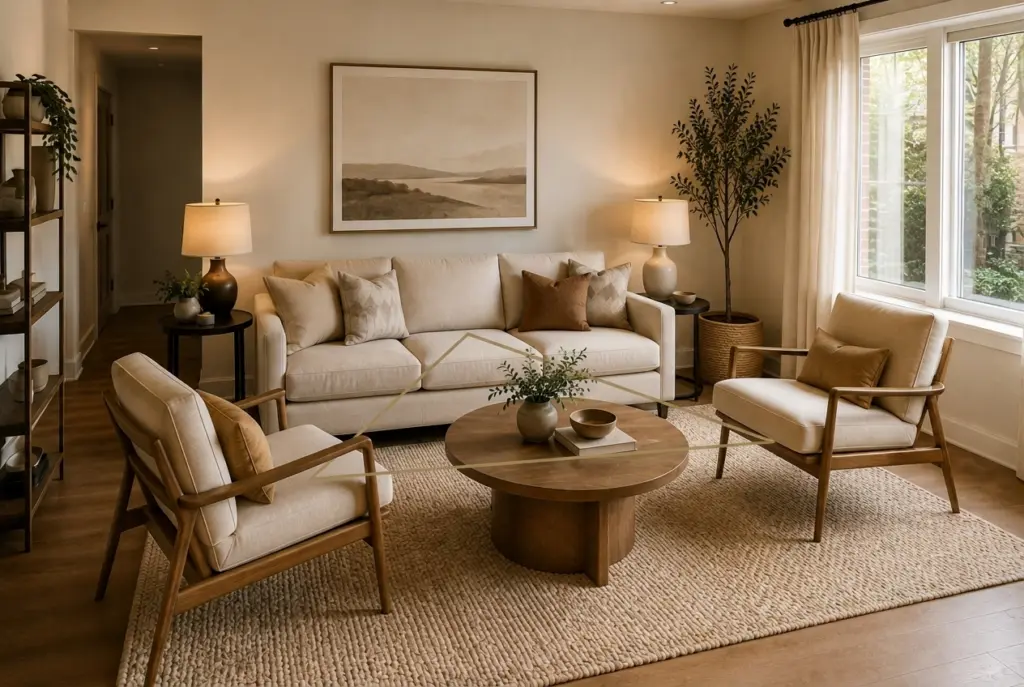
Want your living room to feel more social? Try combining one sofa with two compact chairs. This arrangement creates a natural conversation area without requiring a second sofa.
Place the sofa against the longest wall or float it slightly. Then position the two chairs opposite or at an angle toward the sofa.
The chairs should face slightly inward instead of pointing directly toward the television. This creates a comfortable conversation triangle.
For a very small room, choose chairs with slim frames and visible legs. Avoid oversized club chairs with deep cushions unless you have enough floor space.
A small round coffee table works particularly well with this layout. Its curved shape makes it easier to walk around and softens the straight lines of the sofa and chairs.
5. The Corner Sofa Layout
Sometimes the simplest solution is the most effective. If your living room has an empty corner, place the sofa there and build the seating area around it.
This works especially well in square rooms where placing the sofa in the middle would divide the available floor space unnecessarily.
Keep doors, windows, and heating elements accessible. Then add a small coffee table and, if space allows, one lightweight chair.
Corner placement keeps furniture concentrated in one area. It also creates a cozy atmosphere, which can work beautifully in a small living room.
To prevent the corner from feeling heavy, add something vertical such as a floor lamp, tall plant, artwork, or mirror. These elements can add height without taking much floor space.
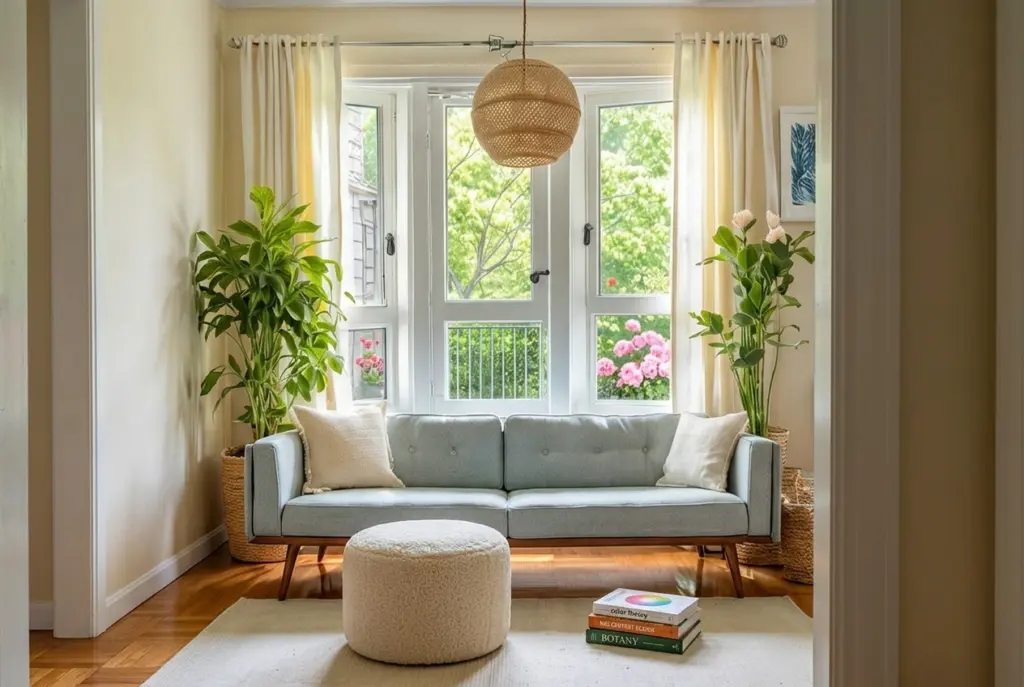
6. The Sofa Under the Window Layout
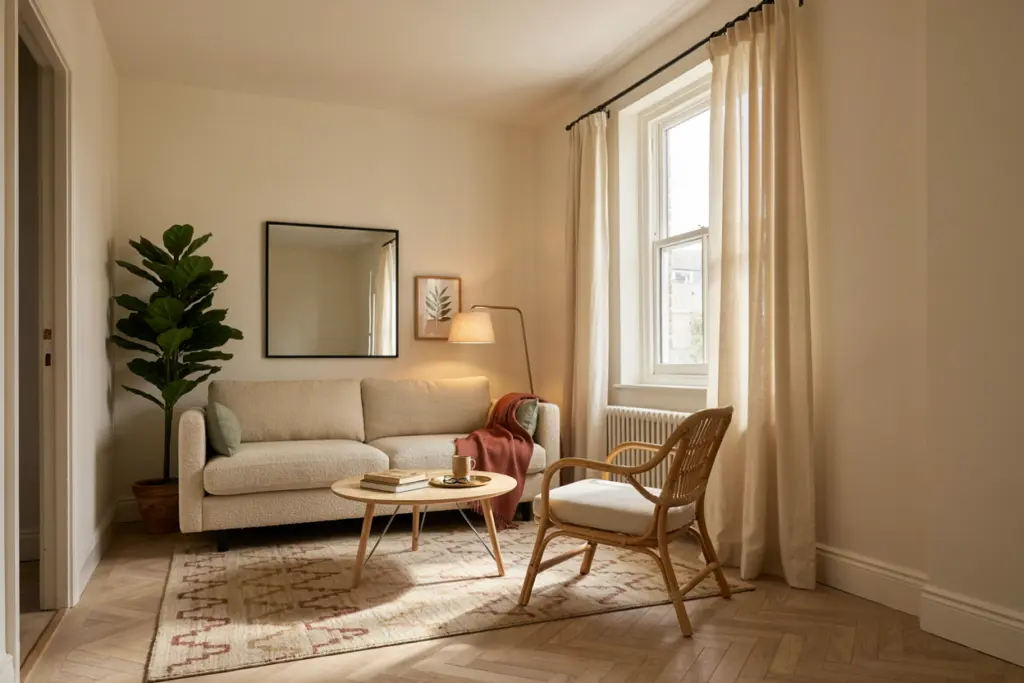
What if the only practical wall has a large window? Instead of automatically avoiding it, consider placing a low-profile sofa underneath the window.
The window can become a beautiful natural backdrop. It also allows the sofa to work with the architecture instead of competing with it.
The main consideration is sofa height. A tall sofa back could block the window and make the room feel smaller.
Choose the Right Sofa Height
A low-back sofa is usually a good option beneath a window. Its lower profile allows more natural light into the room and keeps the window visually important.
Avoid placing bulky furniture directly in front of the window. Instead, keep the area relatively open and allow the natural light to become part of the design.
A small side table can provide function without blocking the window. If privacy is needed, choose lightweight curtains or shades that can be opened during the day.
7. The Sofa-and-Loveseat L Layout
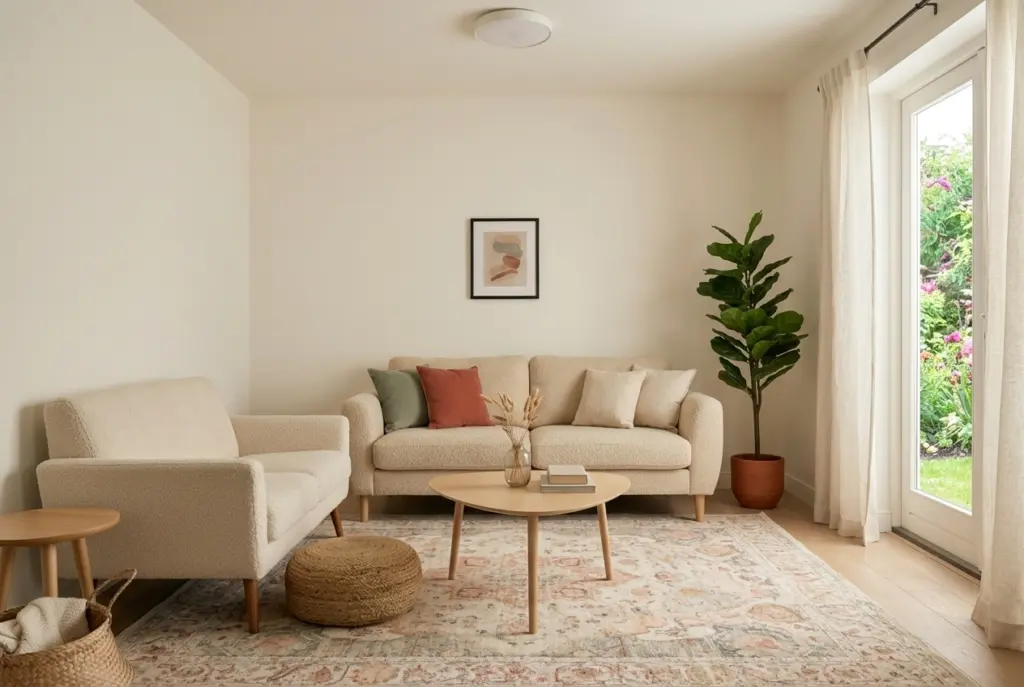
If you need more seating but do not have enough room for a large sectional, consider pairing a sofa with a loveseat.
Place the loveseat perpendicular to the main sofa so the two pieces create an L shape. This arrangement works particularly well when two usable walls meet at a corner.
One advantage is flexibility. Unlike a sectional, the sofa and loveseat can be separated and rearranged later if your needs change.
Try keeping the loveseat visually lighter than the main sofa. You can use matching upholstery for a coordinated look or different textures for more personality.
If both pieces are large, choose a simple coffee table. Adding too many bulky pieces can quickly overwhelm a small living room.
8. The Two-Sofa Conversation Layout
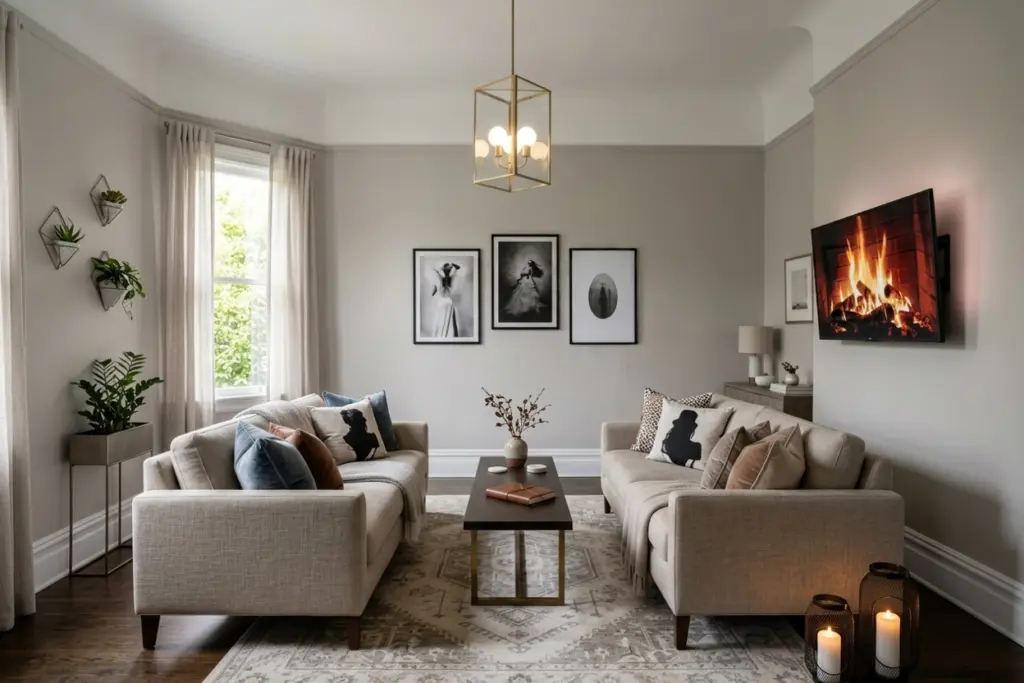
Two sofas facing each other might sound impossible in a small living room. However, it can work surprisingly well in a long, narrow space.
The key is choosing appropriately sized furniture. You do not need two deep, full-size sofas. Compact sofas or loveseats can create the same conversational effect.
This layout is ideal for rooms used mainly for chatting, reading, relaxing, or entertaining rather than watching television.
If you need a TV, place it on a side wall or consider a swivel-mounted screen. This allows the room to remain focused on conversation.
Leave enough space between the sofas for a compact coffee table and comfortable movement. If the gap becomes too narrow, choose a different layout.
9. The Diagonal Sofa Layout
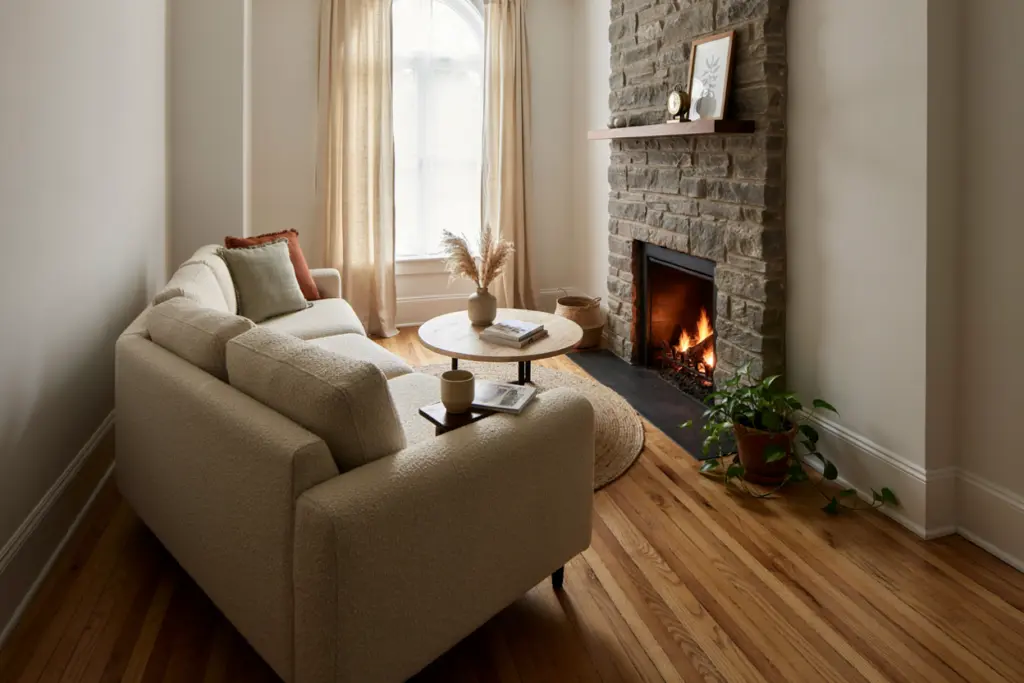
A diagonal sofa placement can completely change an awkward living room. Instead of keeping the sofa parallel to the wall, angle it slightly toward the room’s focal point.
This can work well when the room has multiple doorways, unusual architecture, or an awkward corner.
The diagonal position can direct attention toward a fireplace, TV, artwork, or large window. It also adds movement to a room that might otherwise feel too rigid.
However, this layout requires careful measuring. A diagonal sofa can use more floor space than a straight arrangement.
If it works in your room, pair it with a round coffee table. The curved table can complement the angled sofa and make movement around the seating area easier.
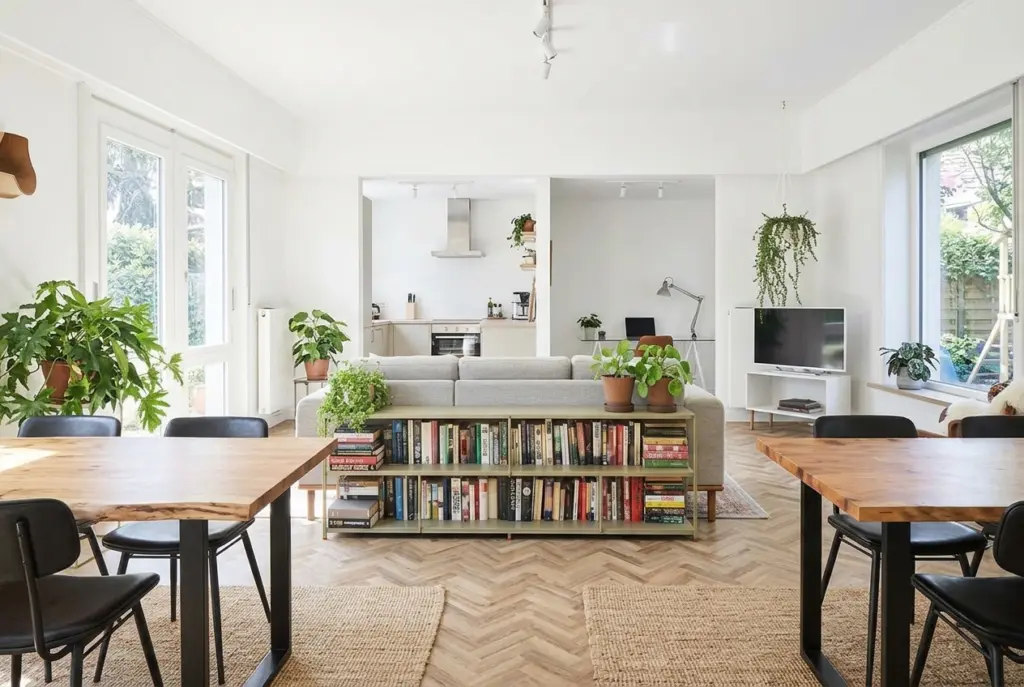
10. The Sofa as a Room Divider
In a studio apartment or open-plan home, the sofa does not always need to face a wall. It can actually become the room divider.
Position the back of the sofa toward the dining area, kitchen, entryway, or workspace. This creates a visual boundary without adding a physical wall.
This is one of the most useful small living room sofa layouts for multifunctional spaces. The sofa can separate the living area from another zone while keeping the room open.
If the back of your sofa is visible, make it part of the design. Add a slim console table, lamp, books, or a few carefully chosen decorations.
A rug can strengthen the separation even more. It visually tells the eye where the living room begins and ends.
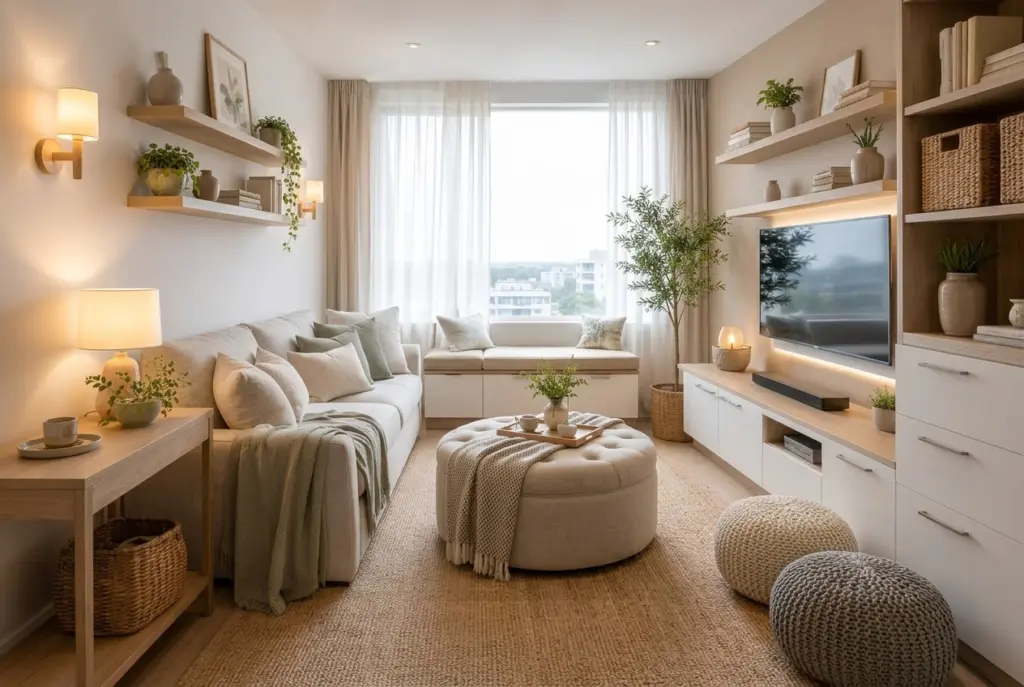
11. The Sofa With an Ottoman Layout
When space is limited, an ottoman can be more useful than a traditional coffee table. It can work as a footrest, extra seat, coffee-table alternative, or storage solution.
Place the sofa against the most practical wall and position a compact ottoman in front. If it has a soft surface, place a tray on top for drinks and decorative items.
This arrangement is ideal if you want flexibility. The ottoman can be moved when you need extra floor space or pulled closer when you want to relax.
A round ottoman is especially useful when the walkway around the seating area is narrow. Without sharp corners, it is easier to move around.
How to Choose the Best Sofa Layout for Your Room
There is no single best sofa layout for every small living room. The right choice depends on the room’s shape, doors, windows, focal point, sofa size, and how you use the space.
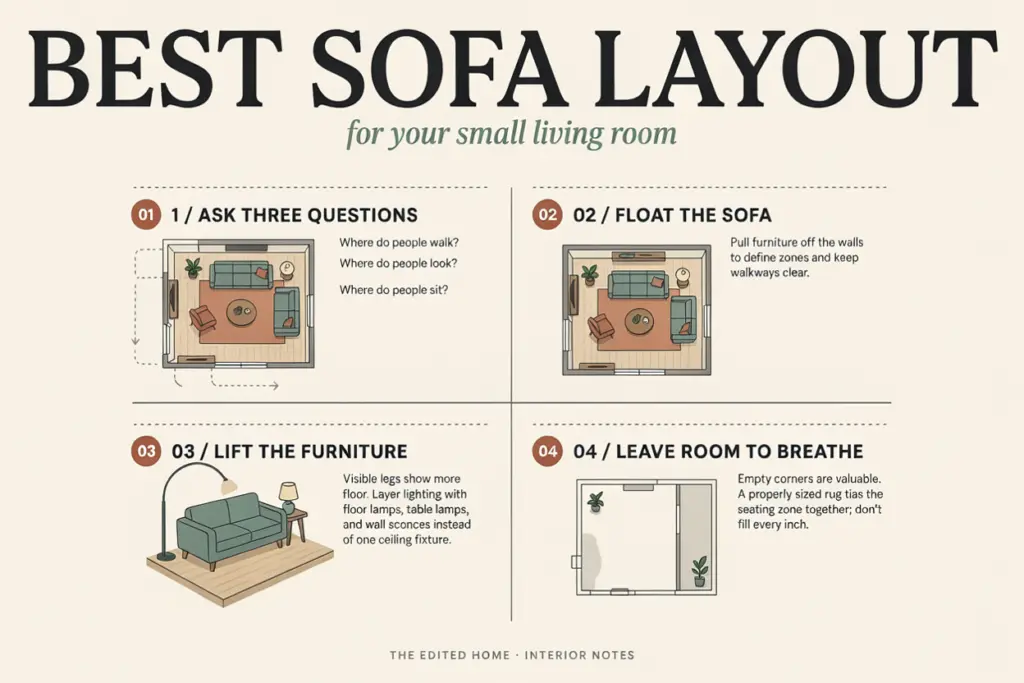
Start by asking three simple questions: Where do people walk? Where do people look? Where do people sit?
If the main walkway passes through the center of the room, keep large furniture away from that path. If the TV is the focal point, prioritize comfortable viewing angles.
If conversation is more important, arrange the sofa and chairs so people can easily see one another. The layout should support your lifestyle rather than simply look good in a photograph.
Small Details That Make Any Layout Feel Bigger
Once the sofa is positioned correctly, small styling choices can make the room feel even larger. Start with the rug. A properly sized rug can connect the sofa, chairs, and coffee table into one cohesive seating zone.
Furniture height also matters. Pieces with visible legs can show more of the floor, creating a lighter appearance.
Lighting is another important detail. Instead of relying only on one ceiling light, consider a floor lamp, table lamp, or wall light.
Finally, do not feel pressured to fill every empty corner. In a small room, empty space is valuable. It gives furniture room to breathe and can make the entire space feel more organized.
Common Small Living Room Sofa Layout Mistakes
One common mistake is buying furniture based only on appearance. A sofa can look perfect online but still be completely wrong for your floor plan.
Always measure the sofa’s width and depth before buying. Also consider doorways, staircases, elevators, and other areas the furniture must pass through during delivery.
Another mistake is automatically pushing every piece against the wall. Sometimes this works, but it can also create a disconnected arrangement.
Oversized coffee tables are another problem. Your coffee table should complement the sofa rather than become another obstacle.
Finally, do not assume that every piece needs to be tiny. A few appropriately sized pieces can look better than several miniature items competing for attention.
FAQs
How can I make my small living room look bigger?
Start with the layout rather than buying new furniture. Remove unnecessary pieces, improve the walkway, use a properly sized rug, add layered lighting, and keep surfaces uncluttered.
What coffee table works best with a small sofa?
Round coffee tables, nesting tables, compact rectangular tables, and ottomans can all work well. Round options are particularly useful when walking space is limited.
Is an L-shaped sofa good for a small living room?
Yes, if you choose the correct size. A compact L-shaped sectional can use a corner efficiently while providing several seats without needing additional chairs.
Should a sofa always be against the wall in a small living room?
No. A floating sofa can work well when it improves circulation or separates different areas. Just make sure enough space remains around it for comfortable movement.
What is the best sofa layout for a very small living room?
A compact sofa against the longest usable wall is often a good starting point. Pair it with a small round coffee table or ottoman and keep the main walkway clear.
The right sofa layout can completely change a small living room without requiring a renovation. From classic TV-facing arrangements to floating sofas, compact sectionals, conversation layouts, and flexible ottomans, there are plenty of options.
Start by identifying the main walkway and focal point. Then measure your furniture and choose an arrangement that allows people to move comfortably.
Use rugs, lighting, mirrors, and carefully selected accessories to complete the space. Remember that the goal is not to make the room look empty. It is to make every piece feel intentional.
Most importantly, choose a layout that fits the way you actually live. If you love movie nights, prioritize the TV. If you entertain often, create a conversation area. If your living room serves multiple purposes, let the sofa help define each zone.
With the right sofa layouts, even the smallest living room can feel comfortable, stylish, and surprisingly spacious.