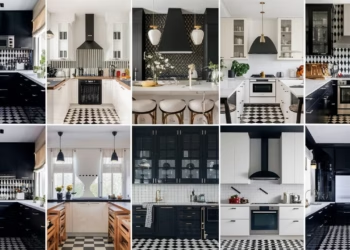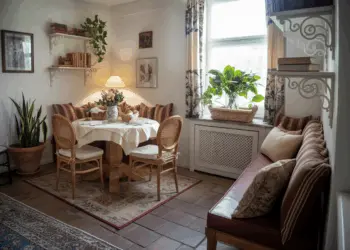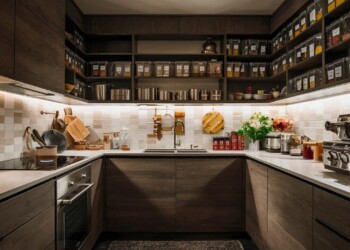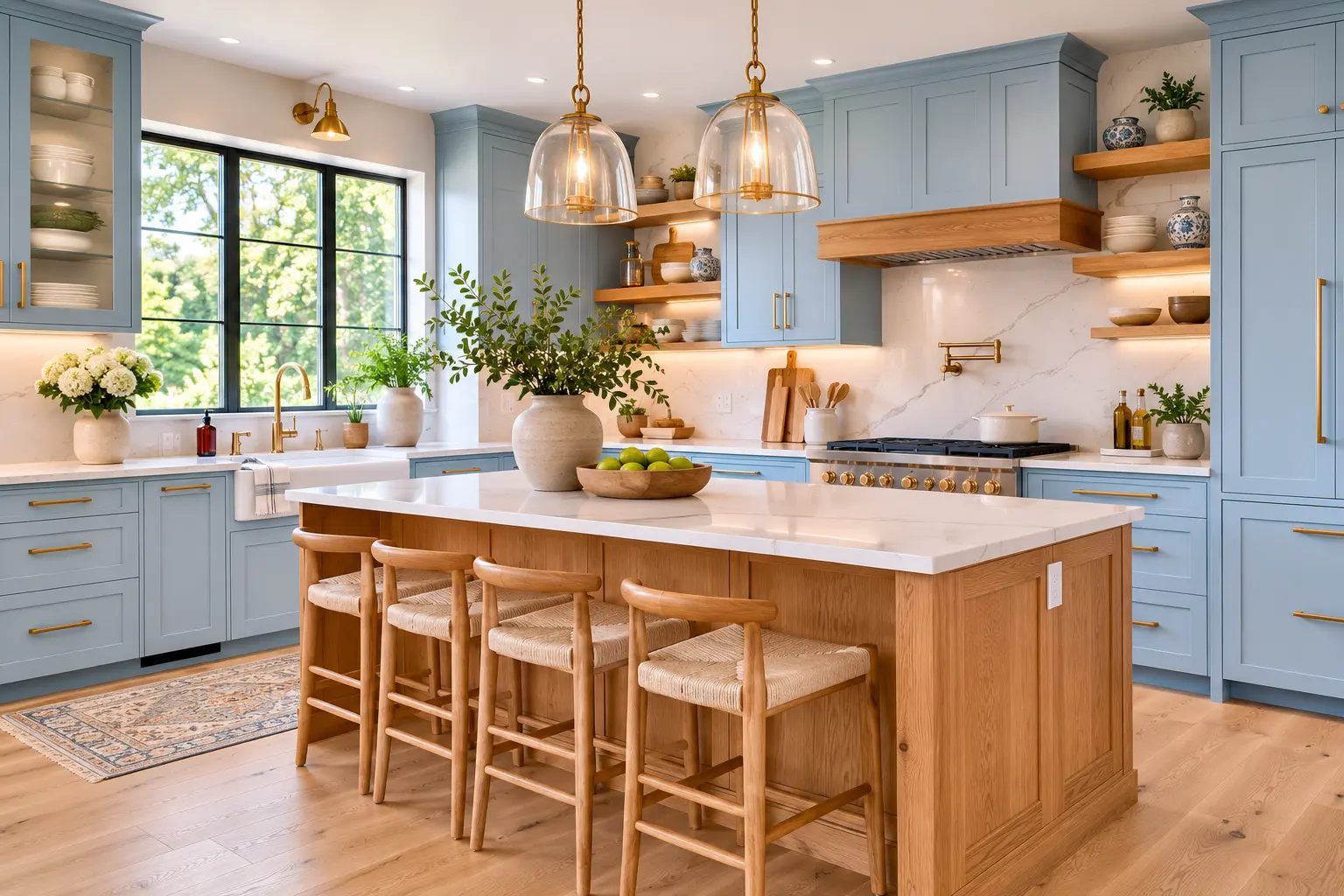
Looking for a fresh way to transform your kitchen? These blue kitchen ideas show how shades from icy blue to deep navy can create a stylish, inviting space. From icy blue cabinets with warm wood to elegant navy and brass combinations, discover 20 inspiring looks to help you create a kitchen that feels fresh, modern, and timeless.
Table of Contents
Why Blue Kitchens Are Having a Moment in 2026
Blue kitchens are trending in 2026 because homeowners want warmer, more personal spaces instead of sterile designs. Wood cabinetry is now more popular than white in many renovations, showing a shift toward natural materials. Blue fits this trend because it works in many tones, icy, navy, teal, or muted shades. It pairs well with oak, walnut, brass, stone, and warm neutrals. Designers also highlight icy blue as an emerging choice when softened with wood or metal accents. The key idea is balance: blue should not stand alone but work with natural textures. If you are exploring blue kitchen ideas, think in full palettes, not just paint colors.
Blue and Wood Create a Perfect Balance
Blue and wood is one of the most reliable kitchen combinations. Blue brings calm and freshness, while wood adds warmth and comfort. Together, they create a balanced, inviting space. You can use wood in islands, shelves, floors, or stools. Medium oak works with most blue shades, while walnut suits deeper blues. Light wood softens icy blues, and darker wood adds contrast. This mix feels modern but still cozy, making it ideal for 2026 kitchen design trends focused on natural, layered materials.
For more Kitchens trends see our 20 Types of Kitchen Cabinet Styles.
1. Icy Blue Cabinets With Warm Wood
Icy blue cabinets create a light, airy kitchen that feels fresh and clean. The color works best in bright spaces with natural light. To avoid a cold look, add warm wood elements like oak floors, walnut stools, or a wooden island. White quartz or light marble countertops keep the space bright. Brass hardware adds warmth and contrast. This style works well in open kitchens where light enhances the soft blue tone.
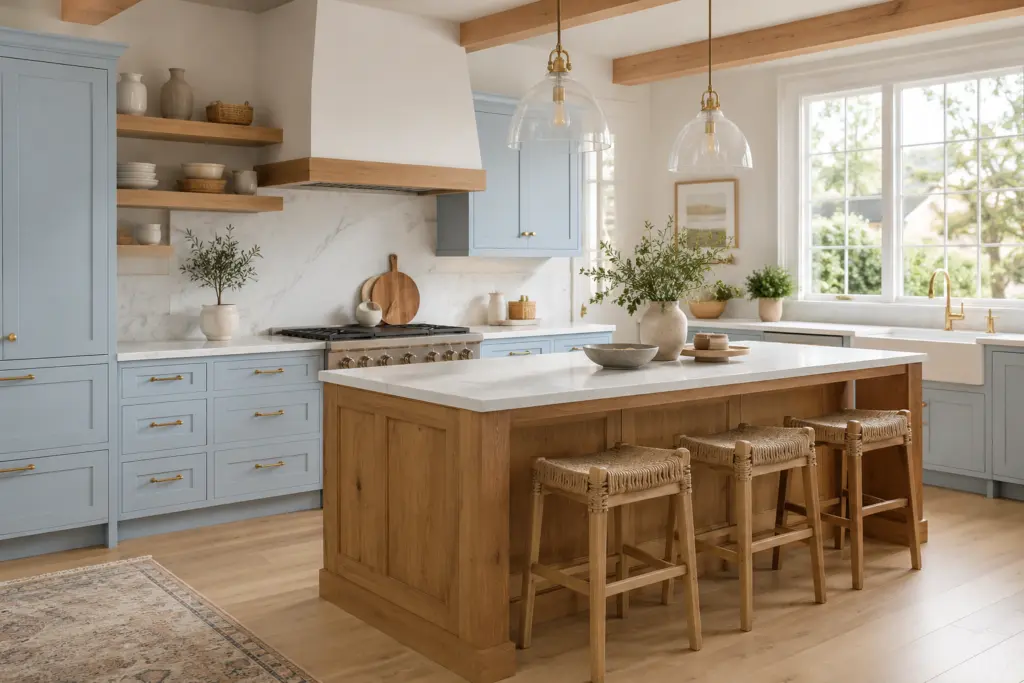
2. Soft Blue and White Kitchen
Soft blue and white kitchens feel bright, simple, and timeless. Use pale blue cabinets with white walls or countertops to keep the space open. This is ideal for small kitchens because light colors make the room feel larger. Add texture through tiles, wood accents, or woven details. The combination is flexible and easy to update with different hardware or decor styles.
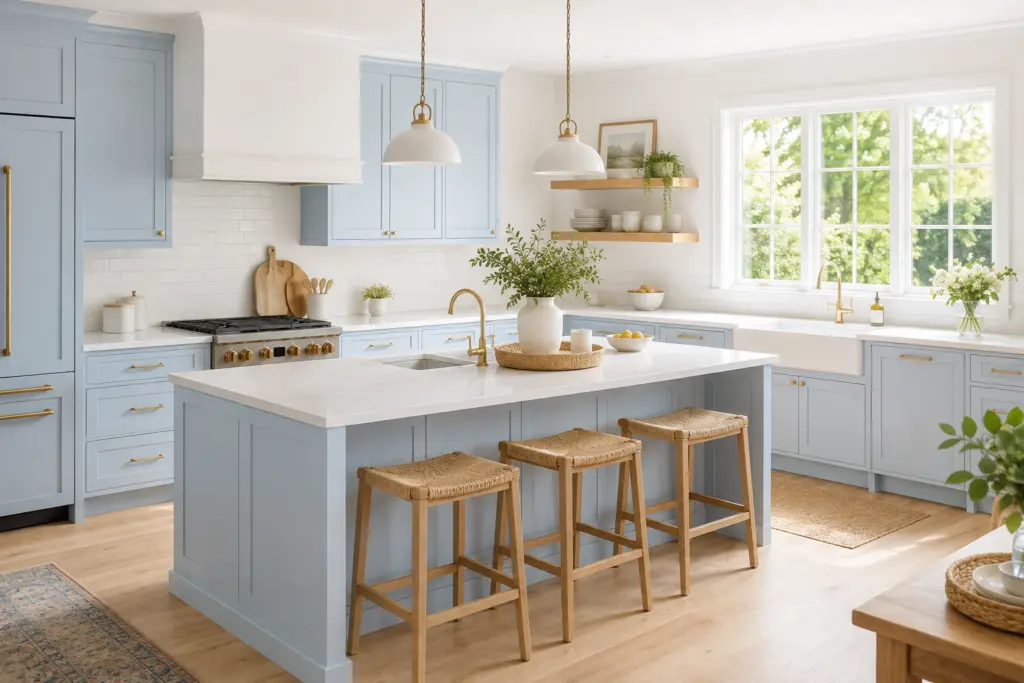
3. Navy Blue Cabinets With Brass Hardware
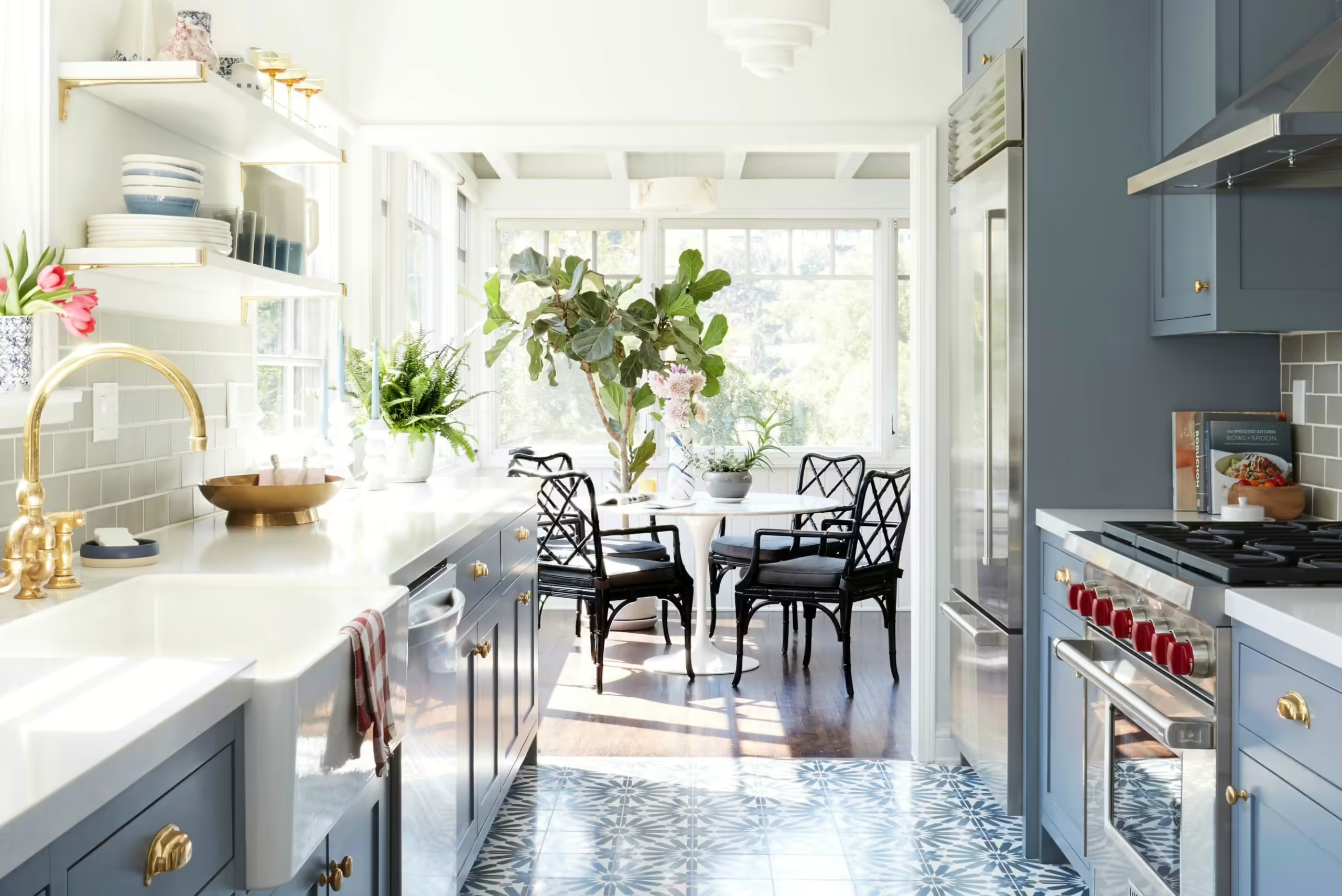
Navy blue cabinets create a bold, elegant kitchen. Brass hardware adds warmth and a touch of luxury. To balance the dark tone, use light countertops and soft wall colors. Good lighting is important to keep the space from feeling heavy. Navy works well in both modern flat-panel designs and traditional Shaker styles. It also helps define open-plan kitchen spaces.
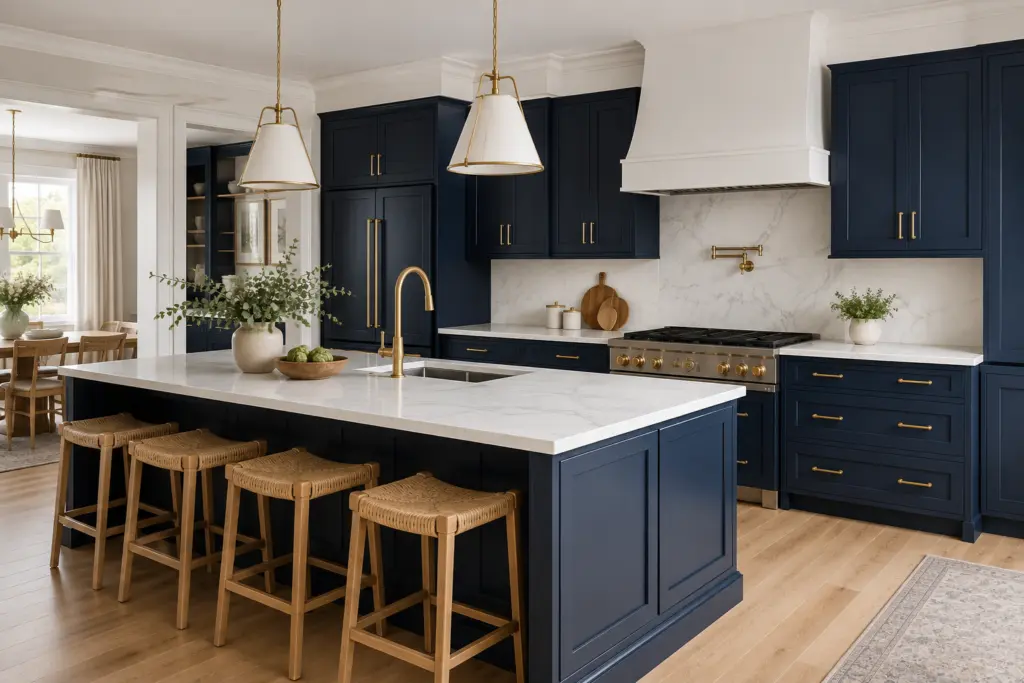
4. Blue Lower Cabinets With Natural Wood Uppers
This design uses blue on lower cabinets and wood on upper cabinets. It keeps the kitchen visually light while adding color at eye level. Dusty blue or navy works well below, while oak or ash adds warmth above. A light stone countertop helps connect both materials. This layout feels balanced, modern, and easy to live with.
5. Dusty Blue Shaker Kitchen
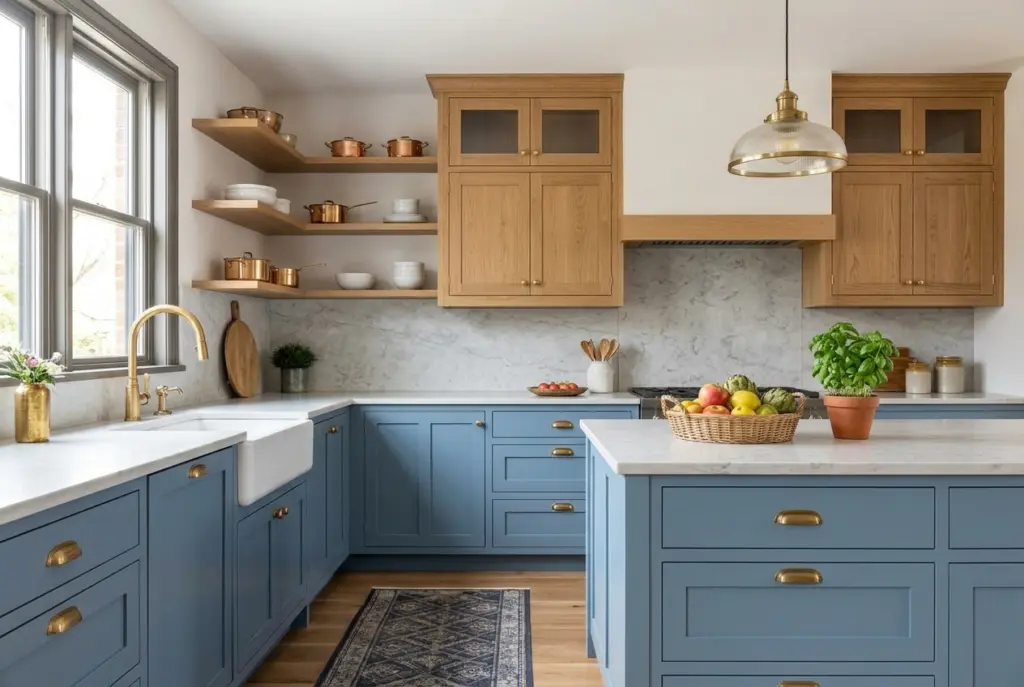
Dusty blue is soft, muted, and very versatile. It works well with Shaker cabinets for a classic look. Pair it with cream countertops, oak floors, and brass hardware for warmth. This style feels cozy and timeless. It also adapts well to both traditional and modern kitchens depending on finishes and lighting.
6. Blue Kitchen With Marble Countertops
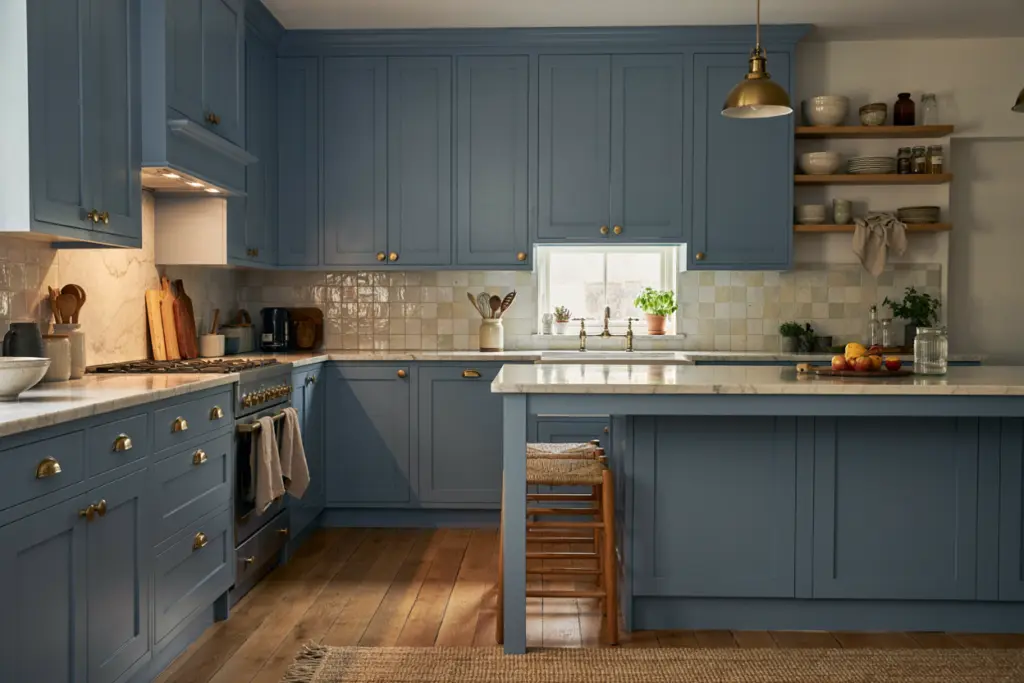
Blue cabinets and marble countertops create a refined, classic look. White marble with soft veining pairs especially well with navy or slate blue. If real marble is not practical, quartz or porcelain can mimic the effect. Keep other elements simple so the stone and cabinets stand out. Add wood or brass accents for warmth.
7. Moody Blue and Dark Wood
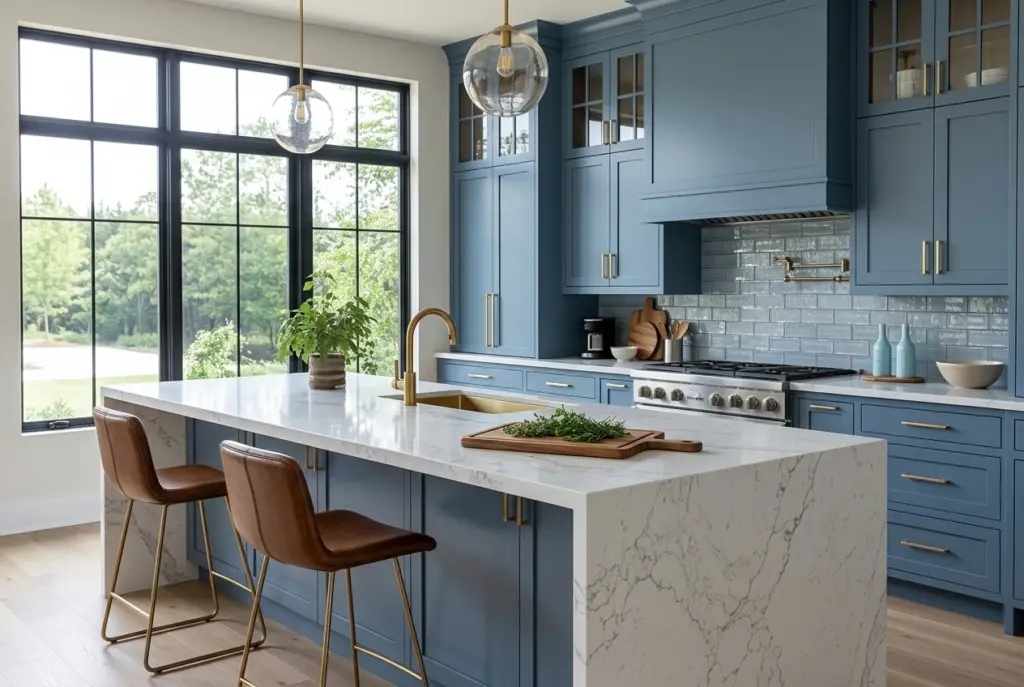
Deep blue and dark wood create a rich, dramatic kitchen. Walnut or dark oak pairs beautifully with navy or blue-black tones. This style feels cozy and sophisticated. To avoid a dark space, add lighter countertops or soft lighting. It works best in kitchens with good natural light.
8. Powder Blue Kitchen With Gold Accents
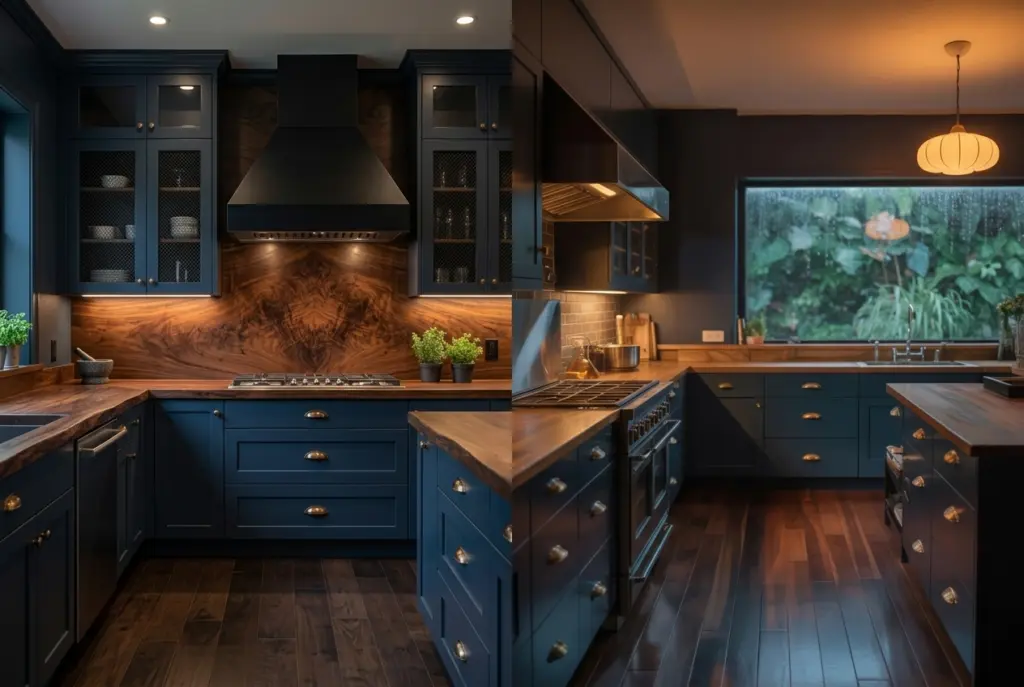
Powder blue is soft and calming. Gold or brass accents make it feel more elegant. Cream backsplashes and light wood add warmth. This style works well in kitchens with less natural light because it stays bright without being harsh. It feels fresh, soft, and welcoming.
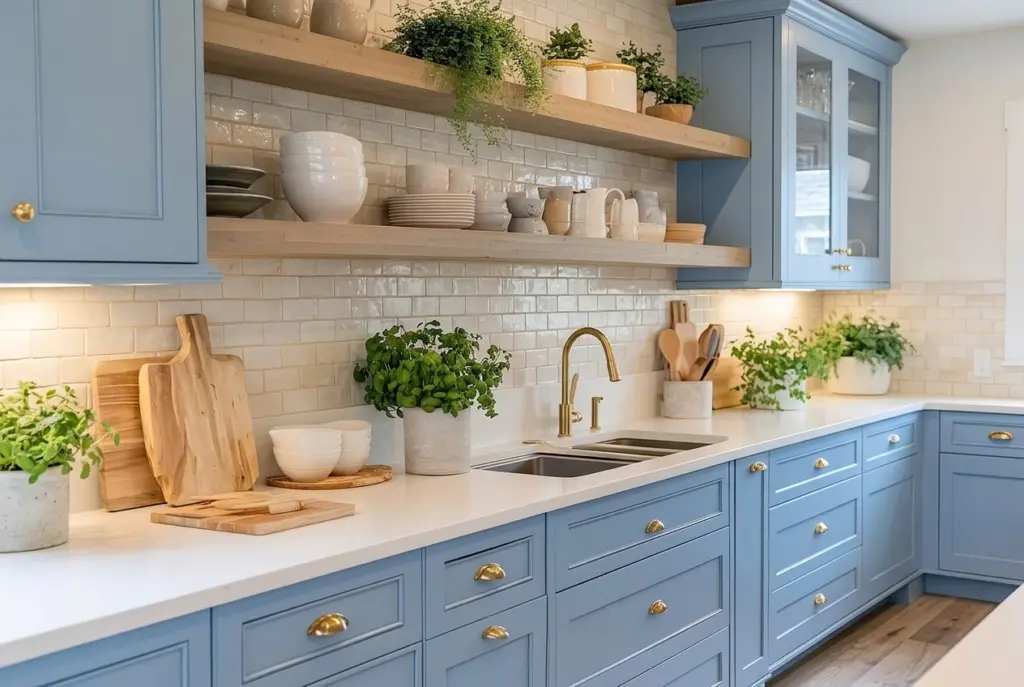
9. Blue Kitchen Island as a Statement Piece
A blue island adds color without changing the whole kitchen. Keep surrounding cabinets neutral in white, cream, or wood. Navy, teal, or cobalt islands work well as focal points. Repeat the color in small details like stools or lighting for balance. This is a flexible and easy design update.
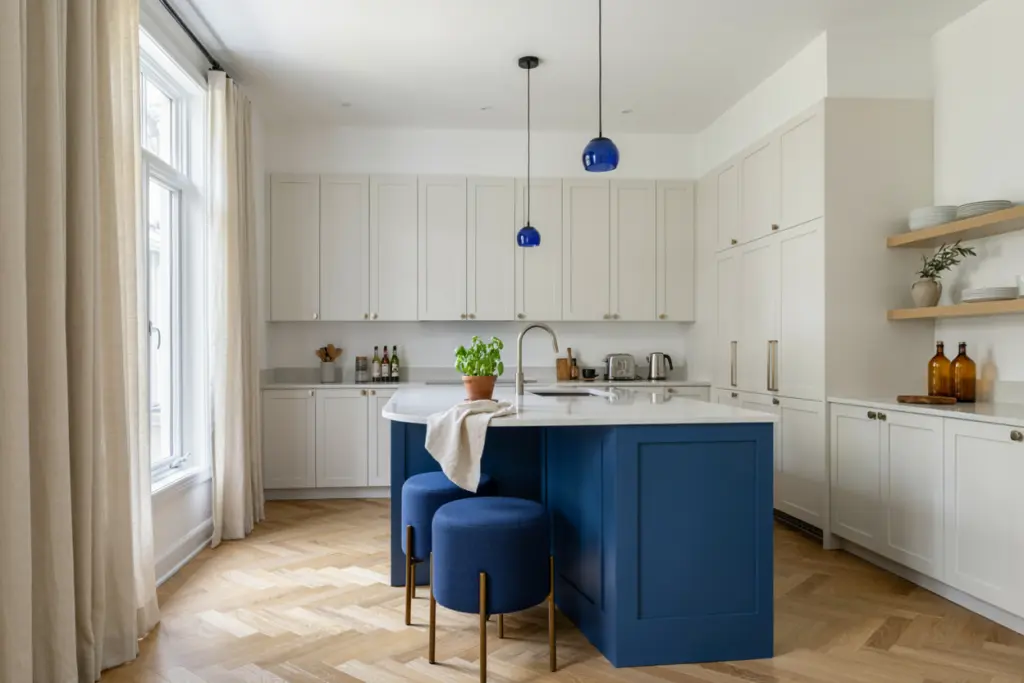
10. Coastal Blue Kitchen With Light Oak
Coastal blue kitchens use soft, muted blues with light oak for a relaxed feel. Avoid bright turquoise and choose natural ocean tones instead. Add woven textures, linen, and simple ceramics. This style feels calm, natural, and bright, especially in sunlit kitchens.
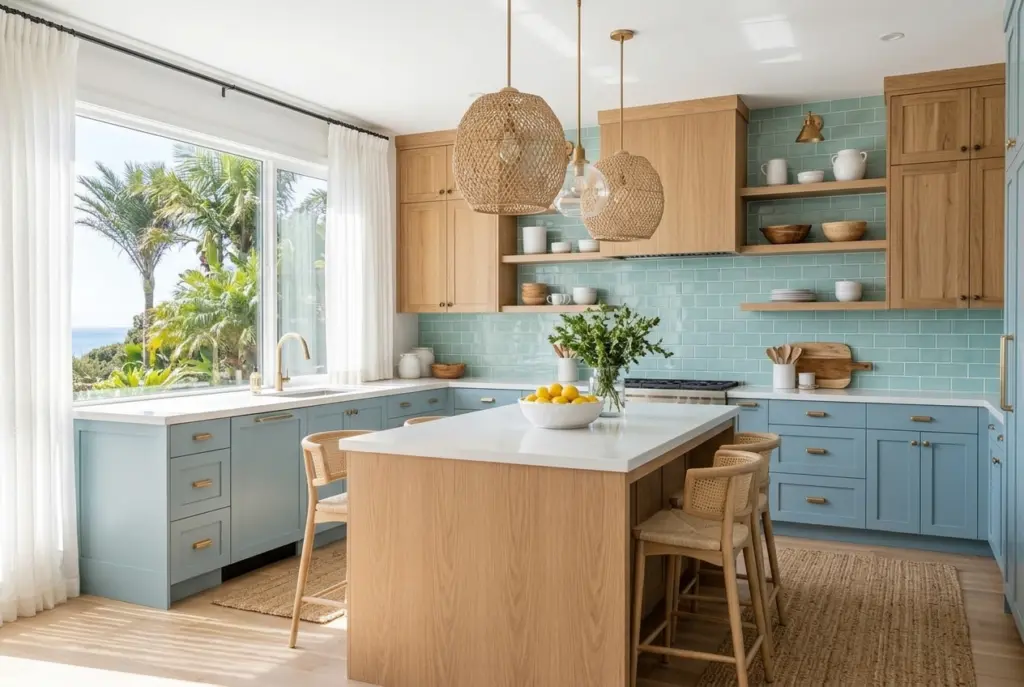
11. Blue Cabinets and Terracotta Details
Blue and terracotta create a warm and cool contrast. Terracotta works best in small accents like tiles, lighting, or decor. Muted blue cabinets balance the earthy tones. Wood helps connect both colors. This combination feels artistic and unique.
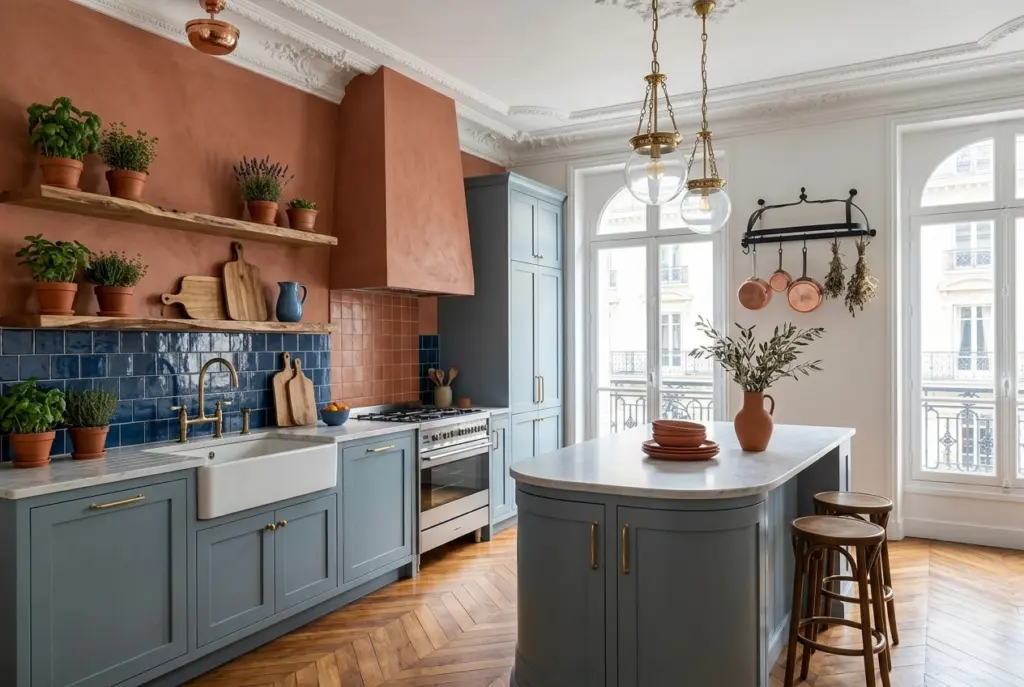
12. Modern Blue Kitchen With Sleek Cabinets
Modern blue kitchens use flat-panel cabinets and clean lines. Blue-gray tones work best for a minimal look. Keep countertops simple and use integrated appliances. Good lighting and smart storage help maintain a clean, uncluttered design.
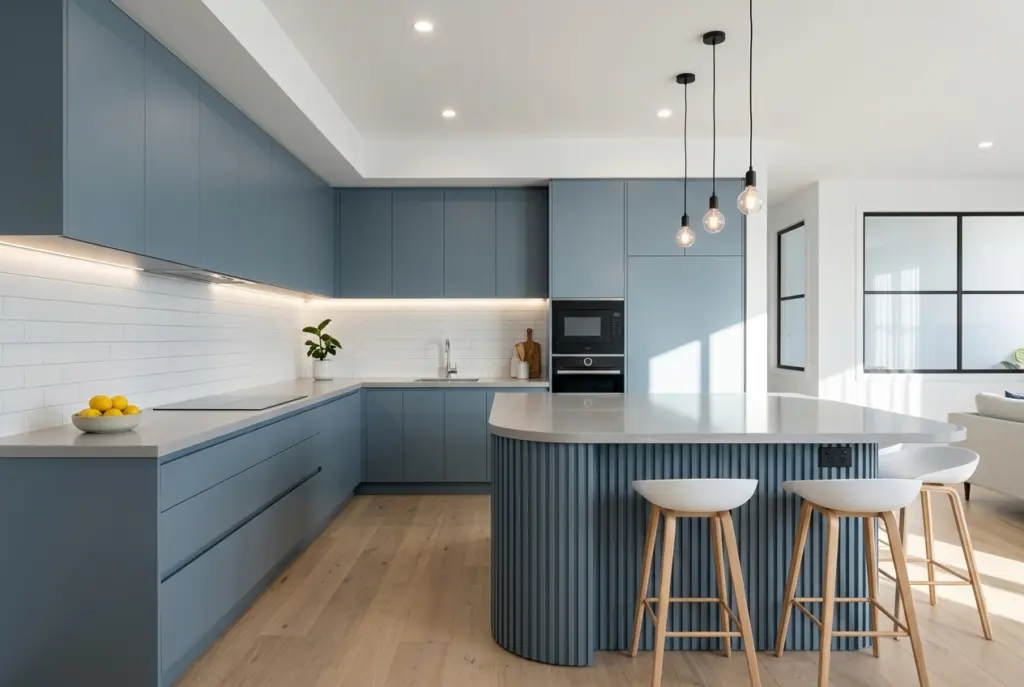
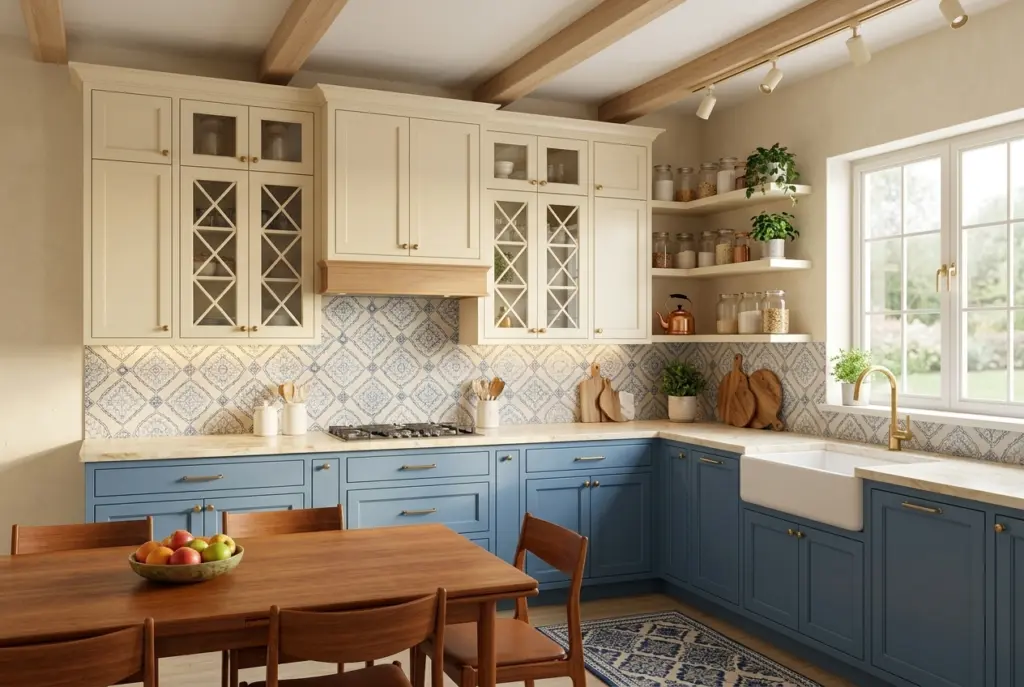
13. Blue and Cream for a Softer Look
Blue and cream create a warm, gentle kitchen palette. Cream softens the contrast of blue and makes the space feel cozy. This works well with navy, denim, or dusty blue shades. Add wood and brass for extra warmth and comfort.
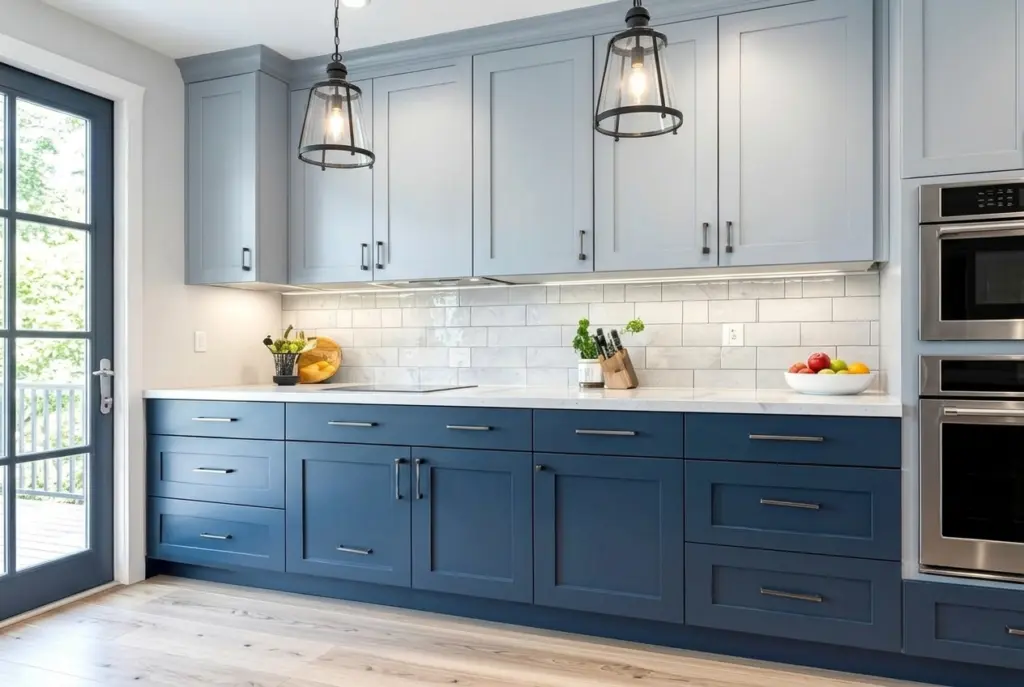
14. Two-Tone Blue Kitchen
A two-tone blue kitchen uses different shades of blue together. Light upper cabinets and darker lower cabinets create depth. This keeps the design cohesive but visually interesting. Neutral countertops help balance the look.
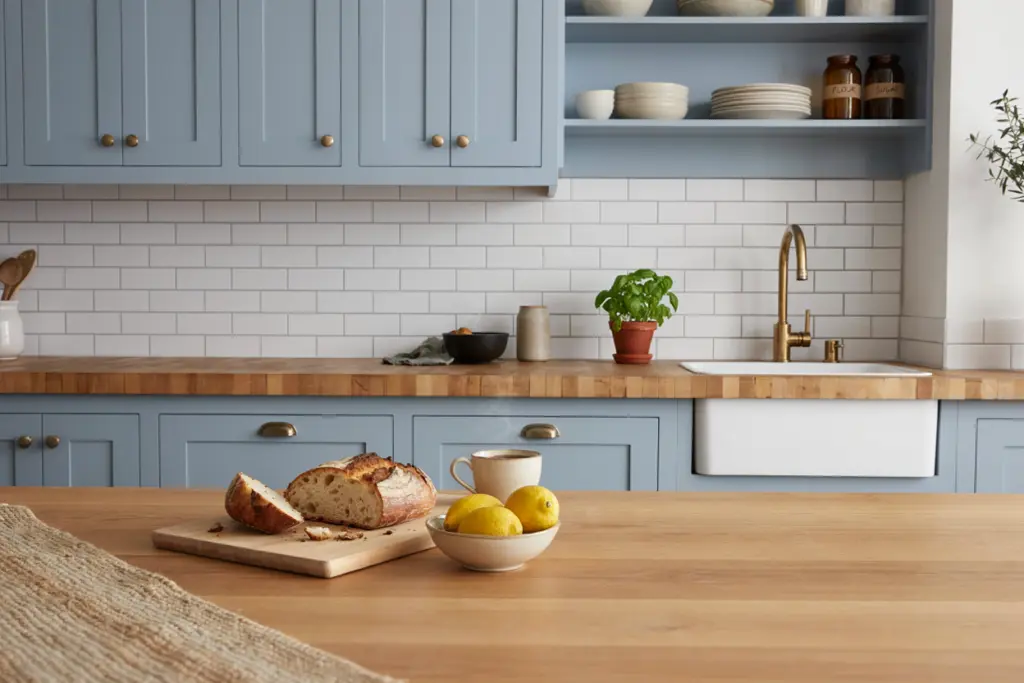
15. Blue Cabinets With Butcher-Block Countertops
Blue cabinets with wood countertops create a warm, casual kitchen. The wood softens the coolness of blue and adds texture. This works well with dusty or slate blues. It feels relaxed, natural, and easy to live with.
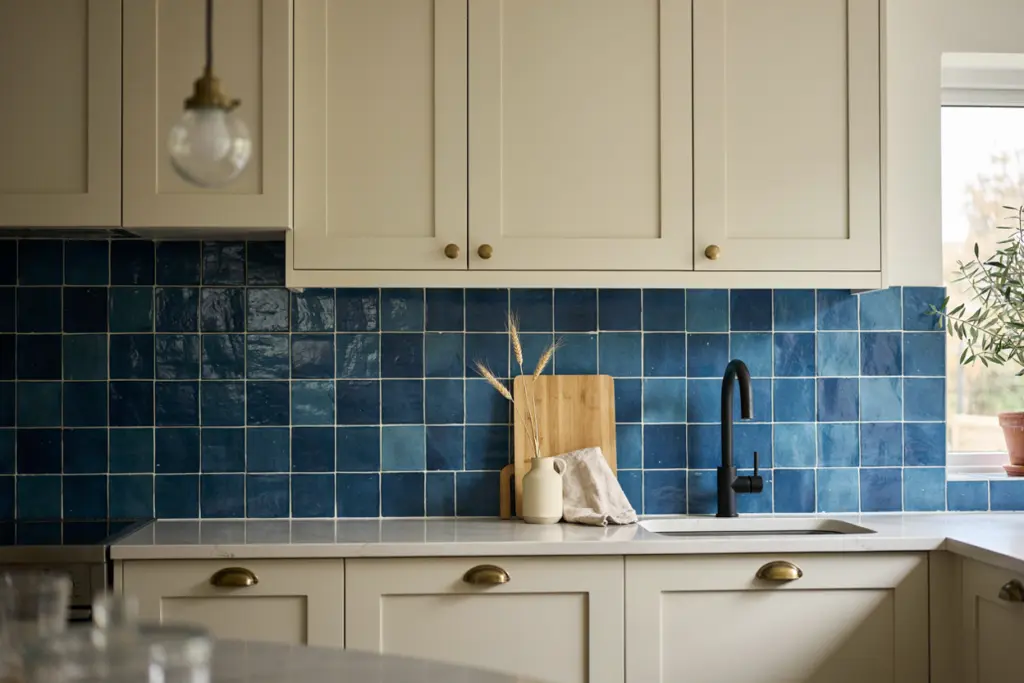
16. Blue Backsplash With Neutral Cabinets
A blue backsplash is a great way to introduce color without changing cabinets. White, cream, or wood cabinets provide a neutral base, while blue tile adds personality. Handmade or textured tiles work especially well because they add depth. This approach is flexible and easy to update, making it ideal for renters or gradual renovations.
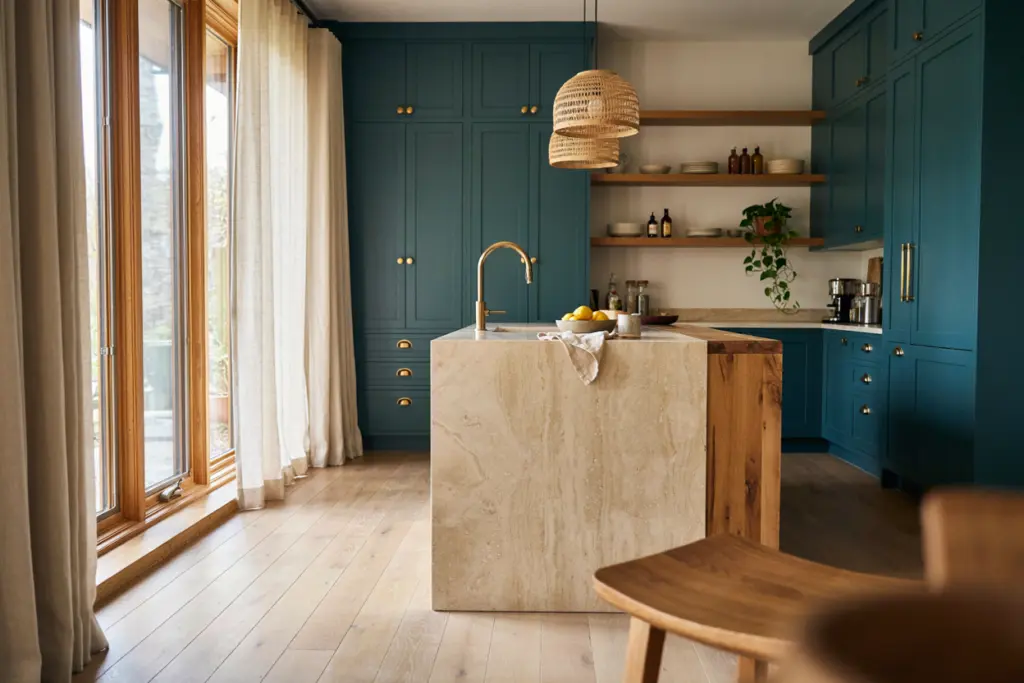
17. Deep Teal Blue Kitchen
Deep teal blends blue and green for a rich, earthy tone. It pairs beautifully with wood, brass, and natural stone. Because teal changes with lighting, testing samples is important. It can feel dramatic or subtle depending on the surrounding materials. Used thoughtfully, it creates a sophisticated and nature-inspired kitchen.
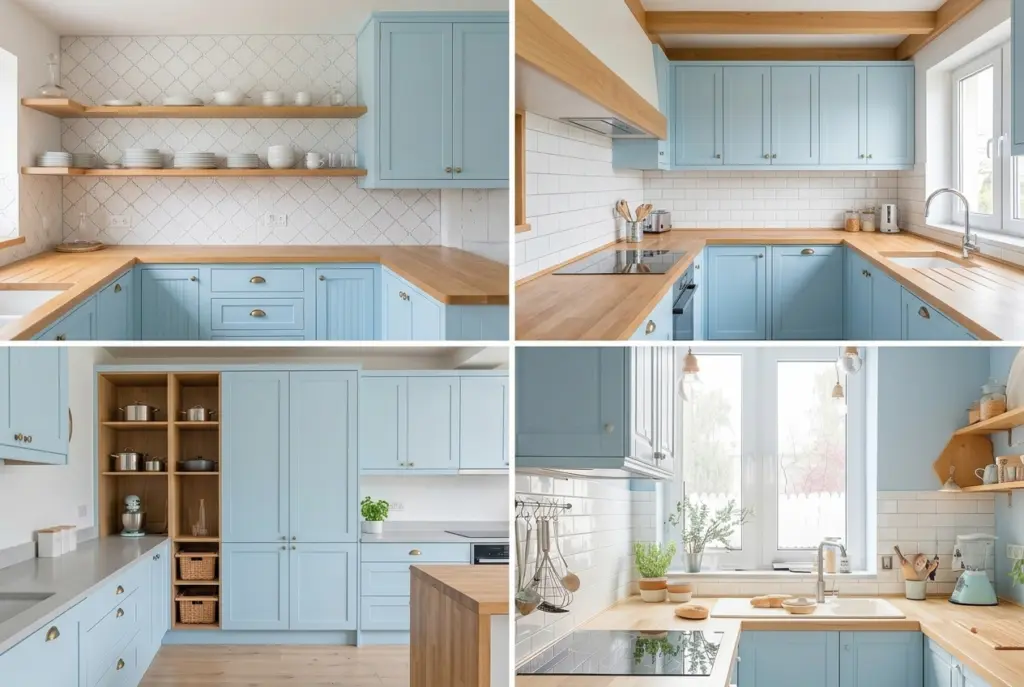
18. Small Kitchen With Light Blue Cabinets
Light blue is ideal for small kitchens because it keeps the space feeling open. Pair it with reflective surfaces, light countertops, and minimal clutter. Good organization and storage are key to maintaining a clean look. Light wood accents can add warmth without overwhelming the space.
For more small Kitchens ideas see our Small kitchen: our useful 8 tips to optimize space.
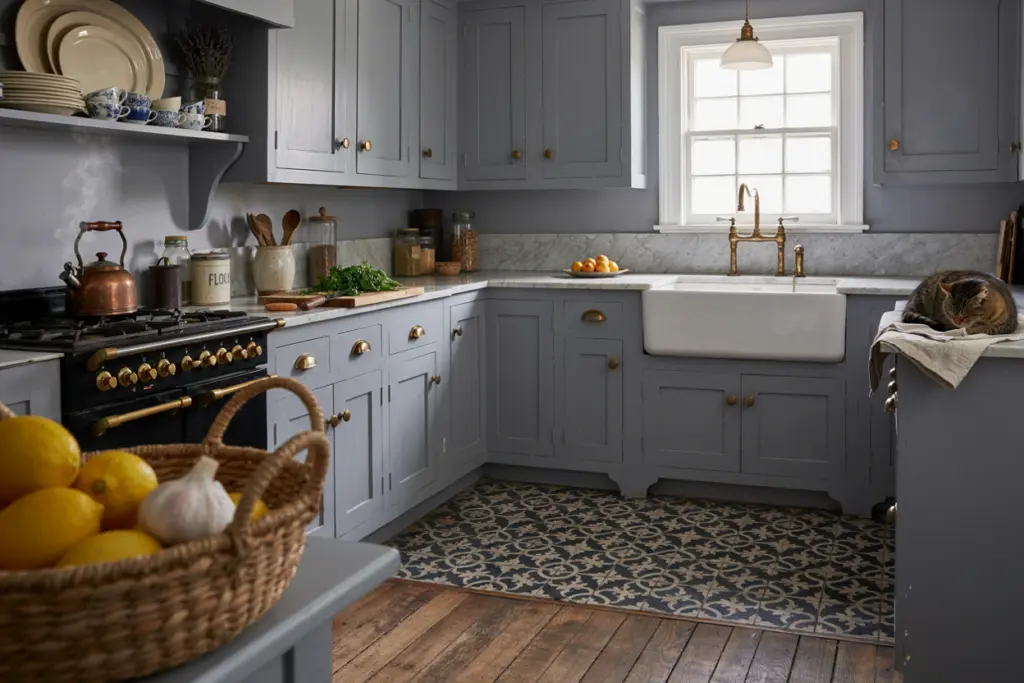
19. Vintage Blue Kitchen With Traditional Details
Vintage-inspired blue kitchens use muted shades like faded navy or gray-blue. Traditional cabinetry, brass hardware, and classic lighting enhance the old-world feel. Wood and patterned floors add character. The goal is a kitchen that feels lived-in and timeless rather than overly styled.
20. Tonal Blue Kitchen With Layered Shades
A tonal blue kitchen uses multiple shades of blue to create depth. Light walls, medium cabinets, and darker accents work together for a cohesive look. Warm materials like wood and brass prevent the palette from feeling too cool. This approach is flexible and easy to update over time.
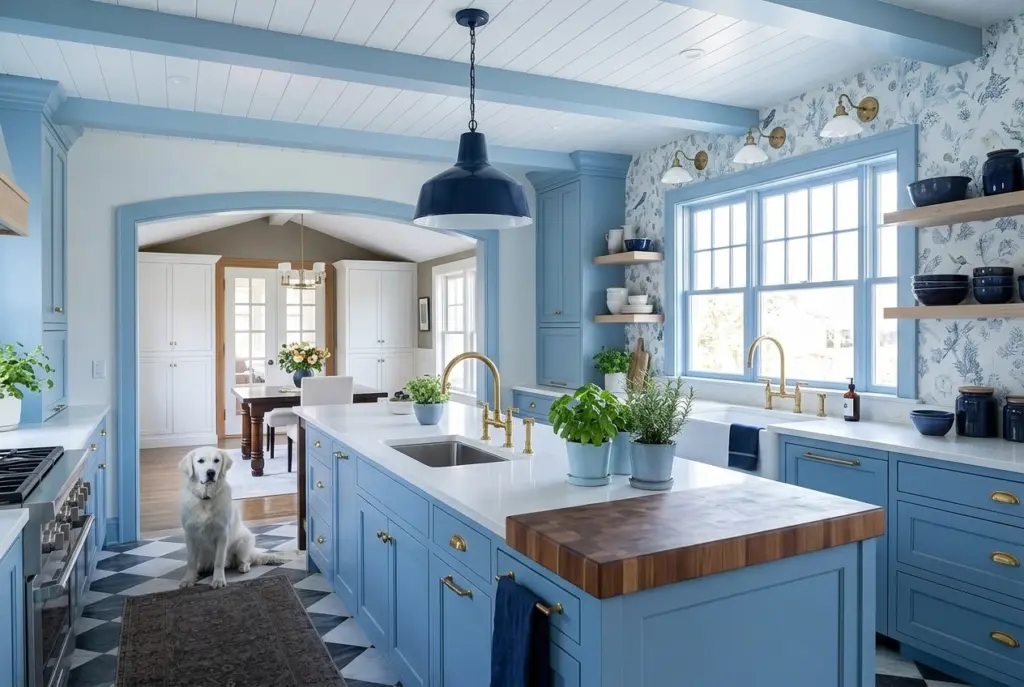
How to Choose the Right Blue for Your Kitchen
Choosing the right blue depends on lighting, space, and existing materials. Natural light can dramatically change how blue appears, so testing samples is essential. Undertones also matter, as blue can lean gray, green, or warm. Consider how much blue you want in the space, whether as a full cabinet color or a small accent. The best kitchens balance color with function, storage, and materials rather than relying on paint alone.
FAQs About Blue Kitchen Ideas
What is the best blue for a timeless kitchen?
Muted navy, blue-gray, and dusty blue are the most timeless options because they adapt well to different styles over time.
Is light blue a good color for a small kitchen?
Yes, light blue helps small kitchens feel brighter and more open, especially when paired with reflective surfaces.
What wood looks best with blue kitchen cabinets?
Oak and walnut are the most versatile choices, working well with both light and dark blues.
Are blue kitchens still trendy in 2026?
Yes, blue remains popular, especially when combined with natural materials. It is often used as an accent or contrasting cabinet color.
What colors go best with blue kitchen cabinets?
Blue pairs well with wood, white, cream, brass, stone, and terracotta. The best match depends on the shade of blue and the overall kitchen style.
Blue kitchens offer endless flexibility, from soft and airy to deep and dramatic. The most successful designs balance blue with warm materials like wood, brass, and stone. In 2026, kitchens are moving toward more layered, natural, and personalized styles. Whether you choose a bold navy island or a subtle powder blue cabinet, the key is harmony between color, texture, and function.