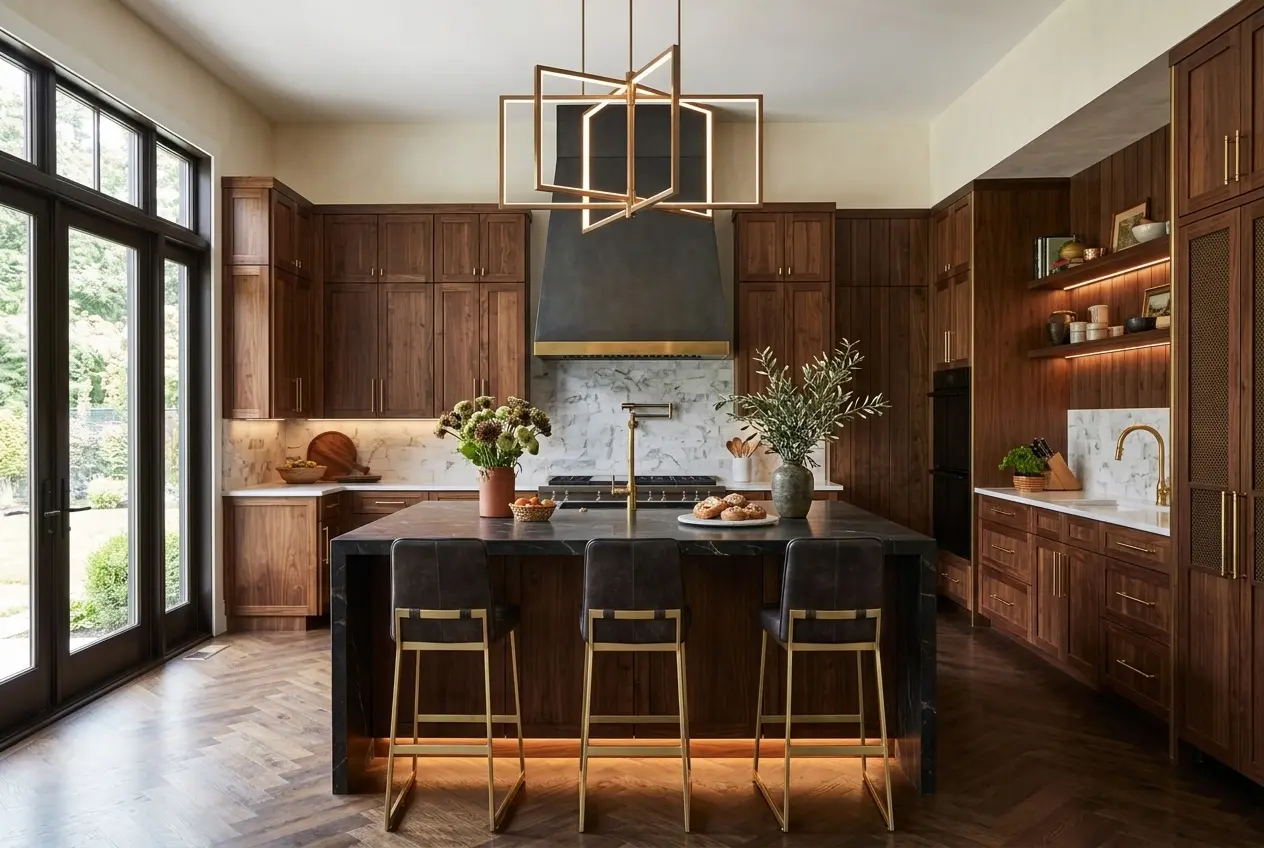
A dark wood kitchen can bring remarkable warmth, depth, and character to a home without making the room feel dark or dated. The key is balance. When rich walnut, espresso, oak, or deep-stained cabinetry is paired with natural light, warm metals, stone surfaces, and carefully chosen neutral colors, the result feels sophisticated rather than overwhelming.
Today’s most inspiring dark wood kitchens combine traditional craftsmanship with modern details. We are seeing dark wood cabinets paired with marble countertops, creamy walls, black accents, earthy greens, warm lighting, and natural textures. This approach creates kitchens that feel luxurious while remaining comfortable and livable.
Whether we are designing a large open-concept kitchen or updating a smaller space, these 15 dark wood kitchen ideas offer practical ways to create a warm, elegant room that does not feel heavy.
For more kitchen trends chuck our The Moody Dark kitchen Trend.
Table of Contents
1. Pair Dark Wood Cabinets With Light Countertops
One of the easiest ways to balance a dark wood kitchen is to introduce a light countertop.
White marble, creamy quartz, limestone, and other pale surfaces create contrast against deep cabinetry. The lighter surface reflects available light and prevents the cabinetry from visually taking over the room.
For an especially sophisticated look, we can choose a countertop with subtle veining rather than a completely plain white surface. Warm gray, beige, or soft taupe veining connects beautifully with walnut and other dark wood tones.
This combination works particularly well in kitchens with islands because the island can become a dramatic focal point without making the entire room feel dark.
2. Choose Warm Walnut for a Sophisticated Look
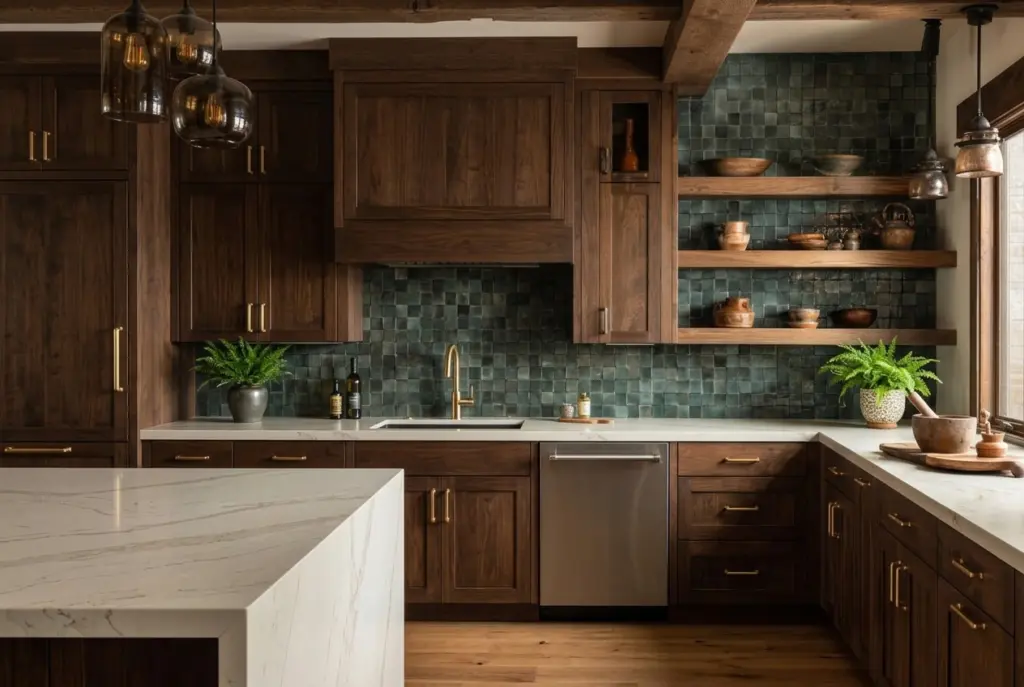
Walnut cabinetry remains one of the most versatile choices for a dark wood kitchen.
Its natural variation gives the room visual movement, while its warm brown undertones make the space feel inviting. Rather than looking flat like some painted cabinetry, walnut adds organic texture through its visible grain.
We can use walnut throughout the kitchen or reserve it for the island while keeping the perimeter cabinets lighter. This creates a layered appearance and allows the wood to become the star of the room.
For a high-end effect, we can combine walnut cabinets with creamy stone, brushed brass hardware, and warm pendant lighting.
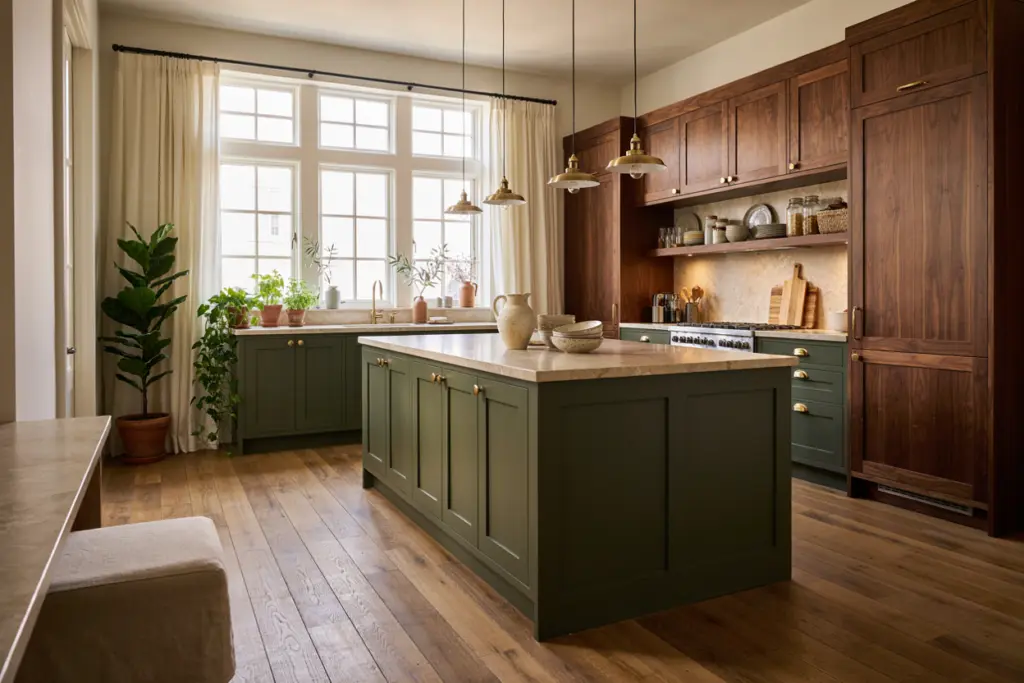
3. Mix Dark Wood With Deep Green Cabinets
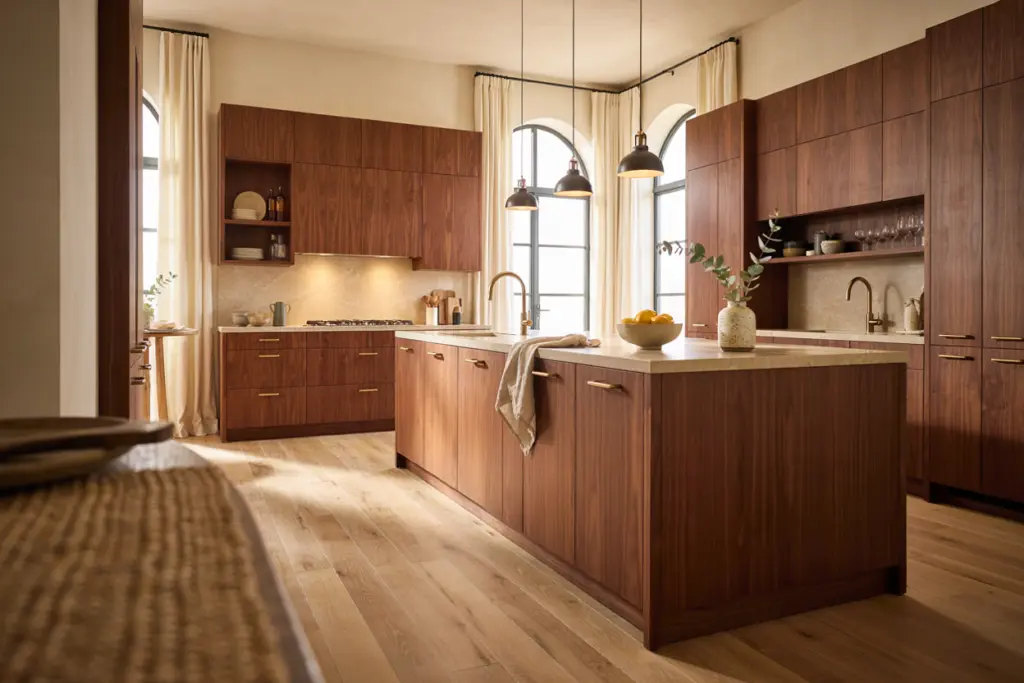
Dark green and dark wood make an exceptionally warm combination.
Instead of using the same finish for every cabinet, we can introduce deep olive, forest, or muted sage green on the island or lower cabinets. The wood brings warmth, while green introduces an earthy quality.
This color combination is particularly effective in kitchens with natural light, plants, stone countertops, and aged brass fixtures.
The result feels connected to nature rather than overly formal.
4. Use Natural Stone to Add Light
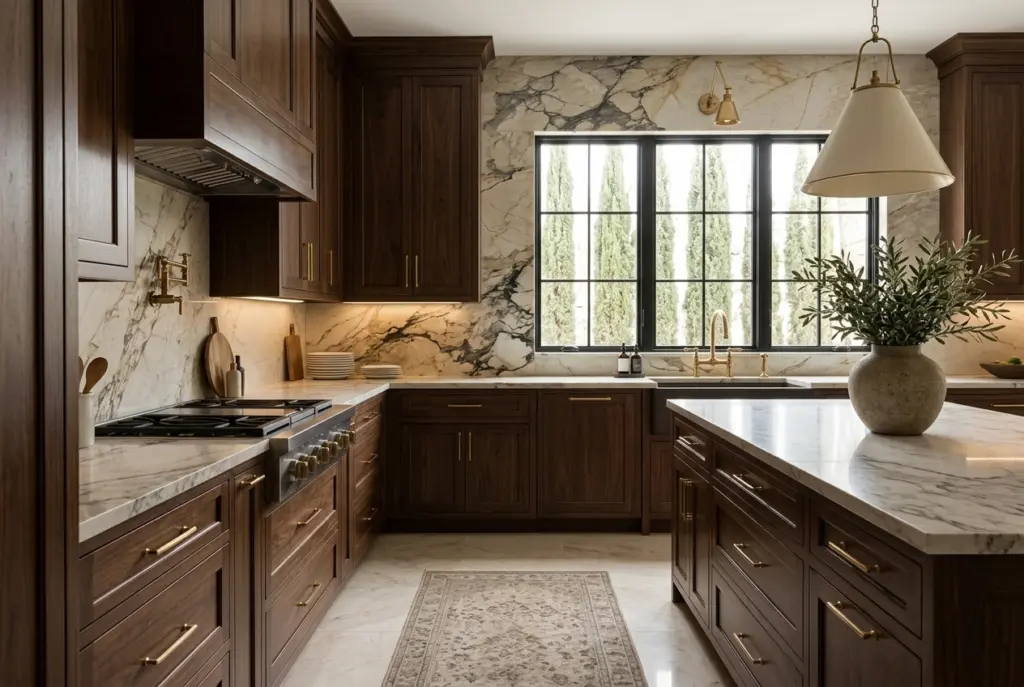
Natural stone can soften the appearance of a dark kitchen while adding luxurious texture.
A marble backsplash, travertine wall, limestone countertop, or softly veined quartz surface can provide a lighter visual layer between dark cabinetry and the rest of the room.
For a modern organic kitchen, we can choose stone with cream, beige, taupe, and warm gray undertones.
Avoid choosing a stone that is extremely cool or blue-gray if the goal is warmth. Warmer undertones generally complement dark wood more naturally.
5. Add Statement Pendant Lights
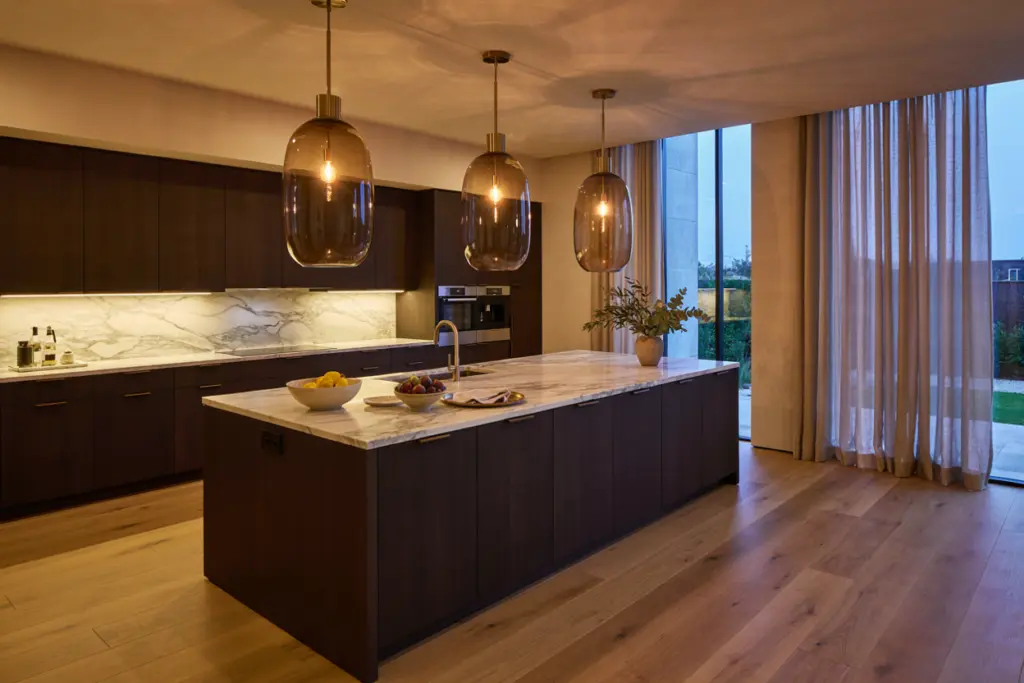
Lighting becomes especially important when working with dark cabinetry.
Instead of relying entirely on recessed ceiling lights, we can use large pendant lights over the kitchen island to create a focal point.
Glass, aged brass, bronze, linen, and natural woven pendants work beautifully with dark wood.
The lighting should also be warm rather than extremely cool. Warm white illumination helps reveal the richness of the wood and creates a more comfortable atmosphere in the evening.
6. Try a Dark Wood Kitchen With Black Accents
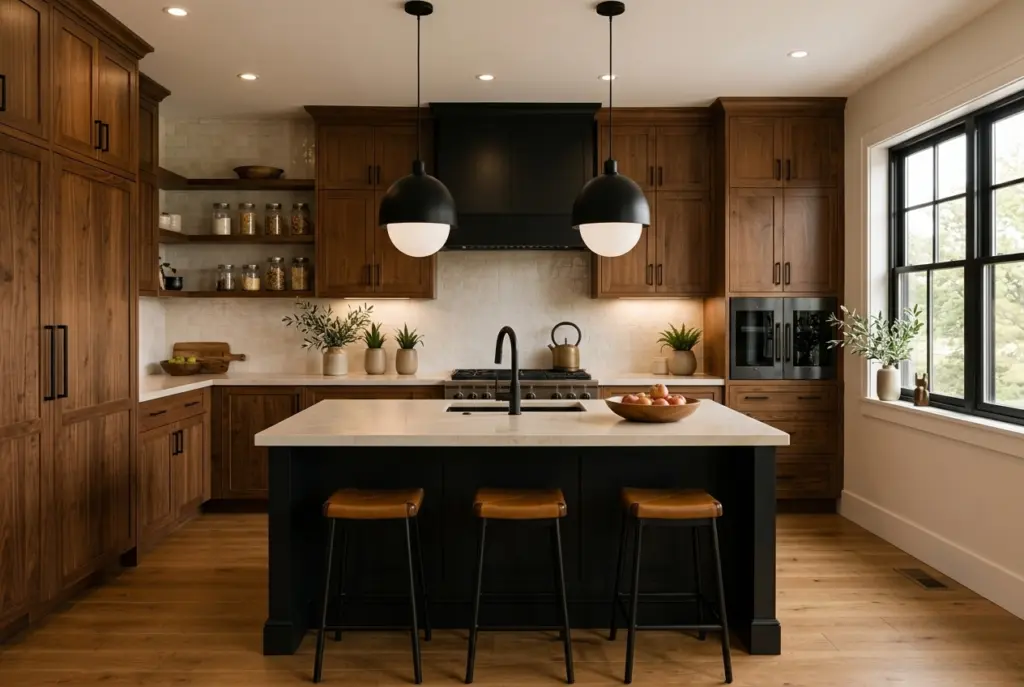
For a more contemporary appearance, we can introduce black into the kitchen through:
- Matte black faucets
- Black pendant lights
- Dark window frames
- Black cabinet hardware
- Black appliances
- Dark bar stools
The combination of dark wood and black creates a sophisticated architectural appearance.
To keep it from becoming too heavy, we can balance the darker elements with white or cream walls, natural stone, and plenty of daylight.
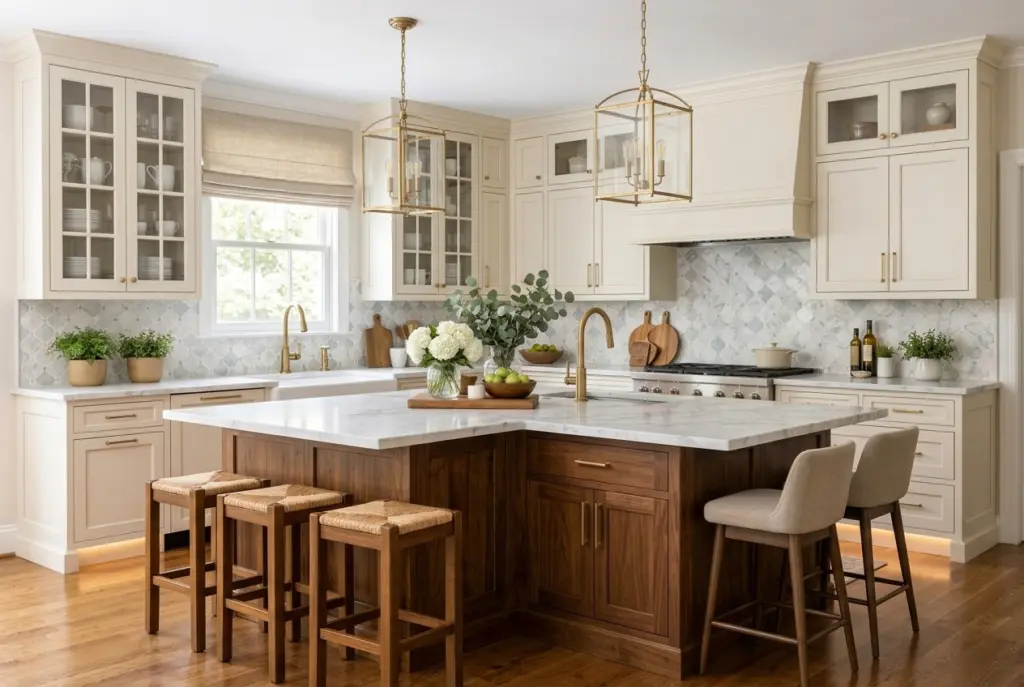
7. Create a Dark Wood Kitchen Island
We do not necessarily need dark cabinetry throughout the entire kitchen.
A dark wood island can provide the same dramatic effect while keeping the perimeter brighter.
For example, we can combine cream cabinets around the walls with a walnut island in the center. This approach creates a natural focal point and makes the island feel like a piece of custom furniture.
A substantial wood island can also introduce warmth into an otherwise minimalist kitchen.
8. Combine Dark Wood With Cream Cabinets
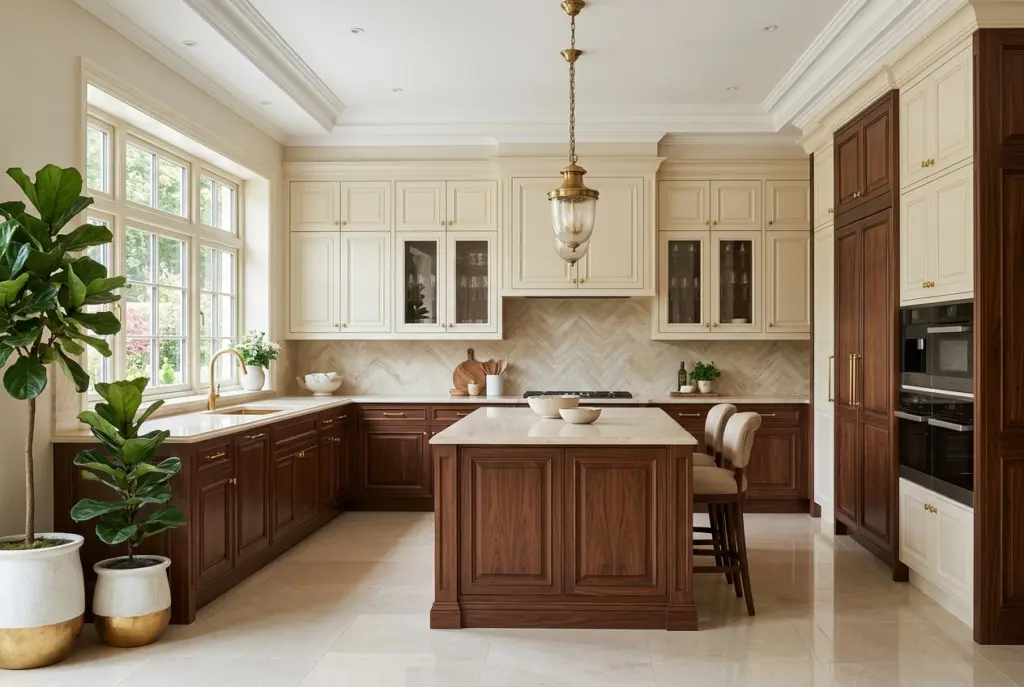
Cream and dark wood create a softer alternative to the classic black-and-white kitchen.
Cream cabinetry reflects light without creating the stark contrast of pure white. When combined with walnut or espresso wood, the result feels warm, elegant, and timeless.
We can use cream on upper cabinets and dark wood on lower cabinets, or reverse the arrangement depending on the size and lighting of the room.
Cream walls, beige upholstery, and warm stone countertops can further enhance this inviting palette.
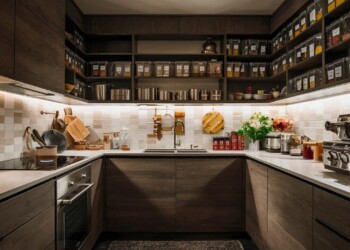
9. Add Open Shelving for Visual Breathing Room
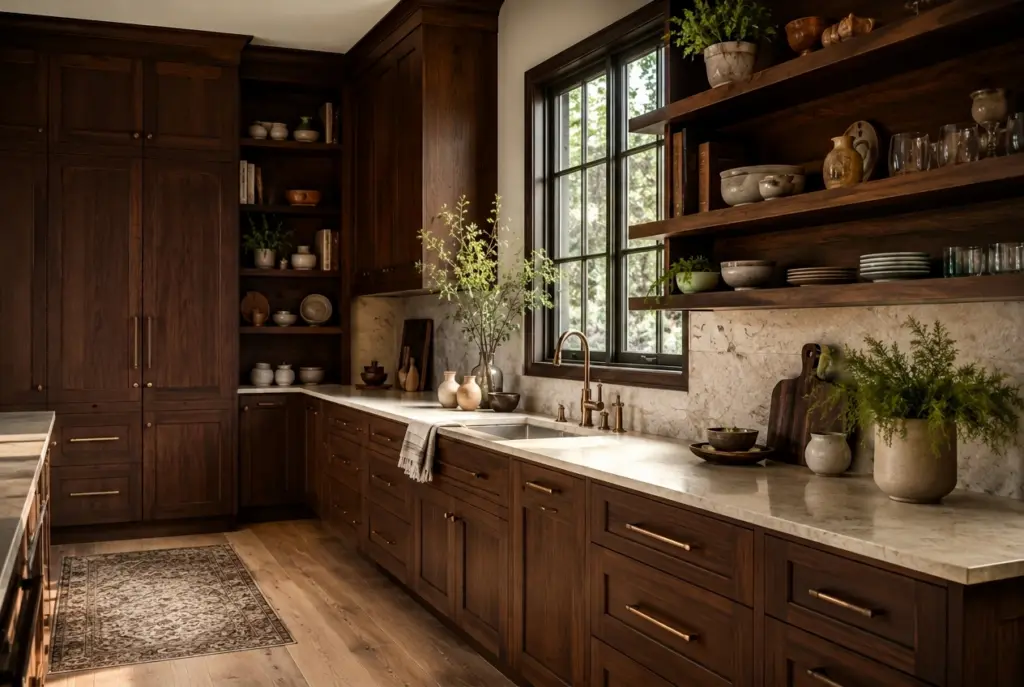
If a kitchen contains extensive dark cabinetry, open shelving can prevent the walls from appearing visually solid.
Instead of covering every wall with upper cabinets, we can remove a section and install natural wood or floating shelves.
The shelves can display:
- Ceramic dishes
- Wooden cutting boards
- Cookbooks
- Glassware
- Small plants
- Decorative pottery
This creates breathing room while also adding personality.
The trick is to keep the shelves edited rather than overcrowded.
10. Use Wood With Visible Natural Grain
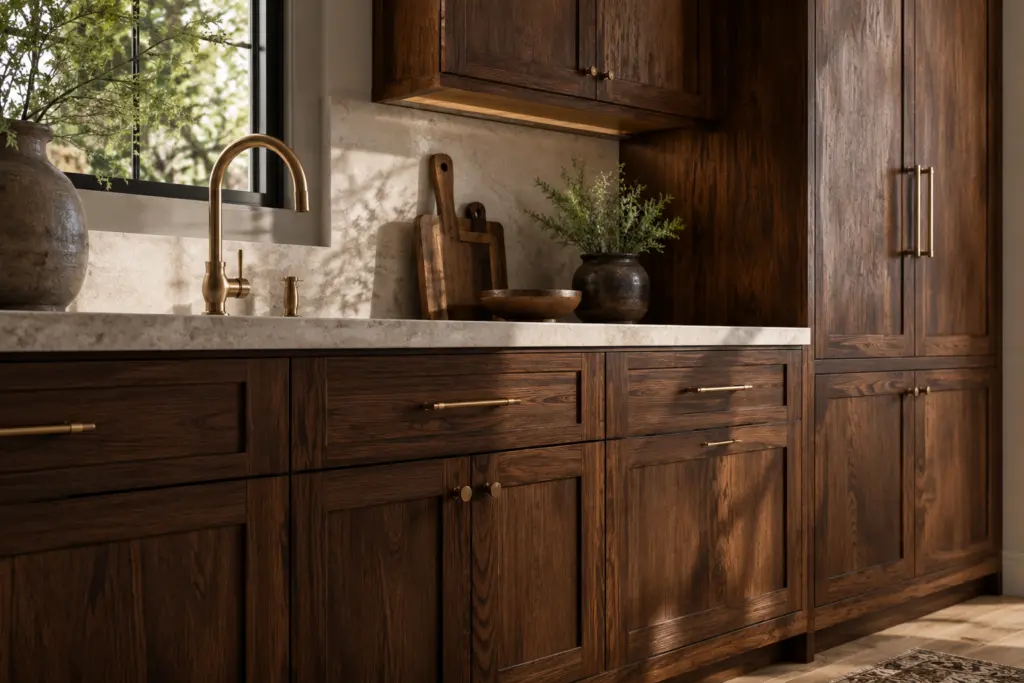
A dark wood kitchen does not have to look perfectly uniform.
In fact, visible wood grain can make the space feel considerably warmer.
Rift-sawn oak, walnut, smoked oak, and other naturally textured woods provide subtle variation. We can emphasize the grain with a matte or satin finish instead of an extremely glossy surface.
This is particularly effective for modern kitchens because the organic texture softens clean lines and minimalist cabinetry.
11. Add Warm Brass Hardware
Hardware can completely change the personality of dark cabinetry.
Brushed brass, aged brass, and antique brass are especially effective because their warm metallic tones complement brown wood.
We can use brass for cabinet pulls, knobs, faucets, pendant fixtures, and even small decorative details.
For a cohesive result, we do not need every metal in the room to match perfectly. However, repeating the dominant finish in several areas helps the design feel intentional.
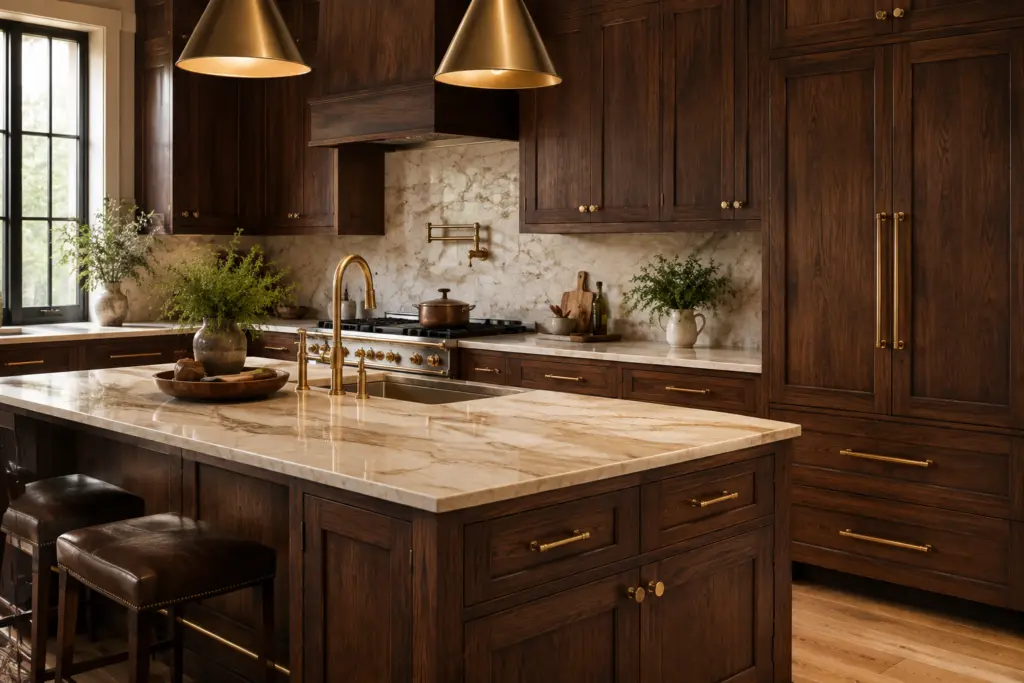
12. Make the Backsplash a Feature
A dark wood kitchen becomes much more interesting when the backsplash is treated as an architectural feature rather than an afterthought.
We can use a large-format marble slab for a luxurious appearance or choose handmade-look tiles for something more relaxed.
Cream subway tile, zellige-inspired tile, natural stone, and softly textured ceramic can all work beautifully with dark cabinetry.
For a dramatic kitchen, carrying the same stone from the countertop vertically up the wall can create a seamless, high-end appearance.
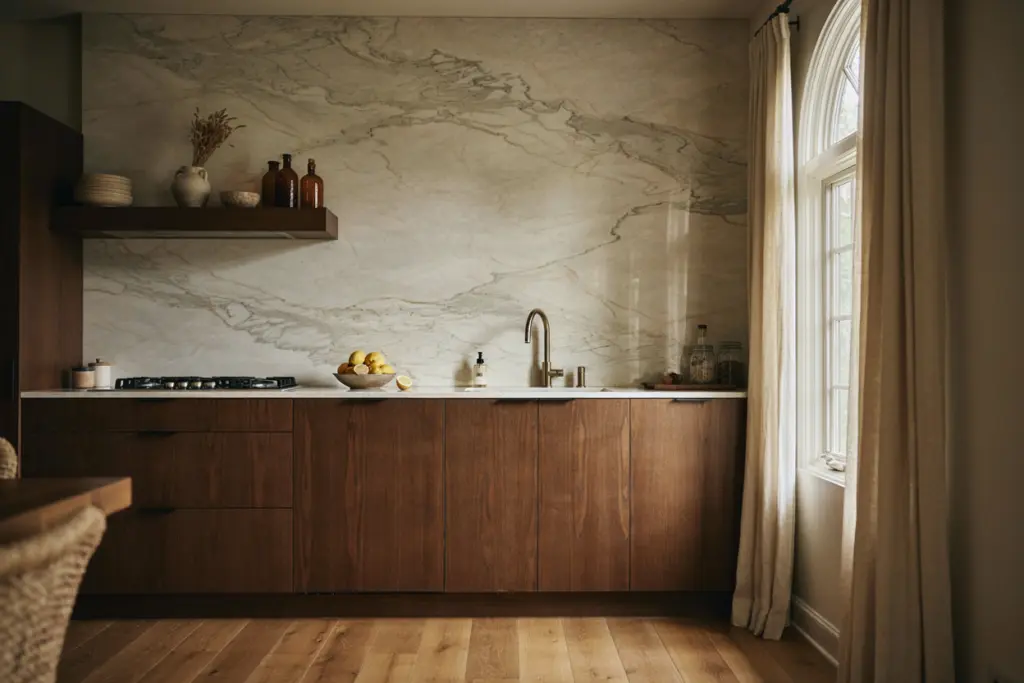
13. Bring in Earthy Greenery
Plants are one of the simplest ways to make a dark kitchen feel fresh and alive.
Greenery works especially well with brown wood because both colors naturally occur together outdoors.
We can add herbs near a window, a large potted plant in an empty corner, or small branches in a ceramic vase on the island.
Olive branches, eucalyptus, herbs, and leafy plants can complement the earthy character of the cabinetry without introducing another strong color.
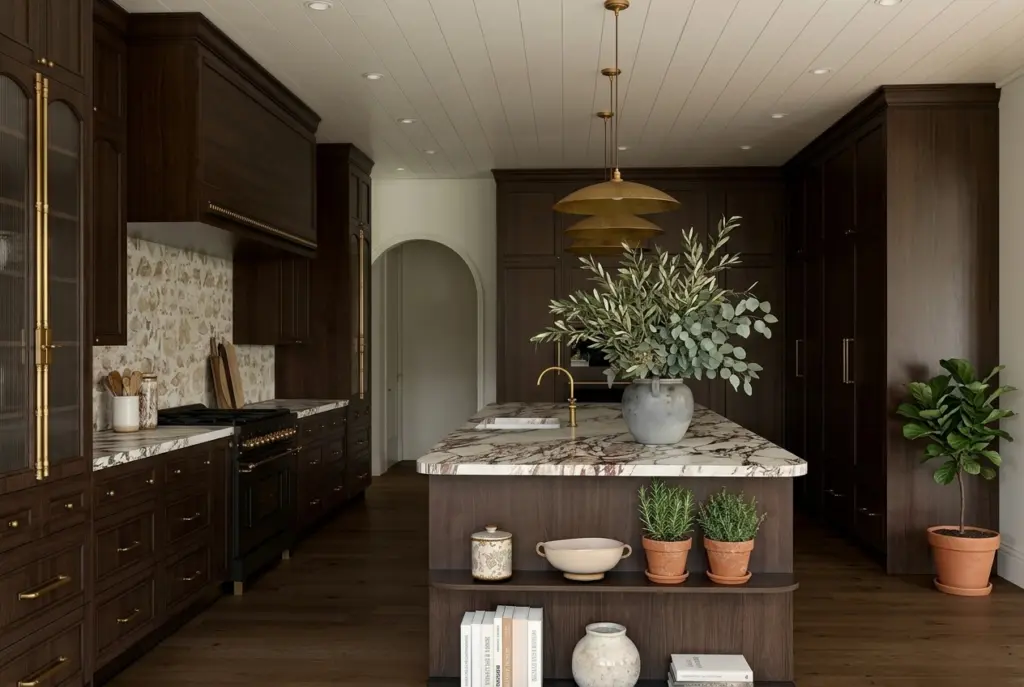
14. Use Warm Wood Floors to Create Continuity
Dark cabinetry can look disconnected if the flooring has an unrelated color.
Instead, we can create visual continuity by choosing flooring that shares some of the warmth found in the cabinetry.
Medium-toned oak, warm walnut, natural hardwood, and appropriately toned wood-look flooring can all work.
However, we do not always need the cabinets and flooring to match exactly. A slight difference in tone often creates more depth.
For example, deep walnut cabinets paired with medium natural oak flooring can produce a beautifully layered appearance.
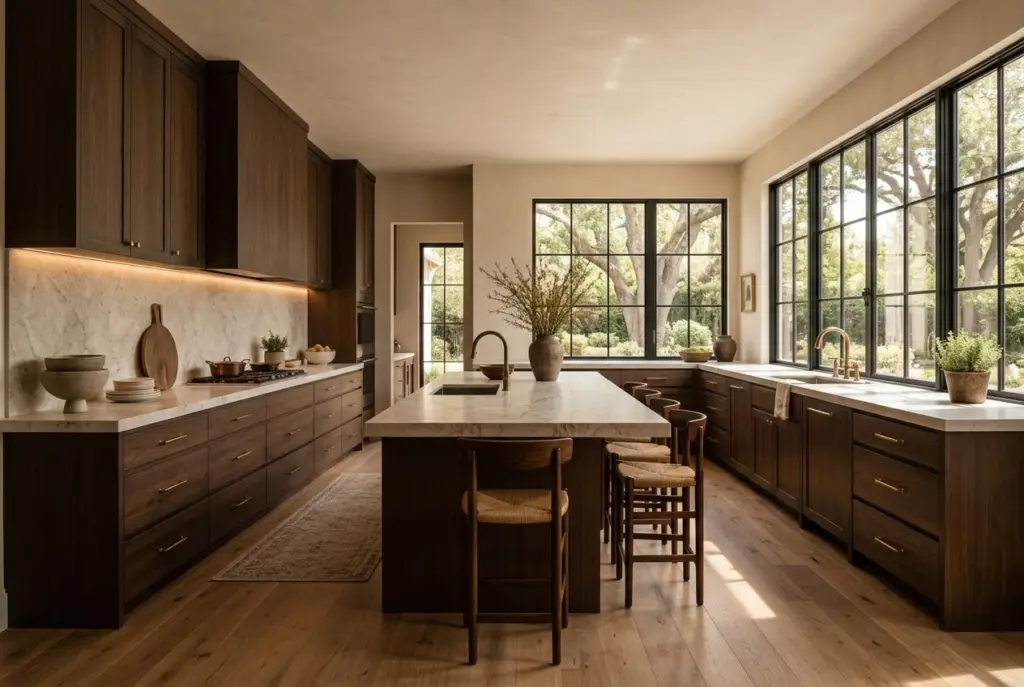
15. Let Natural Light Do the Work
Perhaps the most important element in a successful dark wood kitchen is natural light.
Large windows, glass doors, skylights, and open-plan layouts can dramatically change how dark cabinetry feels.
Rather than blocking windows with heavy treatments, we can keep them relatively open and allow daylight to illuminate the wood.
If the kitchen receives limited natural light, we can compensate with layered artificial lighting:
- Under-cabinet lighting
- Pendant lights
- Recessed ceiling lights
- Interior cabinet lighting
- Wall sconces
- Toe-kick lighting
The goal is not simply to make the kitchen brighter but to create several levels of illumination throughout the room.
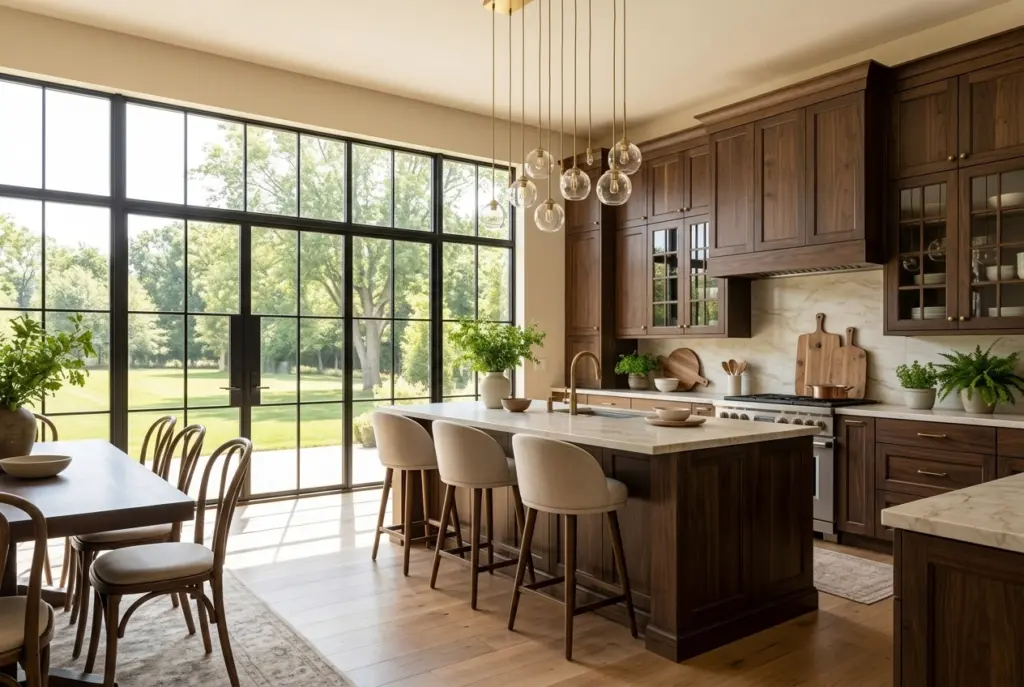
How to Make a Dark Wood Kitchen Feel Less Heavy
The biggest concern with dark cabinetry is usually that the kitchen will feel smaller or gloomy. We can avoid this by balancing the darker elements with lighter materials.
A successful palette might include:
Dark walnut + cream walls + white marble + brushed brass + natural oak
Another option is:
Espresso wood + warm beige + limestone + black accents + greenery
We should also pay attention to visual proportions. If every surface is dark, the eye has fewer places to rest. Introducing lighter countertops, open shelving, pale flooring, or a lighter backsplash creates contrast.
Are Dark Wood Kitchens Still in Style in 2026?
Yes. The current direction in kitchen design increasingly favors warm, natural, earthy interiors over spaces that feel overly cold or sterile.
Rather than completely abandoning dark cabinetry, designers are using it in more sophisticated ways. Dark wood is being combined with organic materials, muted greens, creamy neutrals, natural stone, vintage-inspired hardware, and layered lighting.
The result is less about creating a traditionally “dark kitchen” and more about creating a warm, character-rich kitchen with depth.
This makes dark wood particularly attractive for homeowners who want a kitchen that feels timeless rather than dependent on a single short-lived trend.
Dark Wood Kitchen Color Combinations to Try
When planning the color palette, we can consider these combinations:
| Dark Wood | Complementary Color | Overall Feel |
|---|---|---|
| Walnut | Cream | Warm & elegant |
| Dark Oak | Olive Green | Earthy & natural |
| Espresso | Beige | Sophisticated & cozy |
| Smoked Oak | Soft White | Modern & balanced |
| Walnut | Black | Dramatic & contemporary |
| Dark Brown | Terracotta | Warm & Mediterranean |
| Dark Wood | Brass | Luxurious & timeless |
The best combination depends on the amount of natural light, room size, flooring, and architectural style.
How to Style a Dark Wood Kitchen
The finishing touches can make a major difference.
We can introduce wooden cutting boards, handmade ceramics, linen textiles, woven baskets, vintage-inspired accessories, and greenery to make the kitchen feel collected rather than overly coordinated.
For countertops, a few carefully selected objects are usually enough. A ceramic bowl filled with lemons, a wooden serving board, or a simple vase can add warmth without clutter.
If the kitchen already contains strong wood grain, we should avoid introducing too many additional wood tones. Instead, repeat one or two complementary materials throughout the space.
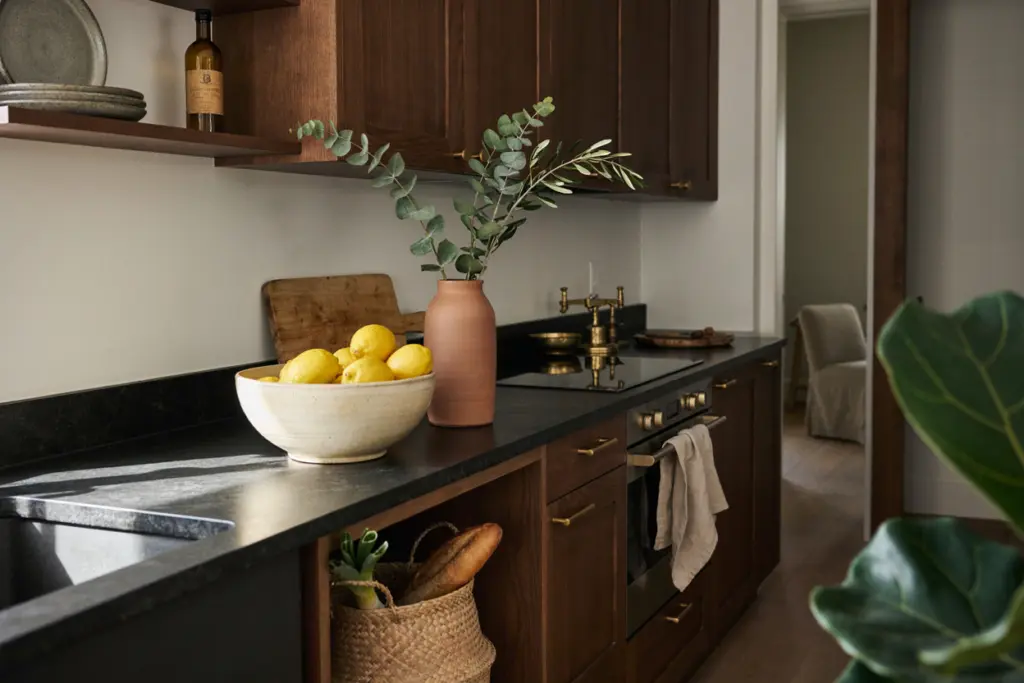
A dark wood kitchen does not have to feel heavy. With the right combination of light surfaces, natural textures, warm lighting, and carefully selected accents, deep wood cabinetry can create one of the most inviting and sophisticated spaces in the home.
The most successful designs balance contrast and continuity. We can pair walnut with cream, dark oak with olive green, or rich espresso cabinetry with natural stone and brass. We can also use a dark wood island as a focal point instead of covering the entire kitchen in dark cabinetry.
Ultimately, the goal is to create a kitchen with warmth, depth, texture, and personality. By combining dark wood with lighter materials and organic details, we can achieve a space that feels luxurious enough to impress while remaining comfortable enough for everyday life.