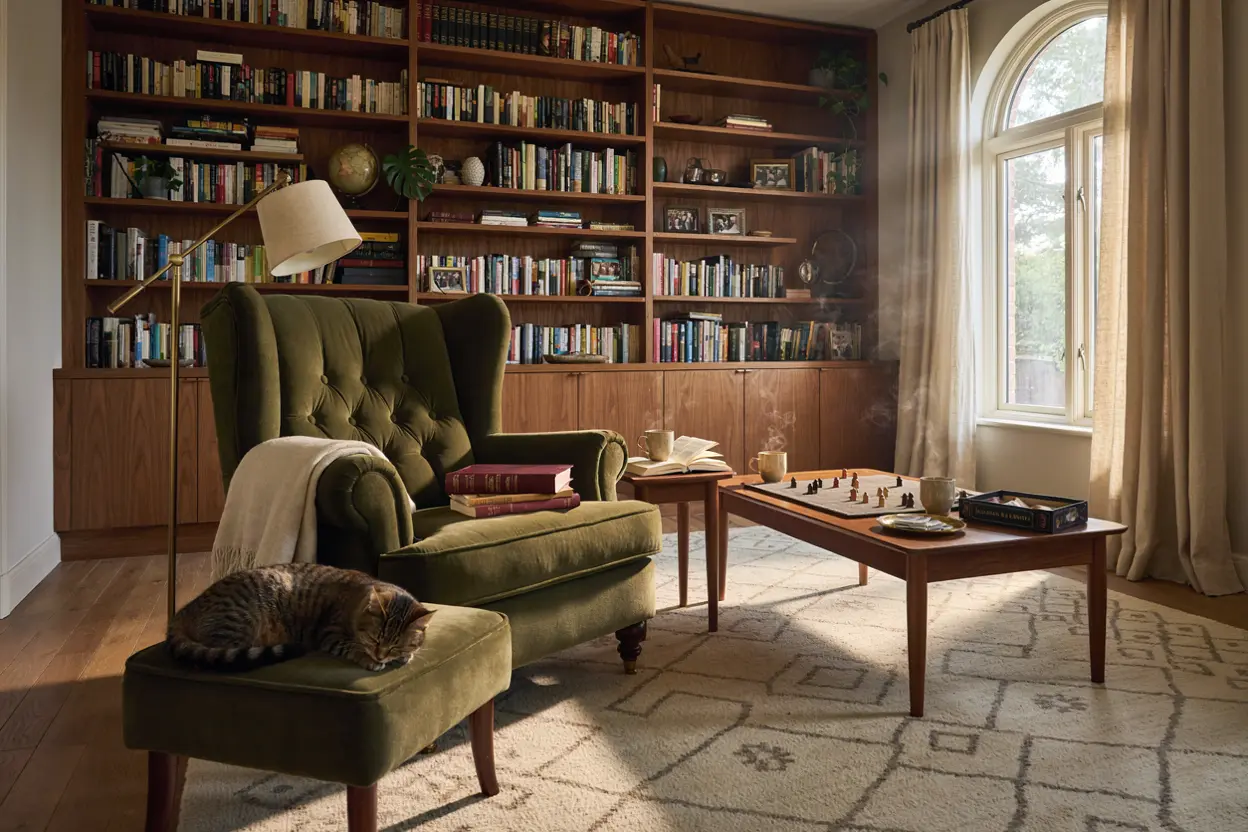
For years, the den seemed like one of those old-fashioned rooms that belonged in another era. Today, however, den ideas are having a serious comeback. Homeowners are rediscovering the value of having a smaller, more personal room designed around relaxation, conversation, hobbies, reading, games, or simply getting away from the noise of everyday life.
The change makes sense. Modern homes often have large open-plan living areas, but bigger doesn’t always mean better. An open living room may be beautiful, yet it can be difficult to create a truly intimate atmosphere when the kitchen, dining area, television, and household activity are all competing for attention.
A den solves that problem.
Instead of trying to make one room do everything, a den gives the household a dedicated space with a clear purpose. It can be a reading room in the morning, a board-game space after dinner, a homework area in the afternoon, and a quiet conversation room when guests arrive.
This renewed interest is also reflected in current design coverage. Recent design reporting describes dens as increasingly multifunctional spaces centered on comfort, practical storage, flexible seating, games, books, and family connection rather than simply serving as television rooms.
Table of Contents
Screen-Free Design Is Changing the Den
One of the most interesting directions for today’s den is the move away from making a television the unquestioned focal point.
That doesn’t mean televisions are forbidden. Far from it. The idea is simply to create another room where technology doesn’t automatically control the layout.
Instead of placing every chair directly toward a screen, consider arranging two sofas opposite each other, adding a pair of lounge chairs, or placing a game table in the center.
You can fill the room with activities that encourage people to stay longer:
- Board games
- Card games
- Puzzles
- Books
- Drawing supplies
- Conversation cards
- Musical instruments
- Craft projects
- Chess or checkers
- Mahjong
- Journaling
- Family photo albums
This approach fits a broader 2026 interest in creating homes that support real-world interaction and flexible, socially enriching spaces. Architectural Digest has also highlighted the growing importance of dedicated spaces that encourage children and teens to interact away from conventional screens.
The result is a room that feels less like an entertainment station and more like a human-centered retreat.
20 Cozy Den Ideas to Try at Home
If you’re looking for inspiration, these den ideas cover everything from tiny corners to dramatic libraries. You don’t need to copy one design exactly. Instead, borrow the elements that fit your home, budget, and lifestyle.
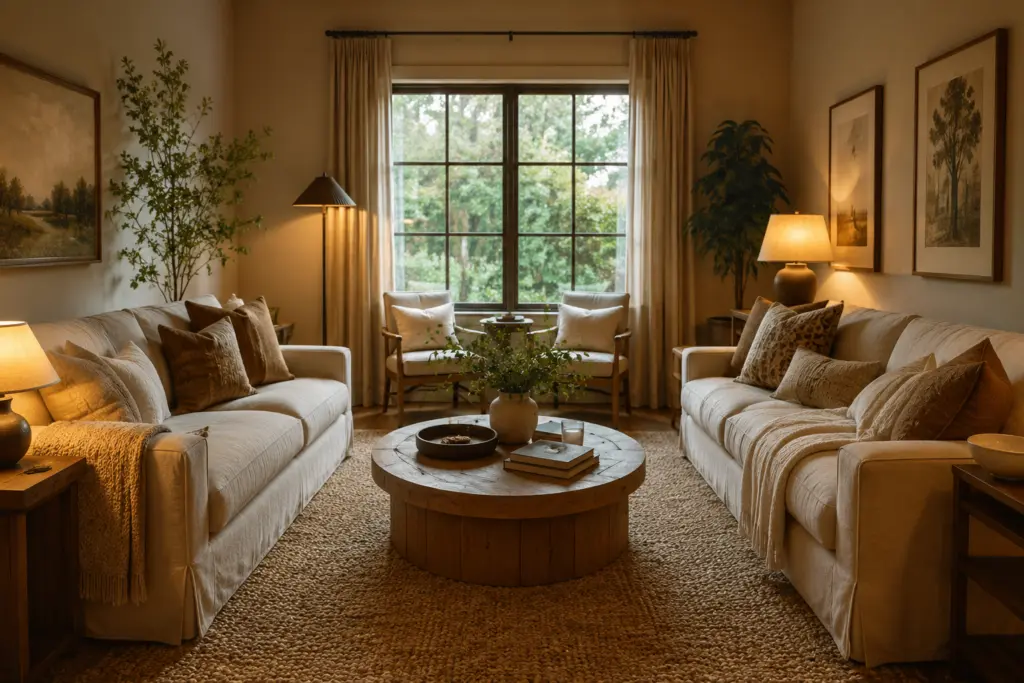
1. Create a Deeply Comfortable Conversation Den
Start with the simplest possible concept: a room designed for talking.
Place a sofa opposite two comfortable armchairs, leaving enough space between them for a small coffee table. Add a large rug underneath the seating arrangement to visually connect everything.
Avoid pushing every piece of furniture against the walls. A slightly more intimate arrangement makes the room feel intentionally designed for conversation.
Add a floor lamp beside one chair and a table lamp near the sofa. Warm, layered lighting will make the room particularly inviting in the evening.
This is one of the easiest den ideas to recreate because it doesn’t require built-ins, expensive furniture, or major remodeling.
2. Design a Cozy Reading Den
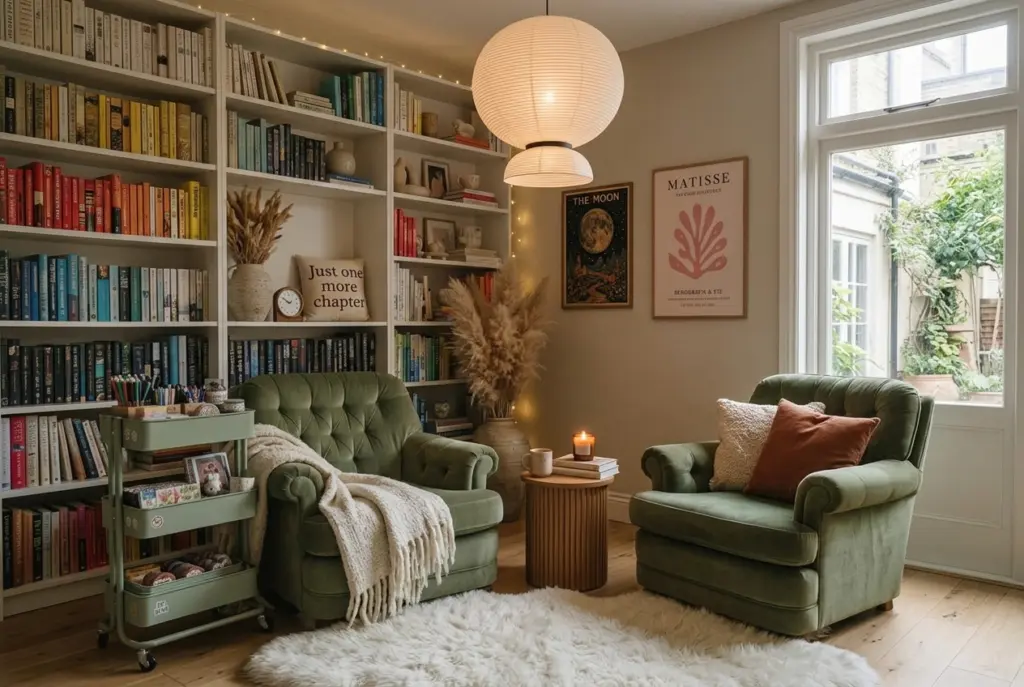
A reading den can be wonderfully simple.
Choose one oversized chair, a footstool, a small side table, and a good reading lamp. Then use bookshelves to create a backdrop.
If space allows, add a second chair so the room can become a quiet conversation area.
Natural wood shelving works beautifully with warm neutrals, while painted shelving can introduce more personality. Add a soft rug, a throw blanket, and a few cushions.
The key is resisting the urge to overdecorate. Books should be the star.
For more Cozy Reading ideas see our 20+ Boho Reading Nook Designs for Book Lovers
3. Add a Classic Game Table
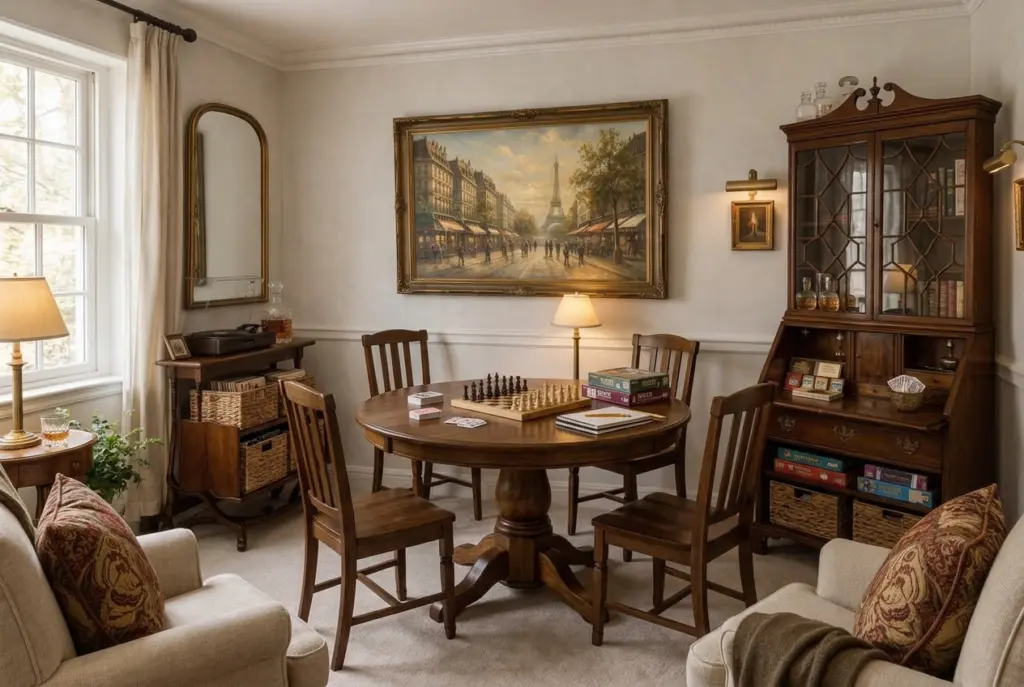
A game table can instantly give a den a purpose.
Choose a sturdy round or rectangular table and surround it with comfortable chairs. Store board games, cards, puzzles, and accessories nearby.
For a sophisticated look, avoid brightly colored plastic storage bins. Instead, use a vintage cabinet, woven baskets, or closed shelving.
A game table also works beautifully as a homework or craft surface when the family isn’t playing.
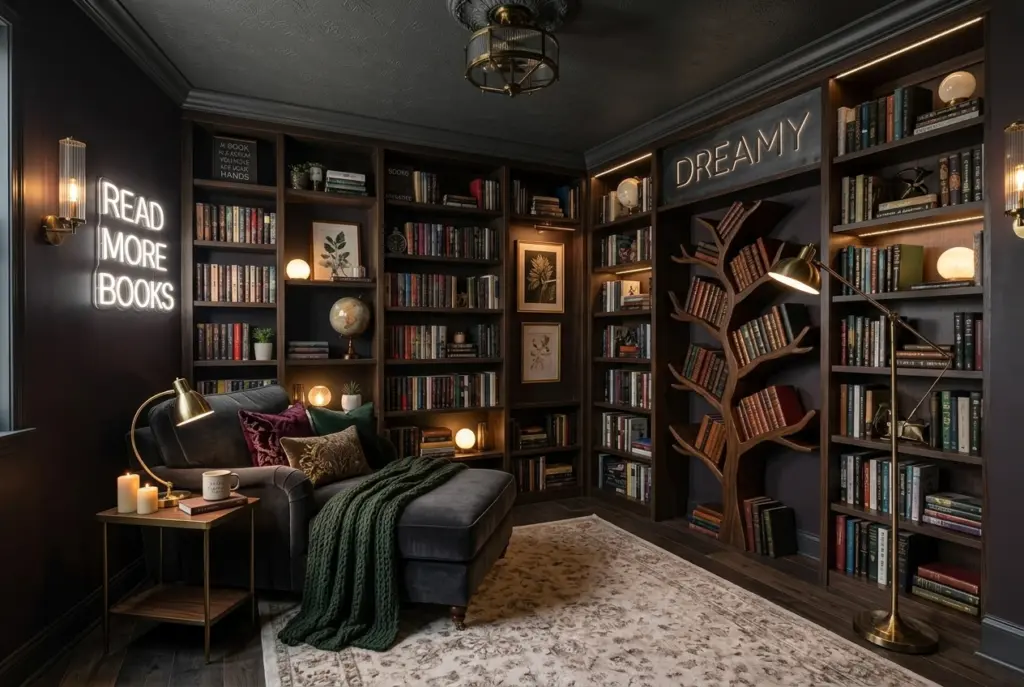
4. Build a Moody Library Den
If you love dramatic interiors, a dark library-style den could be your perfect match.
Think deep green, navy, chocolate brown, charcoal, or burgundy walls paired with warm wood furniture.
Dark colors can make a small room feel surprisingly intimate rather than gloomy when they’re balanced with good lighting and warm materials.
Architectural Digest has long featured moody dens using rich blues, greens, purples, layered textures, and sophisticated furnishings to create cocoon-like retreats.
Add brass or aged-metal lighting, framed artwork, shelves filled with books, and a comfortable reading chair.
5. Create a Small Den Nook
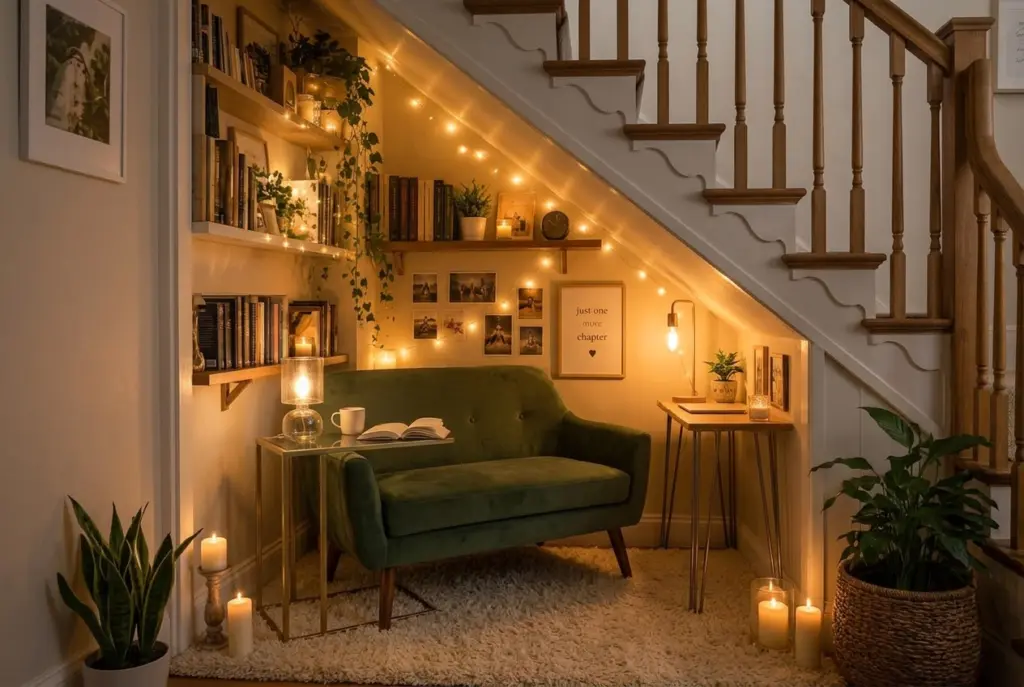
You don’t need an entire room.
An unused corner underneath a staircase, a wide hallway, a landing, or a small spare room can become a mini den.
Use a compact loveseat or two chairs, a narrow table, and wall-mounted shelves.
For very small spaces, choose furniture with exposed legs and avoid oversized pieces. Keeping the floor visually open makes the area feel larger.
6. Use a Fireplace as the Focal Point
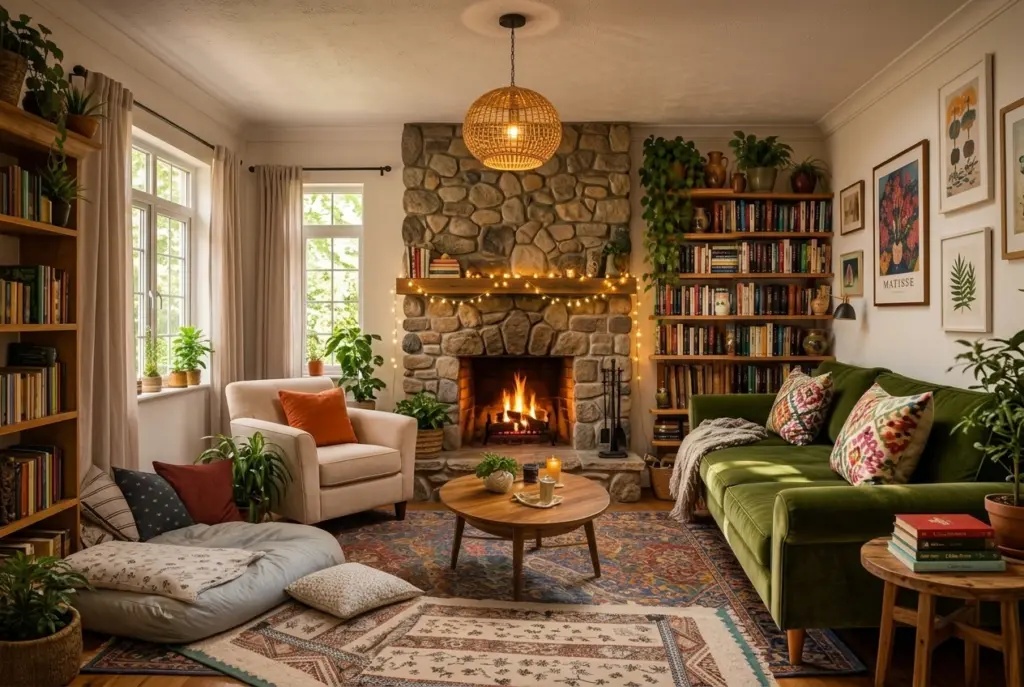
If your den has a fireplace, let it become the room’s anchor.
Arrange chairs and sofas around it rather than automatically orienting the room toward a television.
A fireplace creates an obvious gathering point and works particularly well with layered textiles, natural stone, wood, and soft lighting.
If you don’t have a working fireplace, an electric model or decorative mantel can provide a similar visual effect.
7. Add Built-In Shelving
Built-in shelves are one of the most useful upgrades for a den.
They provide space for books, baskets, games, photographs, art, and decorative objects while keeping the room organized.
Use a combination of open shelving and closed cabinets. Open shelves display personality; closed storage hides the everyday mess.
This balance is especially useful for family rooms because the space can look polished even when it is being used heavily.
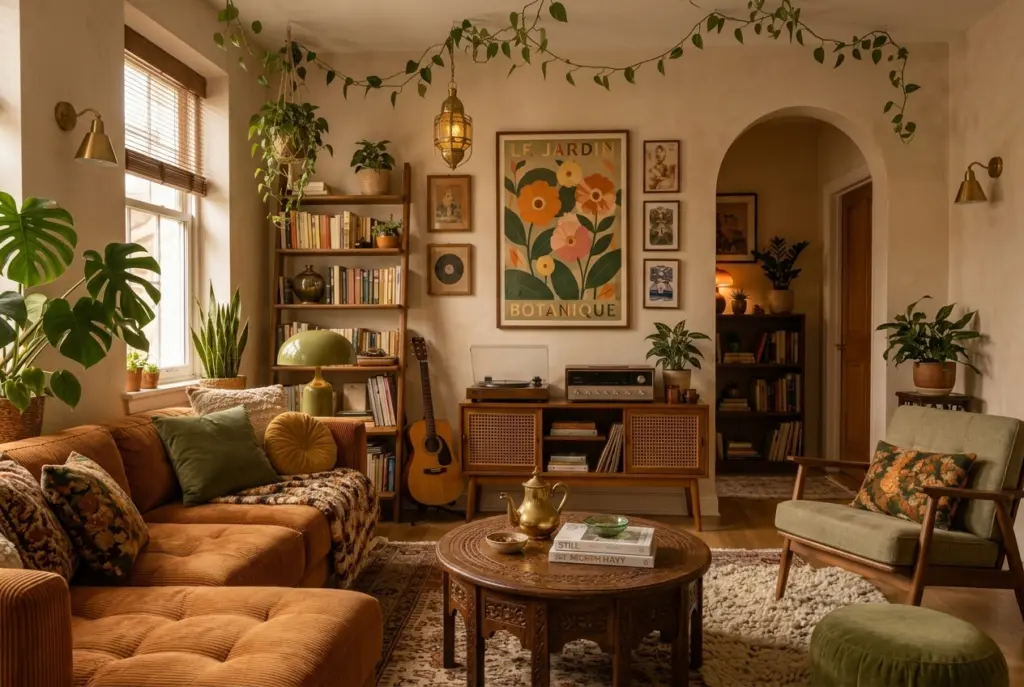
8. Try a Warm Organic Den
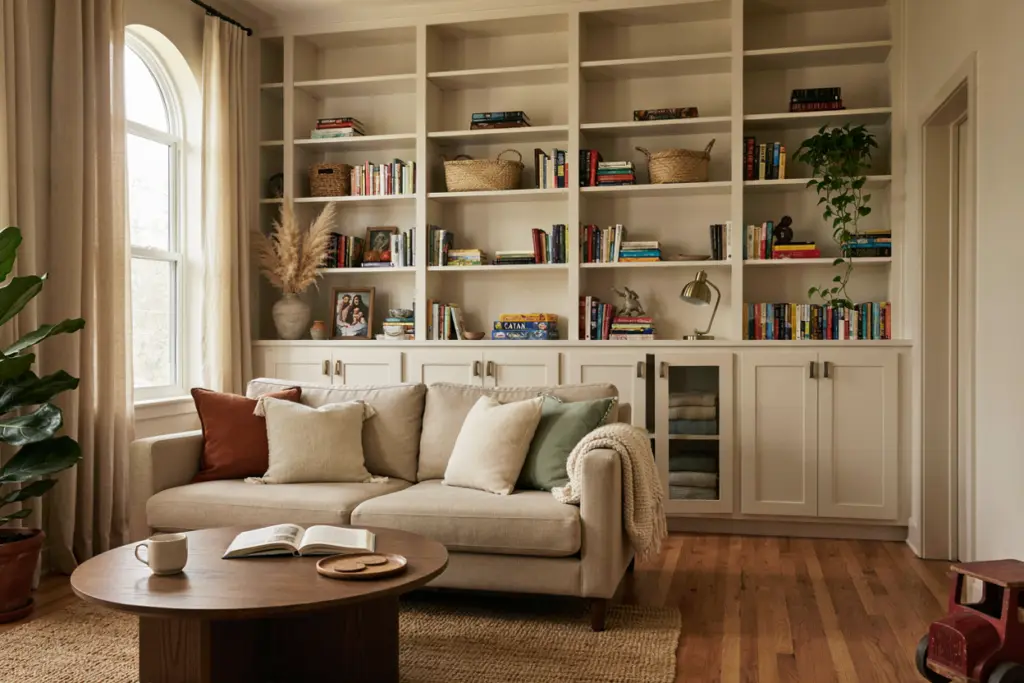
Organic interiors remain a strong direction for cozy spaces.
Use natural wood, linen, wool, rattan, stone, ceramic, and woven materials.
A warm beige wall paired with oak furniture and a textured rug can create a peaceful atmosphere without looking bland.
Recent 2026 design coverage also points toward warmer, more natural interiors and away from overly sterile gray schemes.
Add greenery for another layer of natural texture.
9. Design a Family Craft Den
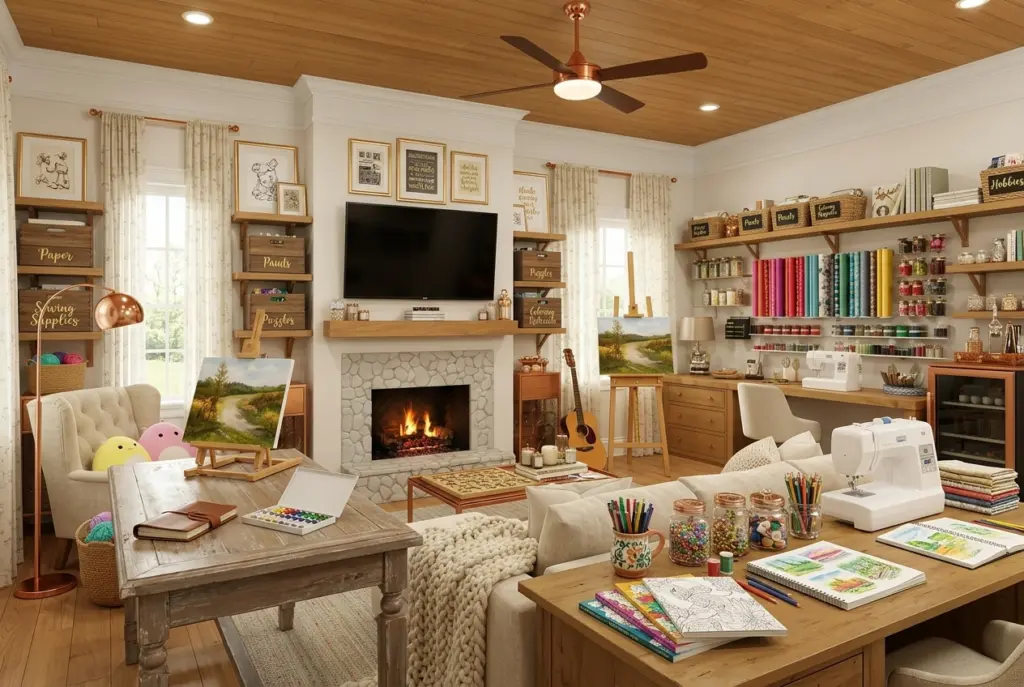
If your family enjoys creative activities, dedicate the den to making things.
A large worktable can serve as the centerpiece. Add storage for paper, paints, sewing supplies, puzzles, coloring materials, or other hobbies.
Use labeled baskets and drawers to keep supplies organized.
The room doesn’t have to look like a classroom. Beautiful cabinets, attractive containers, framed artwork, and comfortable chairs can make it feel like a stylish creative studio.
10. Create a Teen-Friendly Hangout
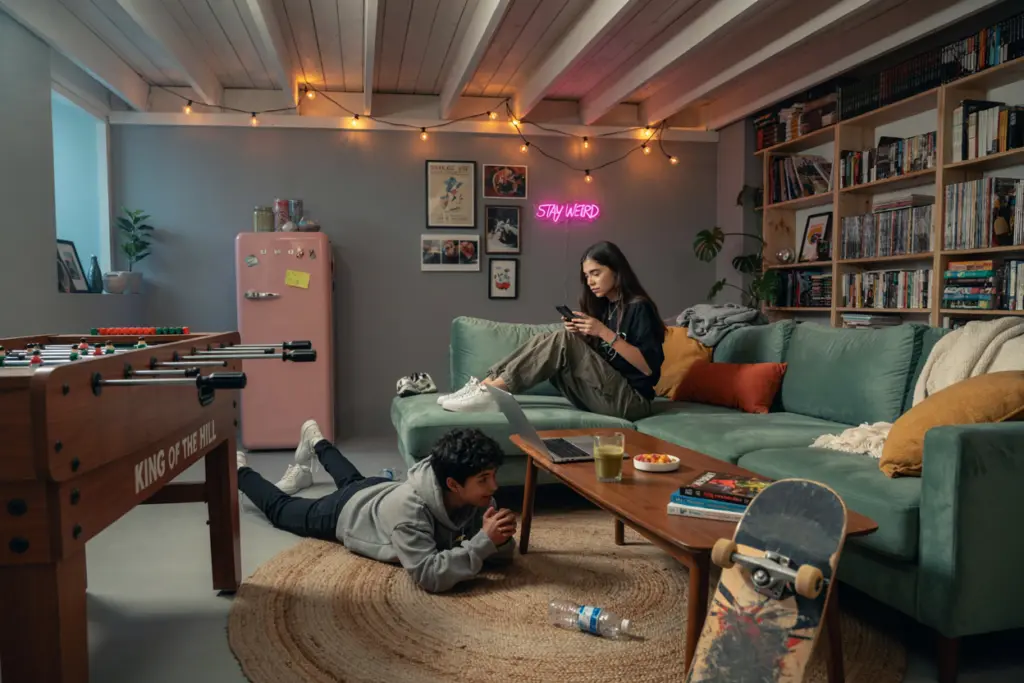
A den can give teenagers a space that feels like their own without completely separating them from the household.
Use comfortable lounge seating, a small refrigerator if practical, a game table, bookshelves, and flexible lighting.
Allow the teen to participate in choosing colors and artwork. A room designed around their personality will feel much more inviting than a generic “teen room.”
Current design thinking increasingly favors personality-driven spaces rather than overly standardized children’s interiors.
11. Add a Cozy Window Seat
If your den has a large window, take advantage of it.
A built-in window seat can become a reading nook, nap spot, or quiet place to watch the garden.
Add a thick cushion, a few pillows, and storage drawers underneath.
This idea is especially useful in small dens because the seating becomes part of the architecture rather than consuming additional floor space.
12. Make It a Vintage-Inspired Den
Don’t be afraid to mix old and new.
A vintage cabinet beside a modern sofa can create more personality than a matching furniture set.
Try an antique-style mirror, an old wooden table, traditional artwork, or a patterned rug.
The goal isn’t to make the room look like a museum. Instead, combine pieces from different periods so the space feels collected over time.
13. Create a Music and Listening Room
A den can become a beautiful screen-free music room.
Place a comfortable sofa or two lounge chairs around a record player, piano, guitar, or another instrument.
Display records, sheet music, or instruments as part of the decor.
This concept works particularly well when the room has good acoustics and plenty of soft furnishings.
14. Use a Sectional for Family Lounging
For large families, comfort should come first.
A deep sectional can provide plenty of seating without filling the room with individual chairs.
Choose performance fabrics or washable covers if children regularly use the space.
Add a large ottoman rather than a sharp-edged coffee table. It can function as a footrest, extra seat, or casual surface when paired with a tray.
15. Add a Hidden Storage Wall
Family rooms can become clutter magnets.
Solve that problem with floor-to-ceiling cabinets.
Keep everyday items in closed storage while leaving a few shelves open for books, art, plants, and decorative objects.
This is one of the most practical den ideas for families because it keeps the room visually calm without forcing you to remove everything after every activity.
16. Design a Cottage-Style Den
For a softer aesthetic, try cottage-inspired decorating.
Think floral patterns, painted furniture, soft curtains, woven baskets, vintage books, natural wood, and comfortable slipcovered seating.
Country Living’s recent 2026 coverage of cozy rustic living rooms highlights reclaimed wood, stone, layered textures, and relaxed furnishings as effective ways to create warmth and character.
Don’t make every item match. A little imperfection gives cottage spaces their charm.
17. Create a Flexible Homework Den
A den can double as a homework zone without looking like an office.
Place a long desk against one wall with comfortable chairs. Add shelves for books and school supplies.
When homework is finished, the desk can become a craft station, writing area, or hobby workspace.
Use attractive storage so school supplies don’t dominate the room.
18. Use Rich Wallpaper
Wallpaper can completely change a den.
Because dens are often smaller than major living spaces, they’re excellent places to experiment with pattern.
Try botanical prints, subtle stripes, classic checks, scenic wallpaper, or textured designs.
If you’re nervous about covering every wall, use wallpaper behind built-in shelves or on one feature wall.
19. Create a Conversation-First Layout
Instead of asking, “Where should the television go?” ask, “Where should people sit?”
Arrange furniture around the center of the room.
Two sofas facing each other can create a natural conversation zone. Alternatively, place four chairs around a round table.
This makes the room useful for family discussions, coffee with friends, reading, or games.
20. Build a Multi-Use Family Den
Finally, combine several purposes.
A successful multifunctional den might include:
- A comfortable sectional
- A reading chair
- Built-in storage
- A game table
- A small desk
- Bookshelves
- Soft lighting
- A flexible ottoman
The trick is giving each activity its own zone.
Even in a small room, a rug, furniture placement, and lighting can visually separate one function from another.
How to Make a Den Feel Cozy Without Making It Cluttered
Good den ideas aren’t simply about adding more pillows, blankets, and decorations.
Cozy design comes from balance.
Choose Comfortable Furniture
Comfort should be the first filter when buying furniture.
Before choosing a beautiful chair, sit in it. Before buying a sofa, consider how people actually lounge.
Deep seating works well for relaxed dens, while firmer chairs may be better for reading or conversation.
If children use the room, prioritize durability and easy maintenance.
Layer Lighting
Never depend entirely on one ceiling fixture.
Instead, combine:
- Ceiling lighting
- Table lamps
- Floor lamps
- Wall sconces
- Reading lights
- Accent lighting
Layered lighting creates different moods throughout the day.
Designers continue to emphasize warm, layered lighting as one of the easiest ways to make living spaces feel more welcoming.
Mix Textures
Texture prevents neutral rooms from feeling flat.
Combine linen with wool, wood with stone, cotton with velvet, and woven baskets with smooth ceramics.
You don’t need dozens of decorative objects. A few contrasting textures can make a much bigger impact.
Choose a Useful Color Palette
For a calm den, consider:
| Style | Suggested Colors |
| Warm organic | Cream, beige, tan, olive |
| Moody library | Forest green, navy, brown |
| Cottage | Cream, sage, dusty blue |
| Modern | Warm white, taupe, charcoal |
| Vintage | Terracotta, camel, muted green |
| Coastal | Sand, soft blue, natural wood |
Warm neutrals are particularly versatile because they work with both modern and traditional furniture.
Add Personality Through Decor
A den should feel like someone’s home.
Display family photographs, favorite books, collected objects, artwork, travel souvenirs, ceramics, or handmade pieces.
The best rooms don’t look as though everything was purchased from one catalog.
Den Ideas for Small Rooms
Small rooms can actually make excellent dens because intimacy is part of their appeal.
Start by choosing furniture that fits the scale of the room. A compact loveseat may be better than a huge sectional.
Use vertical space whenever possible. Tall bookshelves draw the eye upward while providing useful storage.
Mirrors can also reflect light and make a compact room feel more spacious.
Another useful strategy is choosing furniture that performs multiple jobs. An ottoman can serve as seating, a footrest, and a coffee table. A window seat can provide storage and seating. A console can become a compact desk.
Don’t try to squeeze every possible activity into a tiny den. Pick two or three primary uses and design around them.
For example:
Reading + conversation: two chairs, bookshelves, lamp, small table.
Games + family lounging: loveseat, game table, storage cabinet.
Homework + reading: desk, bookcase, comfortable reading chair.
The most successful small-space den ideas are intentional rather than overloaded.
Den Ideas for Families With Kids
A family den has to survive real life.
That means choosing fabrics and materials that can handle spills, toys, pets, homework, and enthusiastic game nights.
Washable or performance upholstery is worth considering. So are rugs that are easy to maintain.
Storage is equally important.
Use baskets for blankets and toys, drawers for craft supplies, and closed cabinets for games and electronics.
Make storage accessible to children. If they can easily return an item to its home, you’re much more likely to keep the room organized.
You can also create small zones:
- Reading corner
- Game area
- Craft table
- Quiet seating
- Storage wall
This lets multiple family members use the den at the same time without the room feeling chaotic.
FAQs
What is a den used for?
A den is a smaller, informal room designed for relaxation or specific household activities. It can function as a reading room, library, family lounge, game room, hobby space, conversation room, homework area, or combination of several uses.
How can I make a den cozy?
Start with comfortable seating, warm layered lighting, a properly sized rug, and several contrasting textures. Natural wood, soft fabrics, books, artwork, and personal objects can add warmth without requiring a major renovation.
What colors work best in a den?
Warm neutrals, earthy greens, deep blues, muted browns, cream, taupe, and soft terracotta can all work beautifully. Dark colors are especially effective for creating a cozy library-style atmosphere, while lighter colors can make a small den feel more open.
How do I decorate a small den?
Choose appropriately scaled furniture and prioritize vertical storage. A loveseat, two compact chairs, wall-mounted shelving, a small round table, and layered lighting can create a functional den without overwhelming the room.
The best den ideas aren’t about creating a picture-perfect room that nobody is allowed to touch. They’re about designing a space people genuinely want to use.
A great den can become the room where your family plays cards after dinner, where someone curls up with a book, where teenagers hang out with friends, where you enjoy coffee on a quiet morning, or where everyone gathers for a long conversation.
And that’s exactly why dens are becoming interesting again in 2026.