A wainscoting bathroom design can completely change the character of a space without requiring an overwhelming renovation. By adding architectural detail to the lower portion of the walls, wainscoting brings texture, proportion, and timeless charm to everything from a tiny powder room to a spacious primary bathroom.
For 2027, we are seeing particularly beautiful combinations of classic wall paneling, soft colors, botanical wallpaper, marble, warm wood, brass fixtures, beadboard, and contemporary tile. The most successful rooms balance decorative wall treatments with practical finishes, allowing the wainscoting to feel intentional rather than simply added as an afterthought.
Whether we prefer traditional English interiors, modern farmhouse bathrooms, coastal spaces, cottage style, or dramatic contemporary rooms, these 21 wainscoting bathroom ideas offer plenty of inspiration for creating a bathroom that feels polished and personal.
Table of Contents
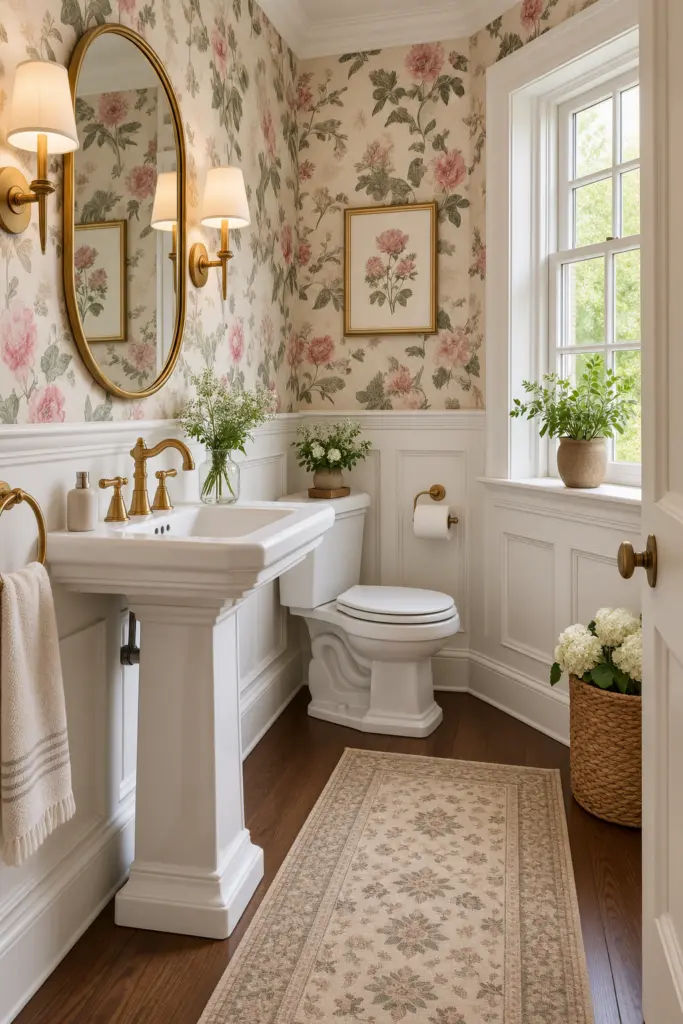
Classic White Wainscoting With Floral Wallpaper
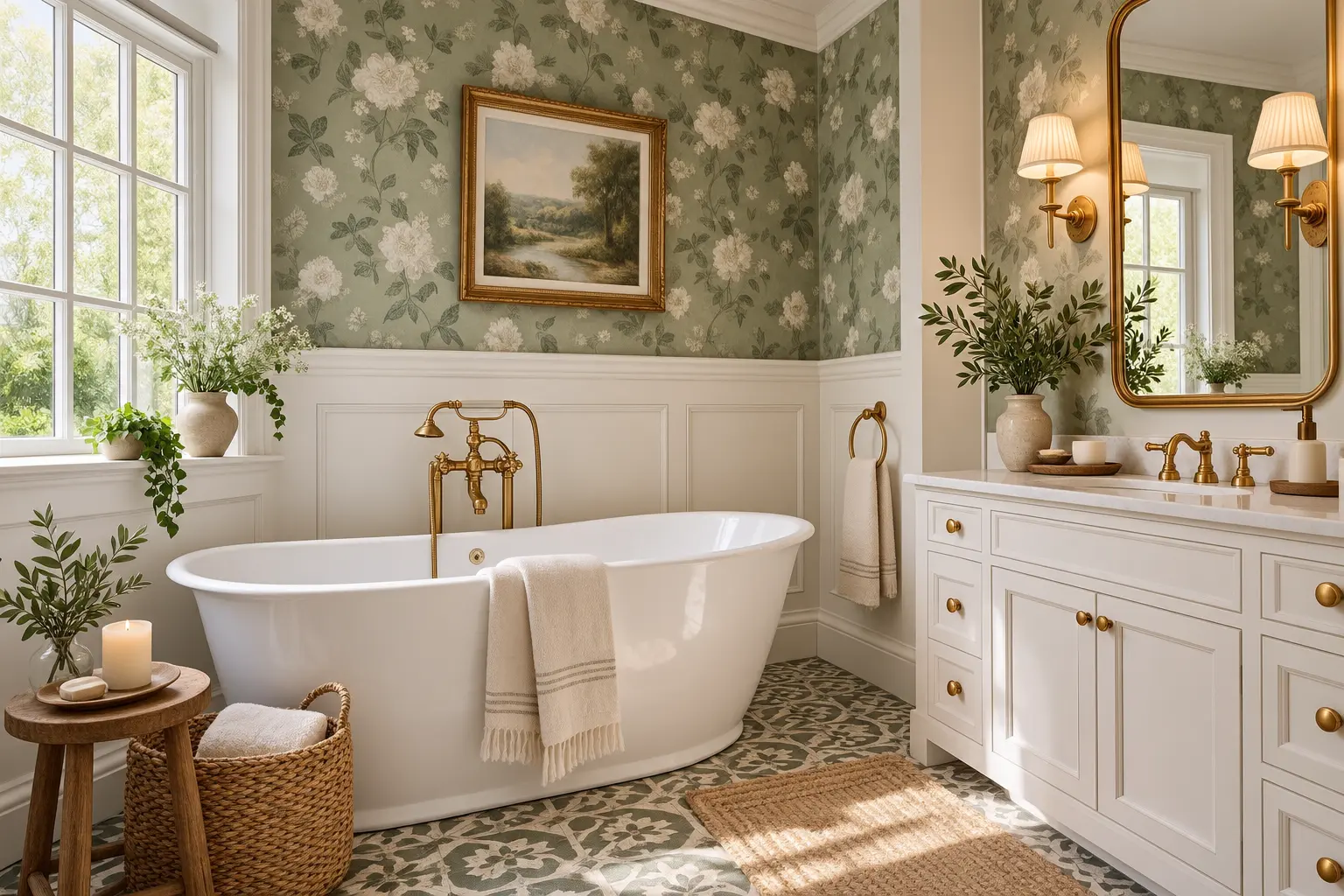
One of the most timeless approaches is pairing white wainscoting with floral wallpaper. The crisp lower panels create a structured foundation while the botanical pattern adds softness above.
This combination works especially well in a powder room because the wallpaper can become the main decorative feature without making the entire space feel visually crowded. We can repeat white through the sink, trim, mirror frame, and fixtures to create a cohesive look.
For a sophisticated 2027 update, consider delicate blue, sage, dusty rose, or muted beige floral patterns rather than overly bright colors.
Soft Blue Wainscoting Bathroom
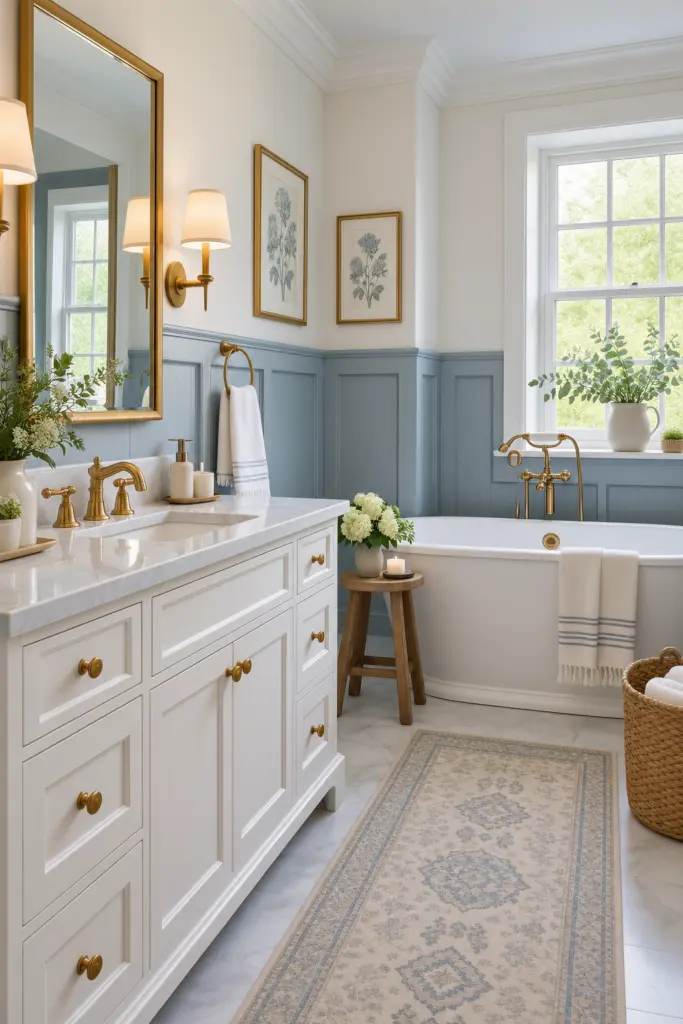
Soft blue is an excellent choice when we want a bathroom to feel calm, fresh, and welcoming. Blue-painted paneling can be combined with white walls, marble countertops, or patterned wallpaper.
A blue wainscoting bathroom works beautifully with brushed brass hardware because the warm metallic finish creates contrast against the cool wall color.
For smaller bathrooms, lighter blue shades can help maintain an airy appearance. Deeper navy or dusty blue can create a more dramatic effect in larger rooms.
Elegant White Paneling With Marble
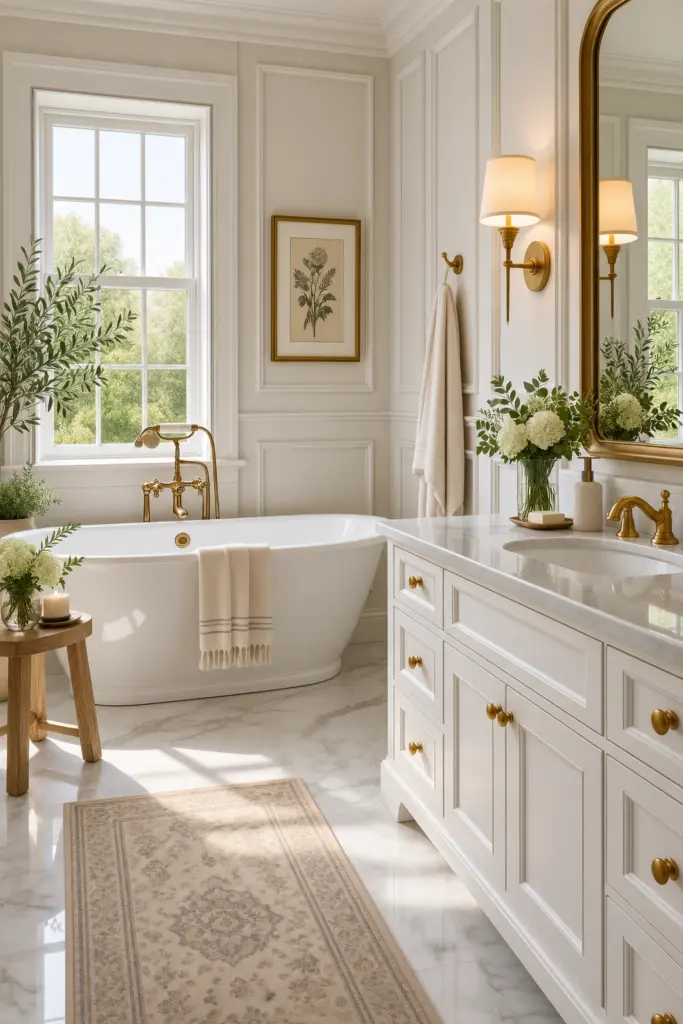
For a luxurious bathroom, we can combine traditional wall molding with marble surfaces. White or pale-gray wainscoting creates an architectural backdrop while marble countertops and flooring introduce natural variation.
The key is to keep the paneling relatively simple. When marble already provides strong veining, uncomplicated rectangular panels allow the stone to remain visually important.
Gold or aged-brass fixtures can then provide a warm finishing touch.
Green Wainscoting With Botanical Details
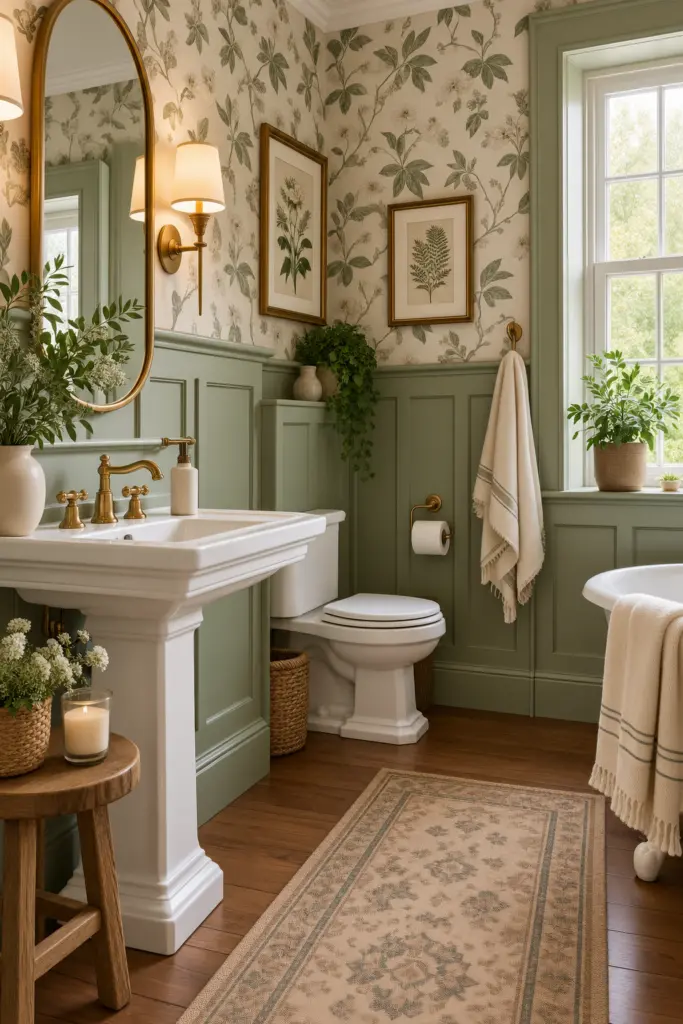
Green is particularly effective for creating a nature-inspired bathroom. A muted sage, olive, or moss green on the lower walls can be paired with floral wallpaper, botanical artwork, natural wood, or greenery.
The result feels collected and comfortable rather than overly coordinated.
We can make this look more contemporary by using clean rectangular panels and simple brass fixtures. For a traditional effect, ornate molding and a vintage-style mirror work beautifully with the same palette.
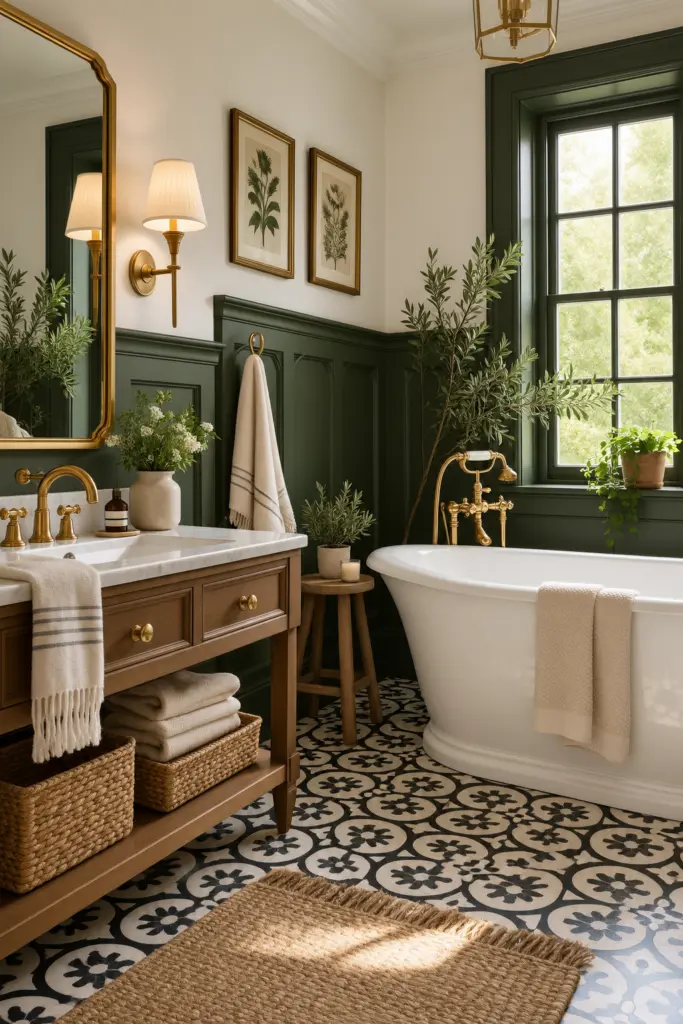
Deep Green Wainscoting for a Moody Bathroom
For those who prefer dramatic interiors, deep green wainscoting creates instant depth. Rather than keeping the paneling white, painting the entire lower section in a rich green makes the architecture itself part of the design.
White bathtubs and sinks stand out beautifully against darker walls. Brass fixtures can add warmth, while patterned black-and-white flooring can introduce another layer of contrast.
This approach works particularly well in bathrooms with natural light, where the dark color can feel sophisticated rather than heavy.
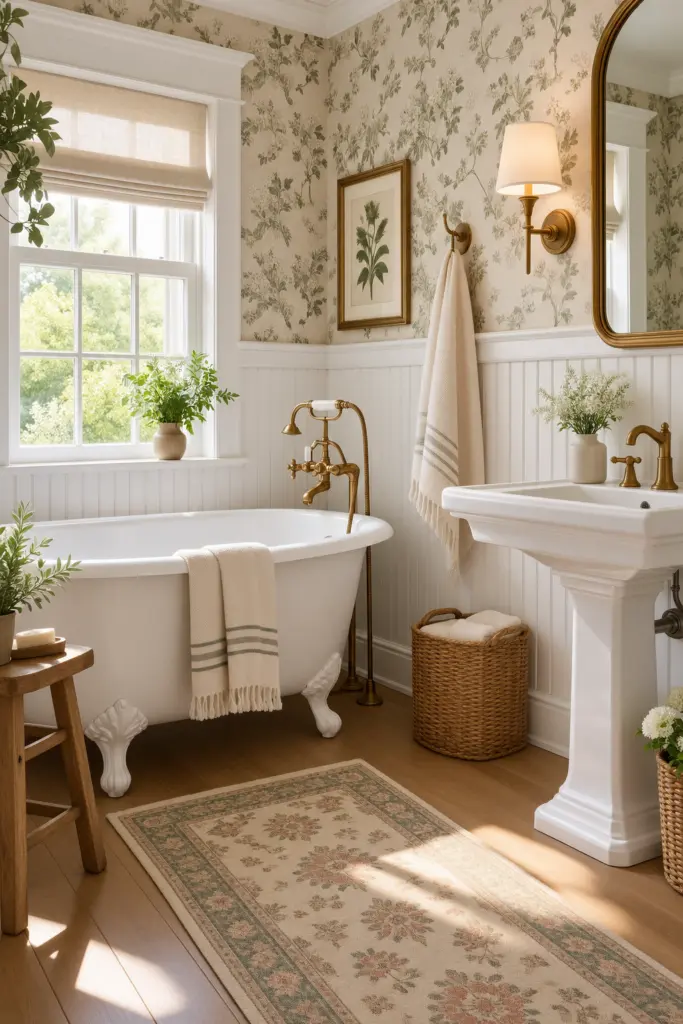
Beadboard Wainscoting for Cottage Charm
Beadboard bathroom wainscoting is one of the easiest ways to create a relaxed cottage atmosphere. Its narrow vertical lines add texture without requiring complicated decorative molding.
White beadboard looks beautiful with:
- Freestanding bathtubs
- Vintage pedestal sinks
- Woven baskets
- Soft floral fabrics
- Natural wood accessories
- Brass or chrome fixtures
For a modern cottage bathroom, we can paint the beadboard in soft sage, pale blue, warm cream, or muted gray.
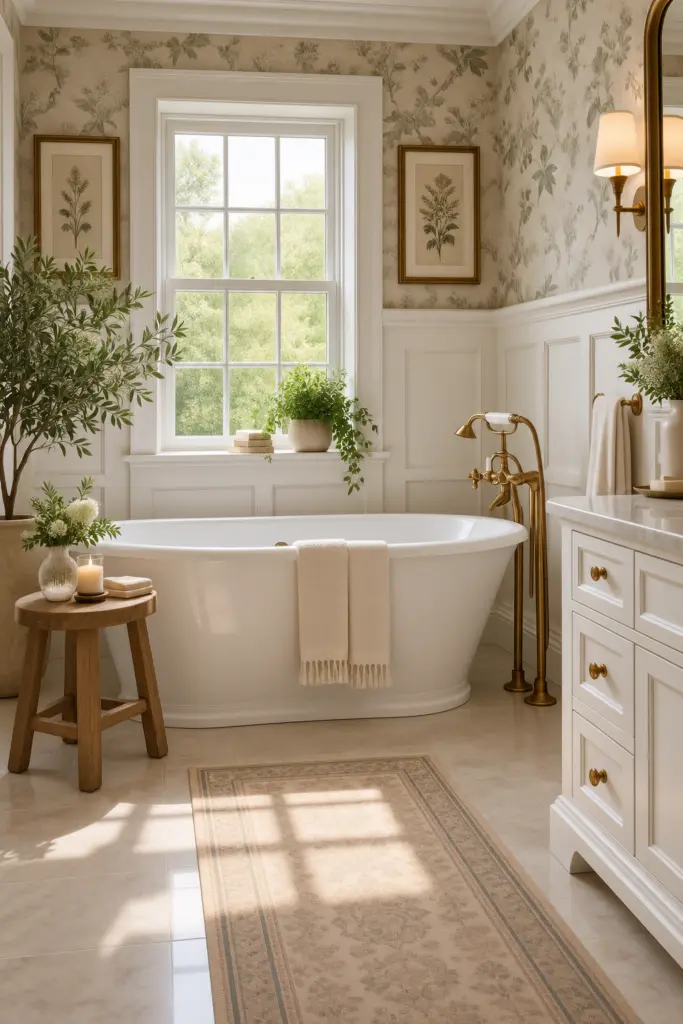
Wainscoting Around a Freestanding Bathtub
A freestanding tub becomes even more striking when positioned against a carefully designed wainscoting wall.
We can use traditional raised panels behind the tub, then add a statement wallpaper or decorative tile above the chair rail. This creates a clear visual division and gives the bathtub a framed, almost furniture-like appearance.
A wooden stool, folded towels, greenery, and a beautiful bath tray can complete the relaxed spa atmosphere.
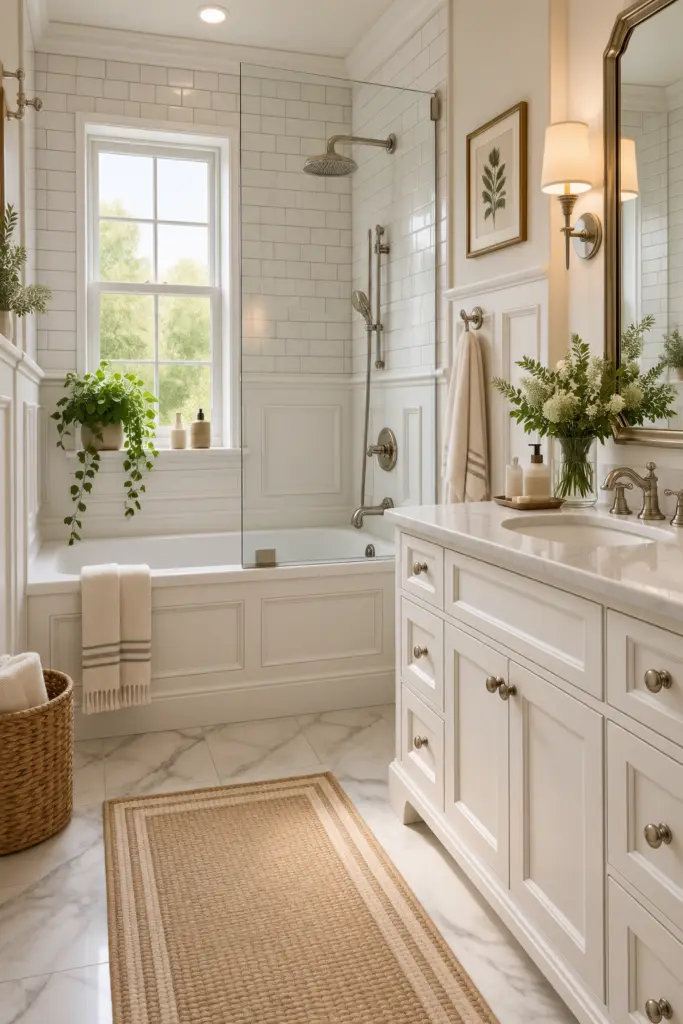
White Wainscoting With Subway Tile
Combining wainscoting and subway tile is an excellent choice when we want traditional character with practical bathroom surfaces.
The lower section can feature painted panels while the upper section uses white subway tile. This works especially well around bathtubs and shower areas where moisture-resistant surfaces are important.
For added character, we can choose a contrasting grout color or use a slightly irregular handmade-look tile.
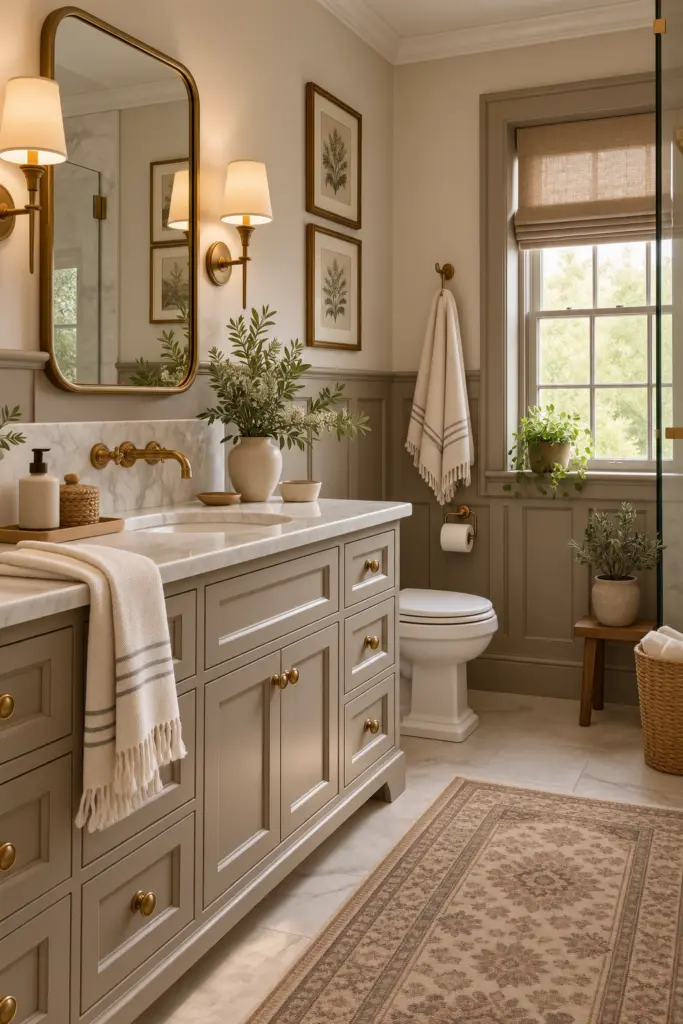
Warm Taupe Wainscoting With Brass
Not every wainscoting bathroom needs to be white. Warm taupe, mushroom, beige, and greige shades can create a softer and more sophisticated atmosphere.
Pairing taupe paneling with brass bathroom fixtures gives the room a refined warmth. A marble vanity top and framed mirror can reinforce the elegant look without making the room feel overly formal.
This neutral palette is also flexible enough to work with different seasonal accessories.
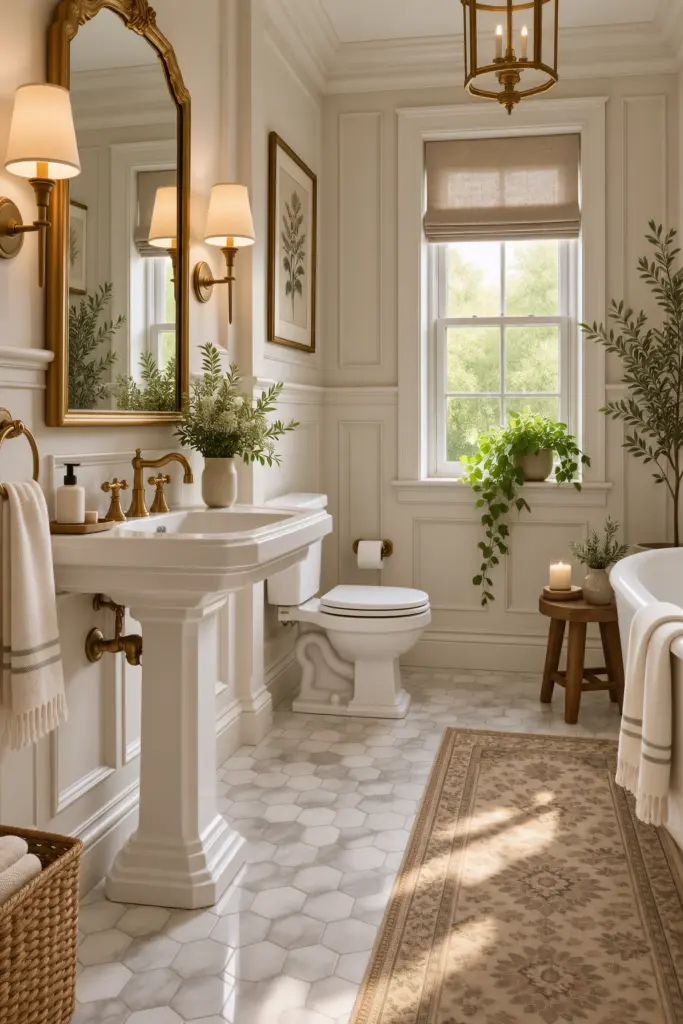
Traditional Picture-Frame Molding
Picture-frame molding is perfect for homeowners who want a more formal appearance. Large rectangular panels can be installed across the lower half of the bathroom wall, creating strong architectural symmetry.
We can paint the molding and wall in the same shade for a subtle effect or use contrasting colors to emphasize the geometry.
This style is particularly beautiful in classic bathrooms with pedestal sinks, traditional faucets, framed mirrors, and decorative lighting.
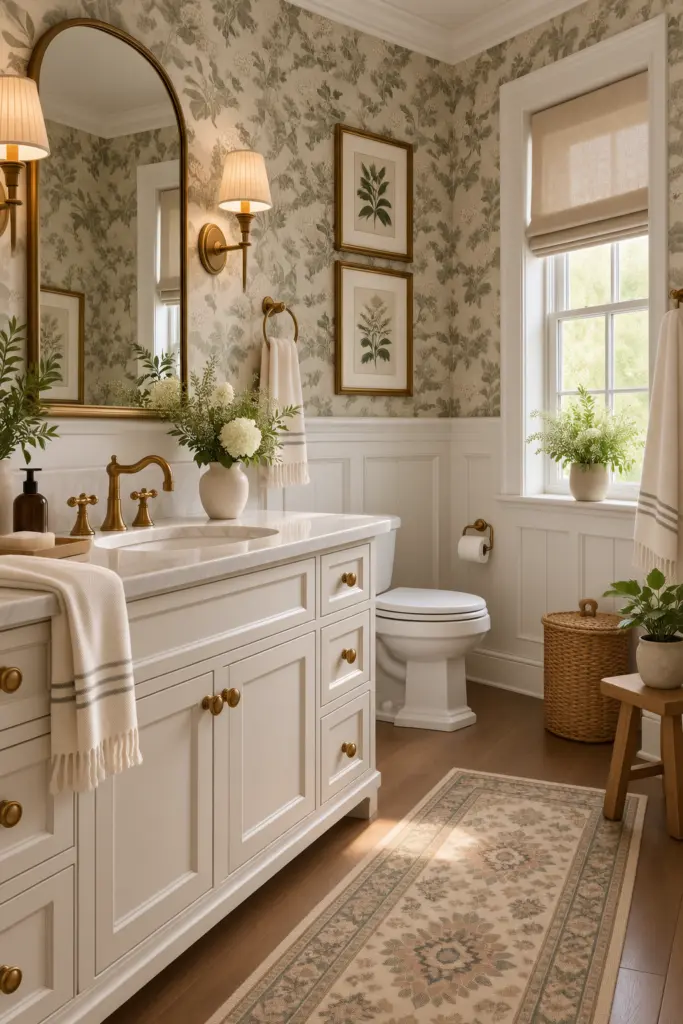
Wainscoting With Patterned Wallpaper
One of the most effective ways to make a wainscoting bathroom feel distinctive is to combine simple paneling with expressive wallpaper.
The paneling acts as a visual break, allowing us to use floral, botanical, toile, geometric, or vintage wallpaper without covering every surface with pattern.
For a balanced composition, we should coordinate at least one color from the wallpaper with the wainscoting. This creates a deliberate connection between the two materials.
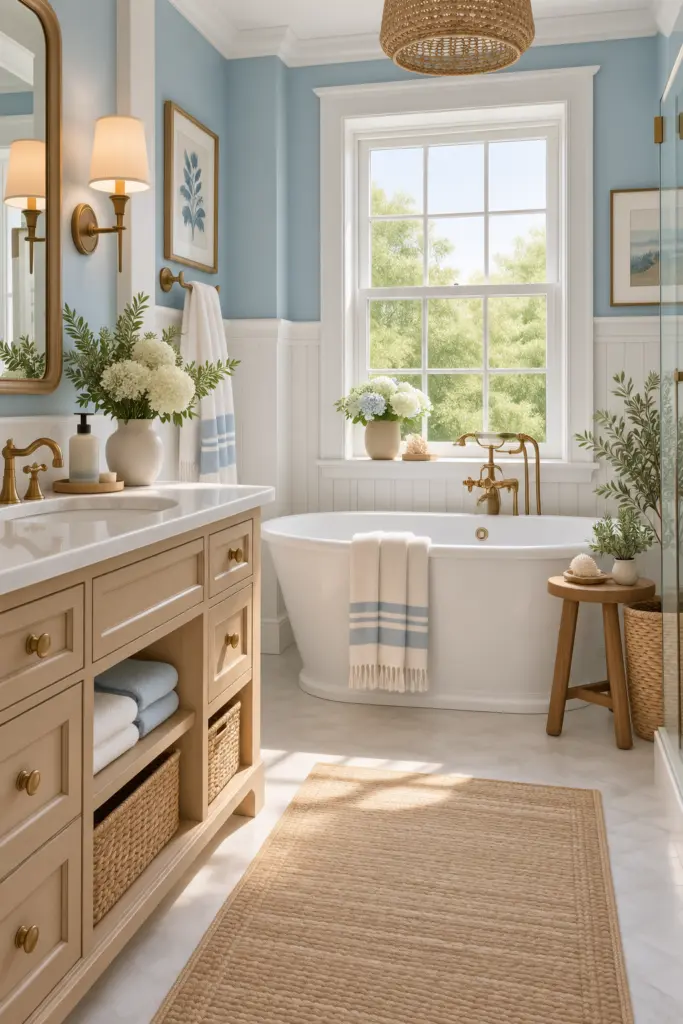
Coastal White and Pale Blue Wainscoting
For a light coastal bathroom, we can combine white paneling with pale blue walls or blue tile.
Natural wood, woven baskets, white towels, and simple greenery can reinforce the relaxed seaside feeling. A freestanding white bathtub can become the focal point without competing with the wall treatment.
The goal is to create a bright room rather than a theme-heavy beach bathroom, so subtle colors usually work better than obvious nautical decorations.
Modern Wainscoting With a Dark Vanity
Traditional wall paneling does not have to look old-fashioned. We can make it feel contemporary by combining clean-lined wainscoting with a modern vanity.
A deep navy, charcoal, forest green, or black vanity creates a strong focal point against lighter walls. Minimal mirrors and streamlined lighting can further modernize the room.
This is an excellent solution when we love classic architectural details but want the overall bathroom to feel current.
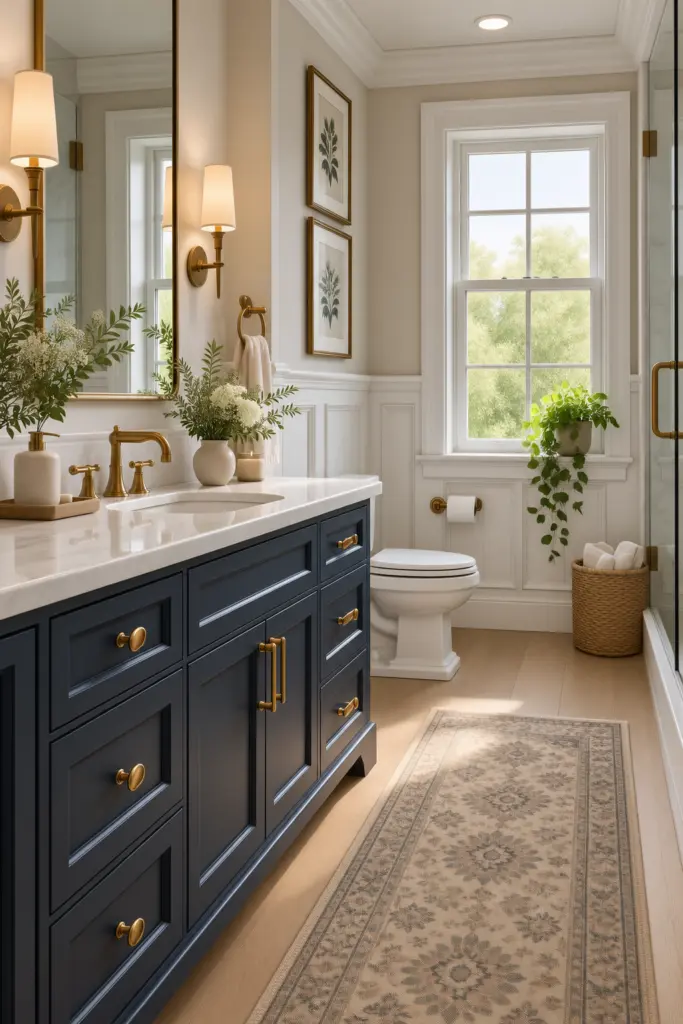
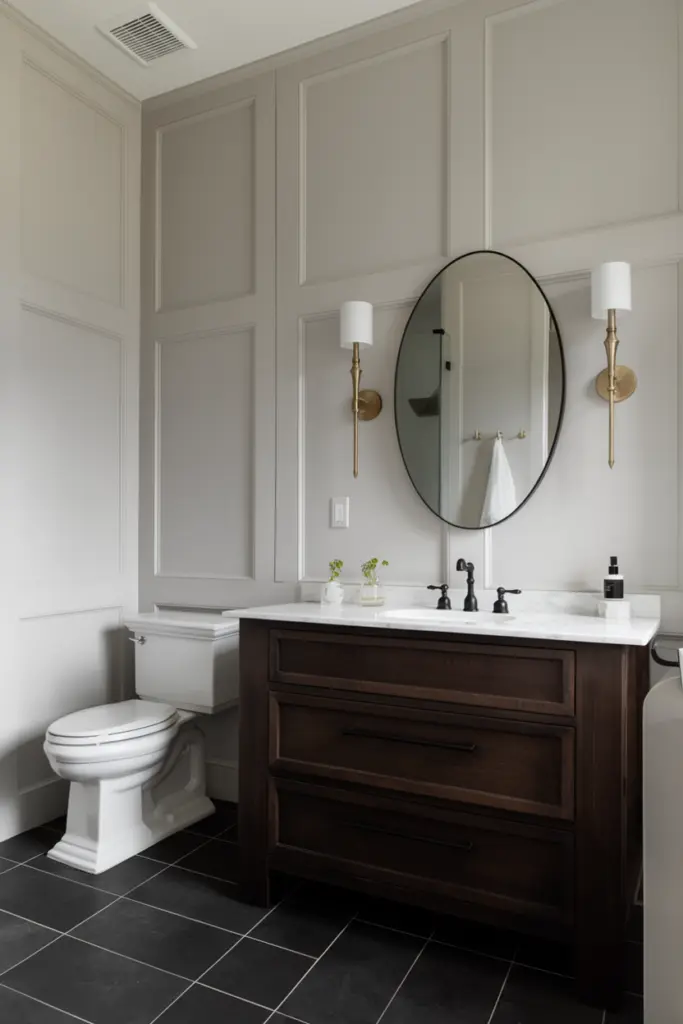
Full-Height Paneling for a Dramatic Look
Although traditional wainscoting usually covers part of the wall, full-height paneling can create an impressive architectural effect.
This approach works particularly well in larger bathrooms with high ceilings. The repeated vertical and rectangular details make the walls feel substantial and custom-designed.
To prevent the room from becoming too busy, we can keep the color monochromatic and introduce contrast through the floor, vanity, hardware, or artwork.
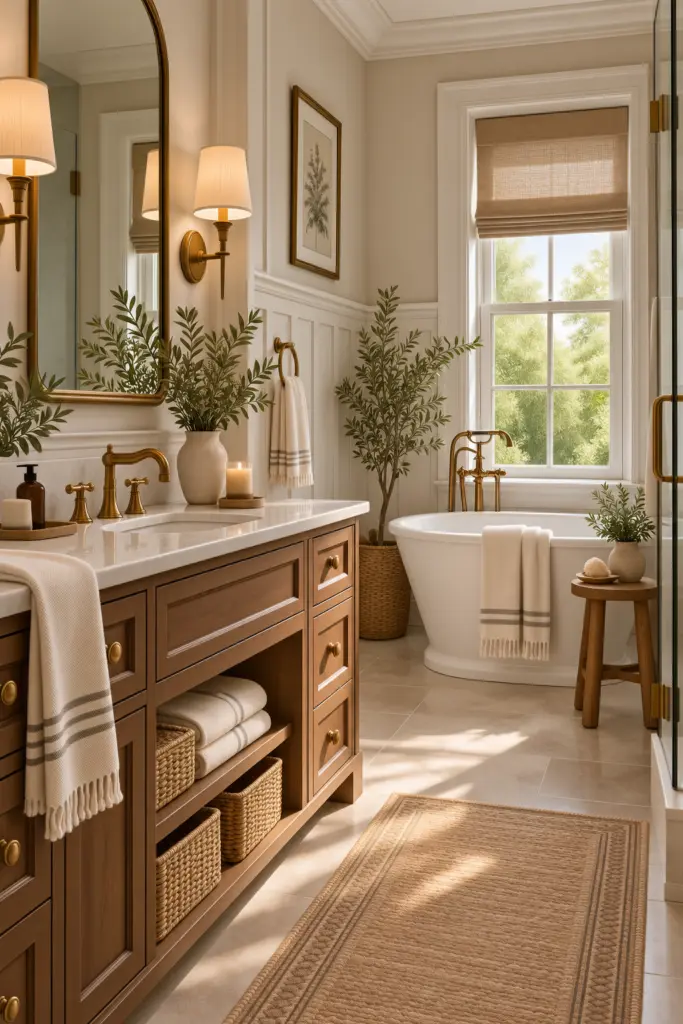
Wainscoting With a Wood Vanity
Wood and painted wall paneling make an especially attractive combination. A walnut, oak, or medium-tone wood vanity introduces natural warmth while the wainscoting provides traditional structure.
We can use white, cream, sage, gray, or muted blue on the walls depending on the desired mood.
Natural wood is particularly effective when paired with stone countertops and brushed brass hardware, creating a warm modern-organic bathroom.
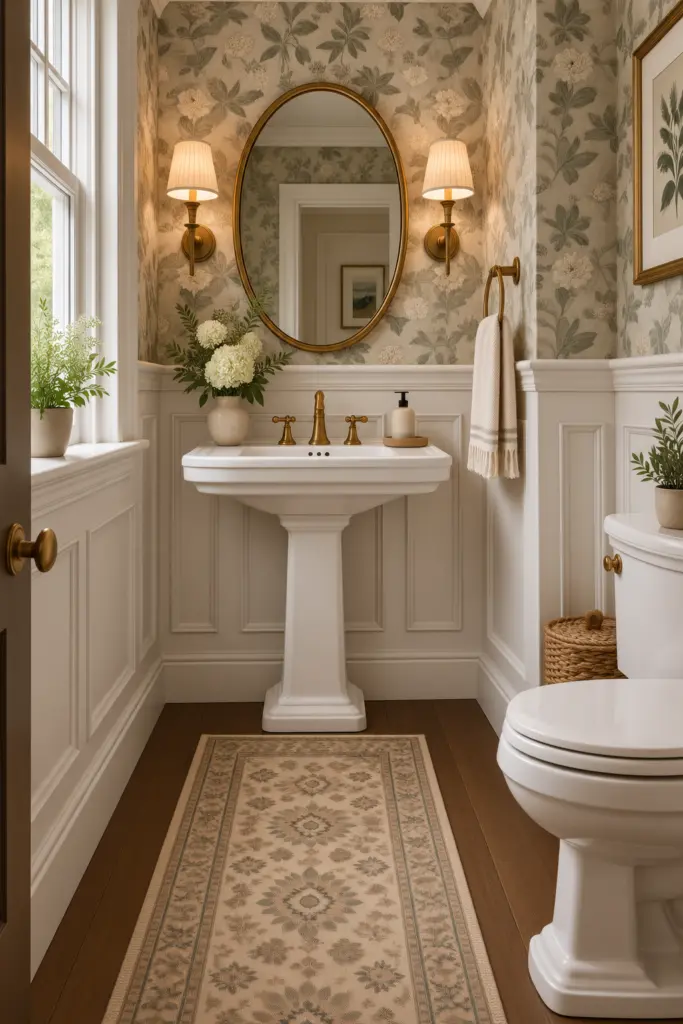
Small Powder Room With Wainscoting
A small wainscoting bathroom can make a strong design statement because the limited square footage allows us to experiment with details.
Instead of trying to make every wall completely plain, we can use white paneling below the chair rail and a decorative wallpaper above it.
A pedestal sink or compact vanity keeps the floor visually open. A framed mirror and attractive wall sconces can then provide the finishing details.
In a small room, using the same paint color on the wainscoting and trim can also create a more seamless appearance.
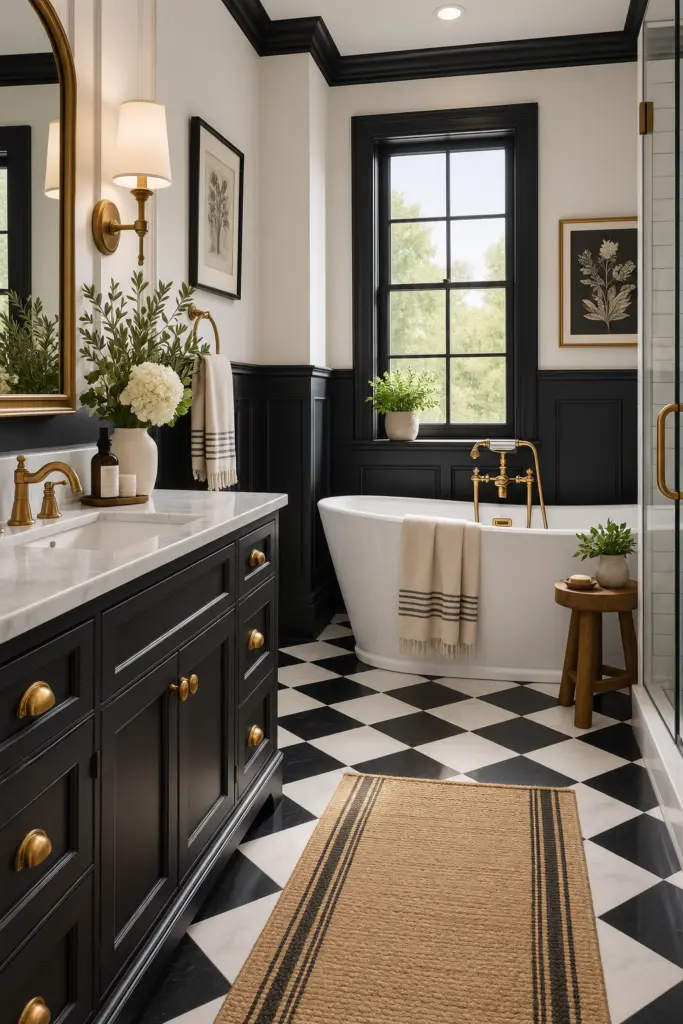
Black-and-White Wainscoting Bathroom
Black and white is a classic combination that can be adapted to almost any decorating style.
White paneling paired with a black floor creates a crisp traditional appearance, while black-painted wainscoting with white walls produces a more dramatic result.
We can soften the contrast with warm wood, brass, beige textiles, or natural woven accessories. This prevents the bathroom from feeling too stark.
Checkerboard, geometric, or small mosaic flooring can further emphasize the timeless character.
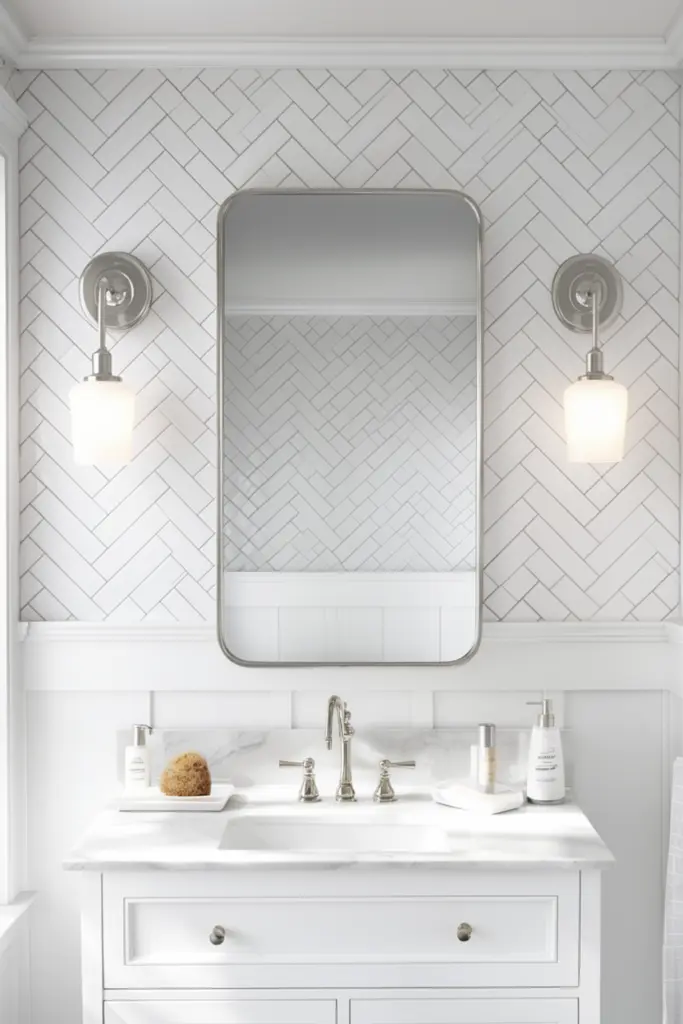
Wainscoting With Herringbone Tile
For a more contemporary interpretation, we can combine traditional wall molding with herringbone tile.
A white or pale-gray herringbone backsplash above the wainscoting adds movement while the lower panels keep the room grounded. This works beautifully around a bathtub or behind a vanity.
Because both the paneling and herringbone tile create visual patterns, keeping them within a restrained color palette helps maintain balance.
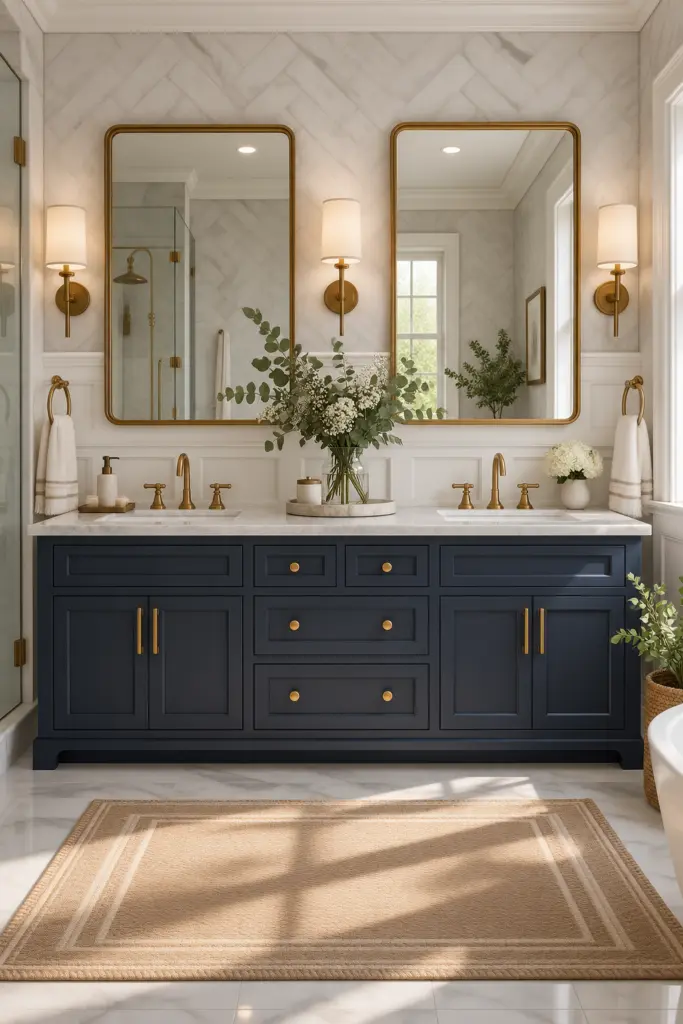
Double Vanity With Decorative Wainscoting
A double vanity provides a natural opportunity for symmetrical wall design. We can center two mirrors over the sinks and use matching sconces to emphasize the symmetry.
Decorative wainscoting behind the vanity adds another architectural layer. White or cream paneling works beautifully with navy cabinetry, while pale gray or beige can complement natural wood.
For a more luxurious finish, marble countertops and brass faucets can be added without overwhelming the room.
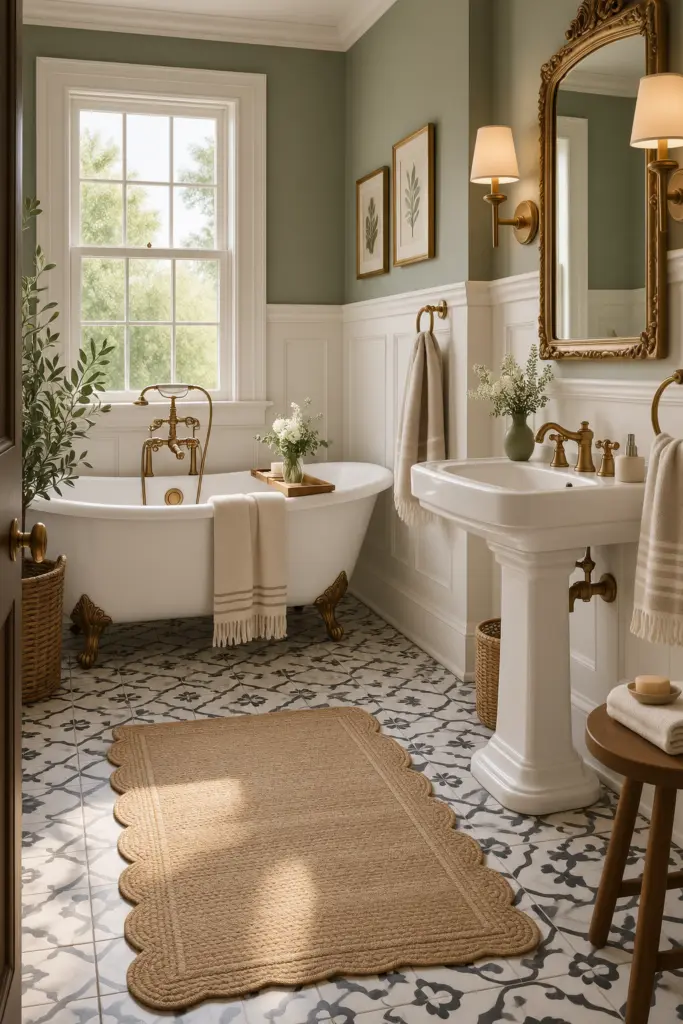
Vintage Wainscoting With Classic Fixtures
Wainscoting is naturally suited to vintage-inspired bathrooms. We can combine painted paneling with a pedestal sink, clawfoot tub, traditional faucet, vintage-style mirror, and patterned floor tile.
Soft gray, muted green, cream, and dusty blue are excellent colors for this style.
The most successful vintage bathrooms do not necessarily use antique pieces everywhere. Instead, a few carefully selected traditional details can create the atmosphere while modern plumbing and lighting keep the room functional.
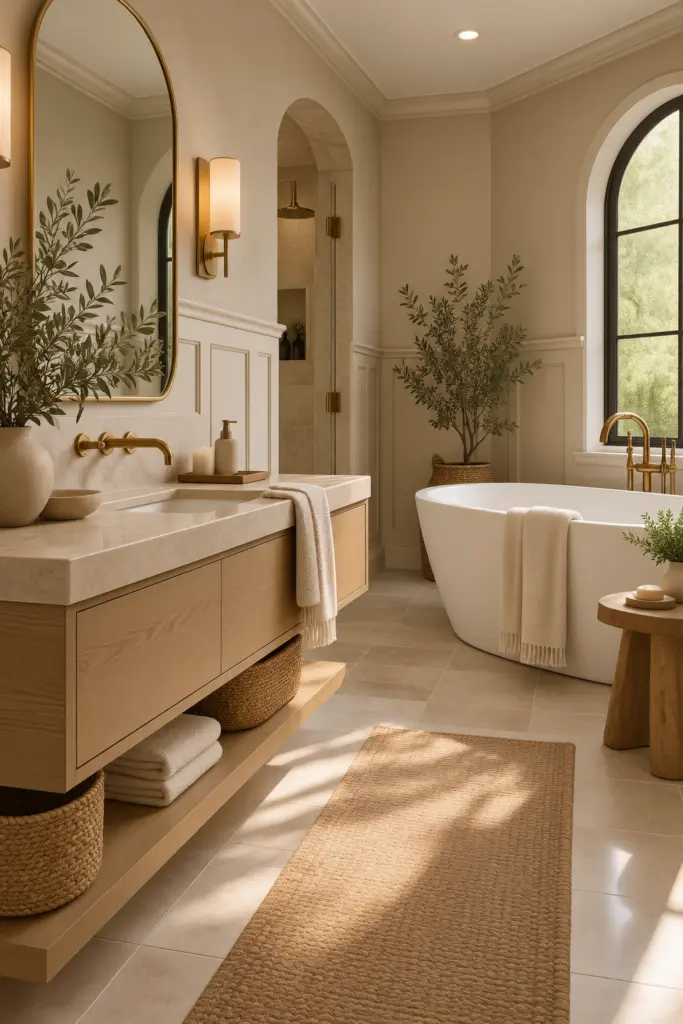
Modern Organic Wainscoting Bathroom
For a 2027-inspired look, we can combine traditional wainscoting with modern organic materials.
Think warm beige walls, natural wood, stone countertops, soft green accents, rounded mirrors, linen textiles, and understated brass hardware. The paneling adds structure while natural textures keep the bathroom relaxed.
This approach is particularly useful for anyone who wants a bathroom that feels contemporary without becoming overly minimalist.
FAQs
How High Should Bathroom Wainscoting Be?
The height of wainscoting can dramatically affect the proportions of the bathroom. A traditional installation often covers approximately the lower third of the wall, while taller paneling can create a more dramatic architectural appearance.
We should consider the height of the ceiling, the position of windows, the vanity, mirrors, toilet, and other architectural features before deciding where the chair rail should sit.
The most important goal is visual consistency. If the paneling stops awkwardly against a window or mirror, the entire wall can feel unbalanced.
What Colors Work Best With Bathroom Wainscoting?
The best color depends on the mood we want to create.
White provides the most traditional and versatile appearance. Soft blue creates a fresh coastal atmosphere, while sage and olive green work beautifully with botanical designs. Taupe and beige provide warmth, and navy or deep green create a dramatic effect.
For a timeless bathroom, we can choose a muted color rather than an extremely saturated shade. This makes it easier to update towels, artwork, accessories, and other details later.
Can Wainscoting Be Used in a Shower Bathroom?
Wainscoting can be used in bathrooms with showers, but material selection is important. Traditional painted wood or MDF paneling is not automatically suitable for areas exposed directly to frequent water.
For wet zones, we should choose materials and installation systems specifically designed for bathroom moisture. Tile can also recreate the visual effect of wainscoting while offering a more practical surface around a shower or tub.
A common approach is to use traditional paneling outside the direct splash zone and tile within the shower enclosure.
The best wainscoting bathroom ideas for 2027 combine classic architectural detail with materials and colors that feel fresh today. From crisp white beadboard and soft blue panels to dramatic green walls, floral wallpaper, marble, natural wood, and elegant brass fixtures, there are countless ways to personalize this timeless treatment.
For a small bathroom, we can use wainscoting to create definition and visual interest. For a large primary bathroom, full-height paneling or a carefully framed bathtub wall can provide a luxurious architectural focal point.
Whether our preferred style is cottage, coastal, traditional, vintage, modern, farmhouse, or modern organic, wainscoting gives us a versatile foundation that can make the entire bathroom feel more intentional.
The most beautiful results come from choosing the panel style, color, materials, and fixtures as one coordinated composition. With the right combination, even a simple bathroom can gain the character, warmth, and timeless elegance of a carefully designed interior.
For designing your dream bathroom see our 30+ Moody Bathroom Ideas for 2027, How to Choose a Bathroom Vanity, and The Best Plants For A Bathroom.