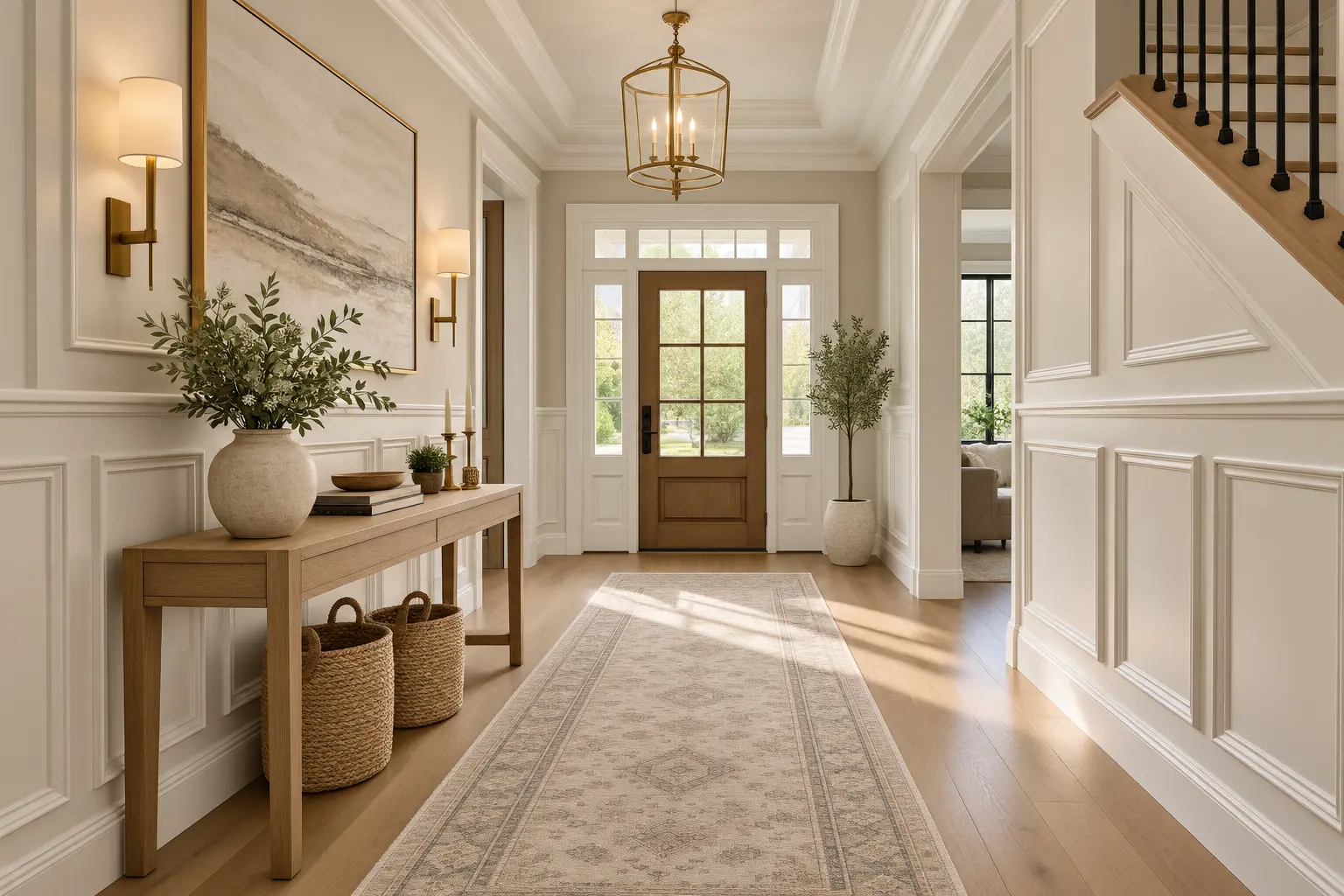
The entryway sets the tone for the entire home, making it the perfect place to introduce architectural details, thoughtful decorating, and timeless style. Modern wainscoting entryway ideas offer an elegant way to transform plain walls into beautiful focal points while adding depth, texture, and personality to your interior. From classic white wall panels to contemporary dark wainscoting, these designs suit a variety of decorating styles, including modern farmhouse, transitional, traditional, and minimalist interiors.
Whether we are updating a small foyer or designing a spacious entrance hall, these 25 wainscoting entryway ideas provide inspiration for creating a space filled with charm, character, and modern appeal.
Table of Contents
Classic White Wainscoting with Elegant Wall Molding
White wainscoting remains one of the most versatile choices for an elegant entryway. Rectangular wall panels introduce subtle architectural detail while maintaining a bright, uncluttered appearance. This design works particularly well in homes with neutral walls, hardwood floors, and traditional architectural features.
We can enhance the look with a slim console table, a large framed artwork, and brass wall sconces. Keeping the upper walls a soft white or warm ivory creates a seamless transition between the molding, ceiling, and surrounding decor.
For a modern finish, we should choose clean panel profiles and avoid overly ornate trim. The result is a timeless wainscoting entryway that feels sophisticated without appearing formal or outdated.
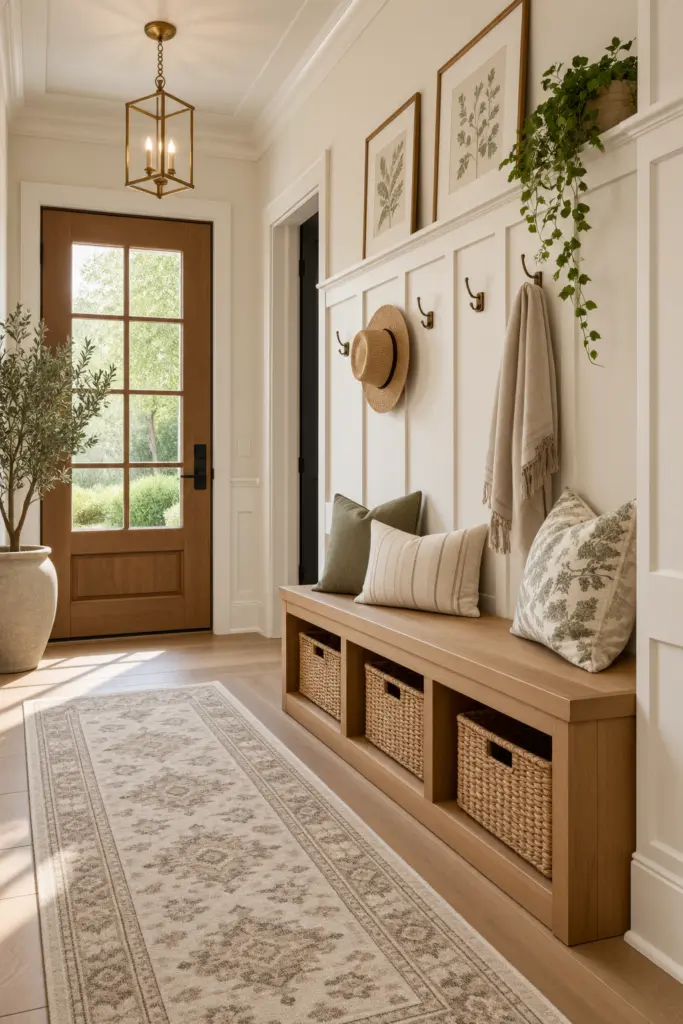
Modern Farmhouse Entryway with Board and Batten
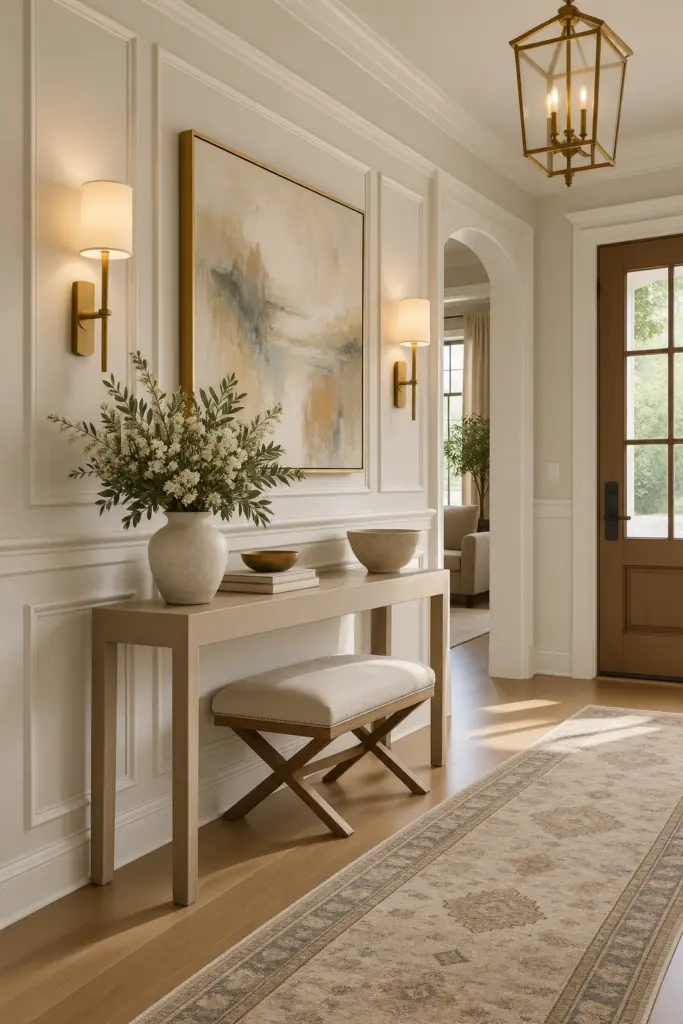
Board-and-batten wainscoting brings a relaxed architectural character to modern farmhouse interiors. Its combination of vertical boards and horizontal rails creates a structured appearance that works beautifully with natural materials and understated accessories.
We can pair white board-and-batten walls with a wooden bench, woven baskets, black metal lighting, and a neutral runner. These elements introduce warmth and texture without competing with the wall treatment.
For an especially cohesive design, we can match the wainscoting to the home’s existing door trim and baseboards. This approach creates a consistent architectural style from the entrance into adjoining rooms.
Floor-to-Ceiling Wall Paneling for a Grand Entrance
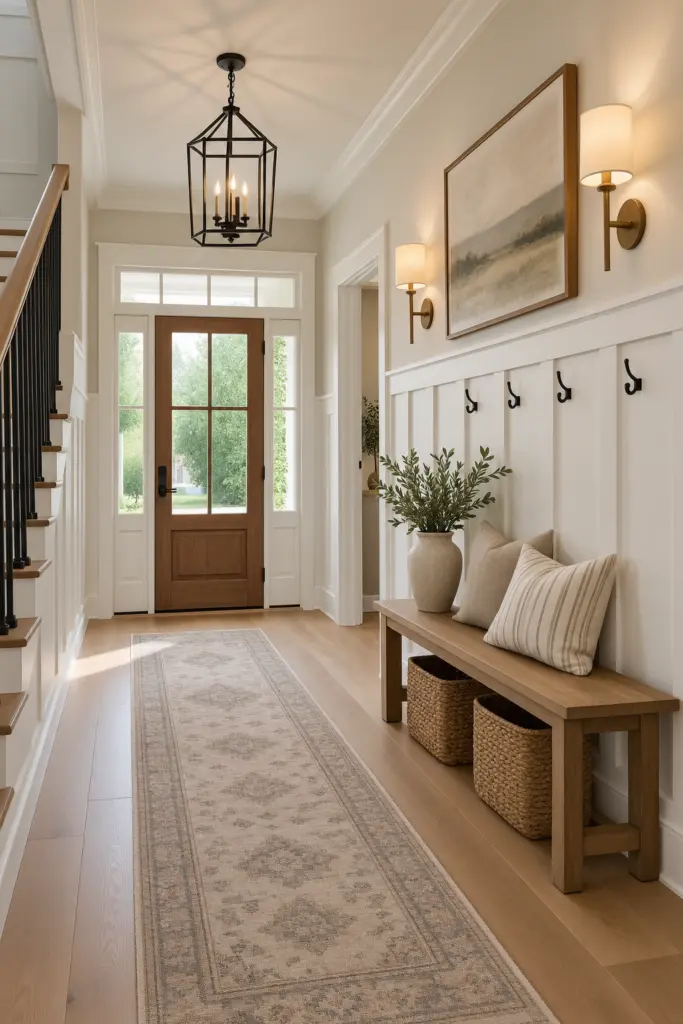
In a spacious foyer, extending decorative wall paneling toward the ceiling creates a dramatic architectural statement. Tall panels emphasize vertical proportions, making the entrance feel grand and carefully designed.
This approach works particularly well in homes with high ceilings, staircases, and large windows. A statement chandelier, polished wood flooring, and restrained artwork complement the paneling without overwhelming the space.
We should maintain consistent panel proportions across the walls, adjusting their size to suit the height of the room. In particularly tall spaces, larger panels often look more balanced than numerous small rectangles.
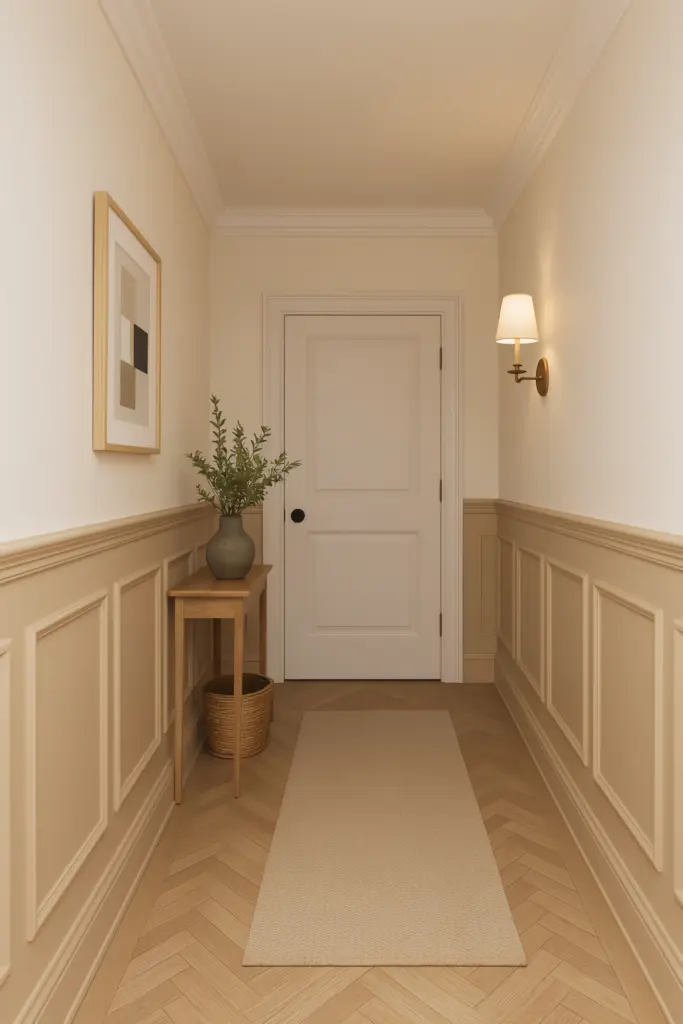
Warm Beige Wainscoting for a Soft, Welcoming Look
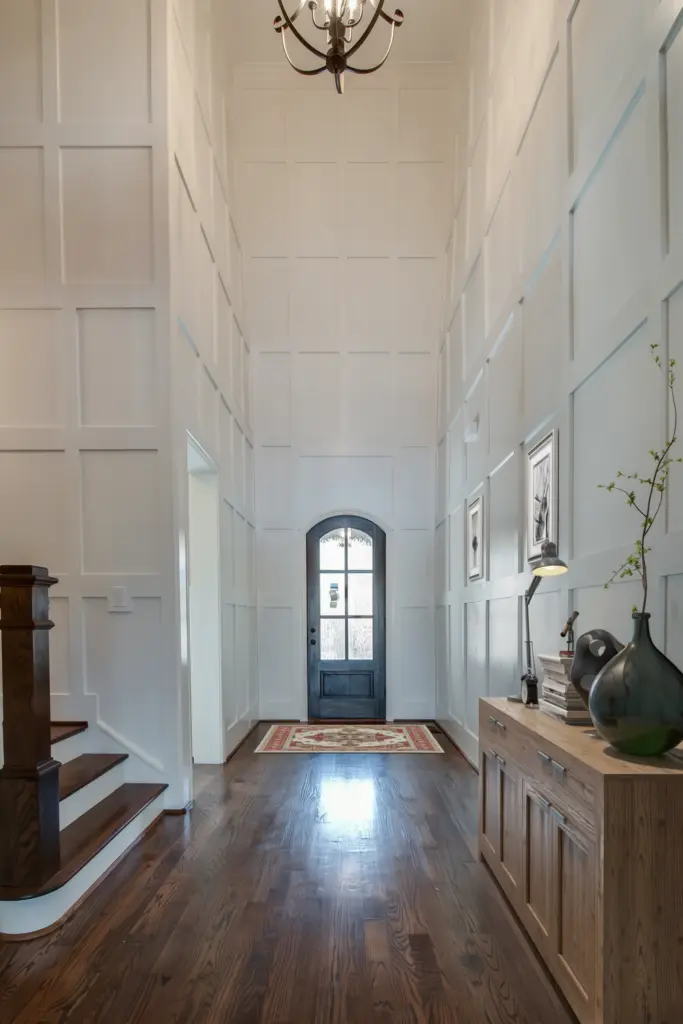
White is not the only option for a refined entrance. Beige, sand, and warm greige wainscoting introduce a softer appearance while preserving the architectural beauty of decorative molding.
We can combine beige lower panels with cream upper walls, a natural wood console, and warm metallic accessories. A textured runner and a ceramic vase filled with branches make the entrance feel inviting rather than overly decorated.
This palette is especially suitable for transitional interiors, where traditional architectural details meet contemporary furniture and natural finishes.
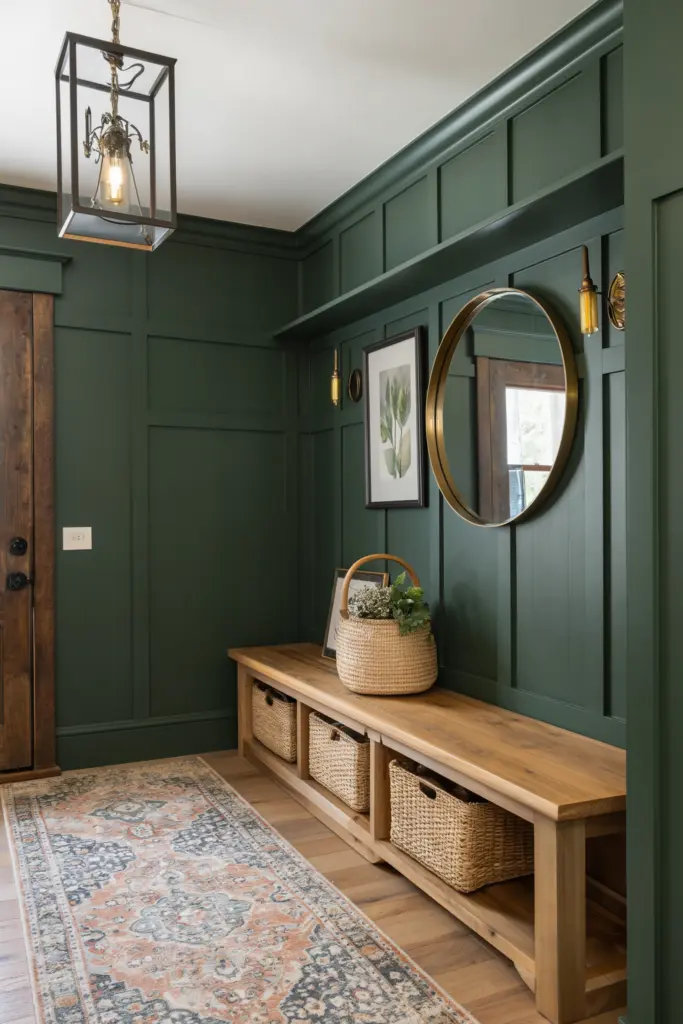
Dark Green Wainscoting with Traditional Charm
Deep green wainscoting brings depth and personality to an entryway. Shades such as forest green, olive, and muted sage work beautifully with wood, brass, cream, and natural stone.
We can use green paneling across the lower half of the walls while keeping the upper section light. Alternatively, painting the entire wall in the same green creates a richer, more enveloping atmosphere.
A wooden console, framed botanical prints, and warm lighting help balance the darker color. In a narrow hallway, choosing a muted green and incorporating a mirror can prevent the design from feeling too heavy.
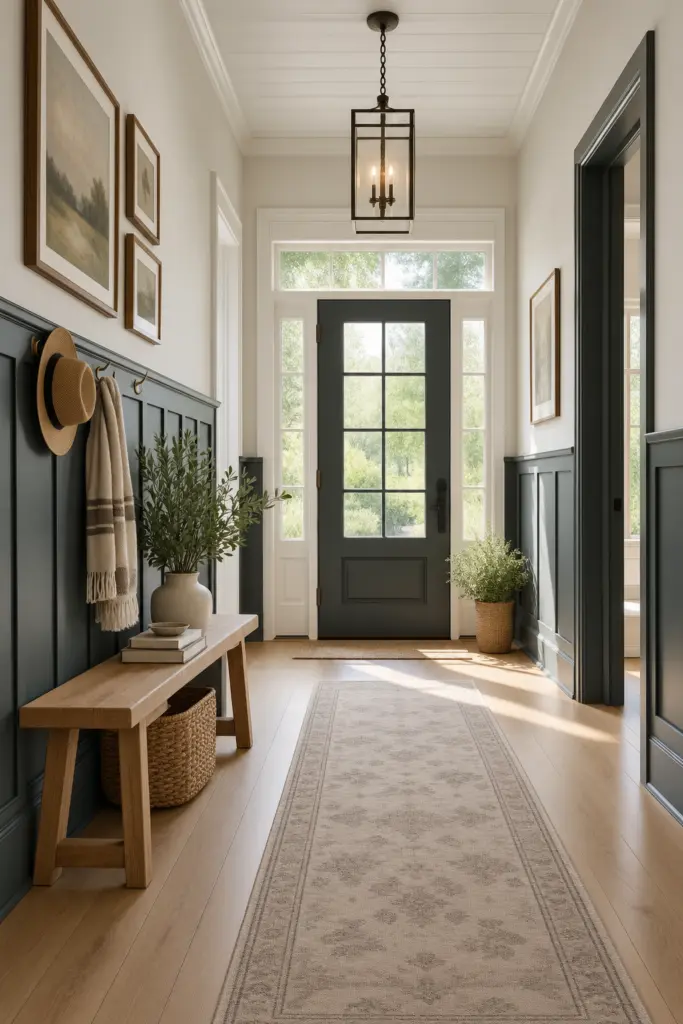
Two-Tone Wainscoting for Contemporary Contrast
Two-tone wainscoting creates a clear visual distinction between the lower and upper portions of an entryway. Popular combinations include white and charcoal, cream and taupe, and pale gray with deep navy.
The contrast emphasizes the paneling and gives the entrance a more contemporary character. We can coordinate the lower wall color with a staircase railing, door frame, or nearby cabinetry to establish a consistent palette.
For a balanced result, the division between the two colors should follow the proportions of the room and the placement of architectural features. A carefully selected height makes the wall treatment feel intentional rather than arbitrary.
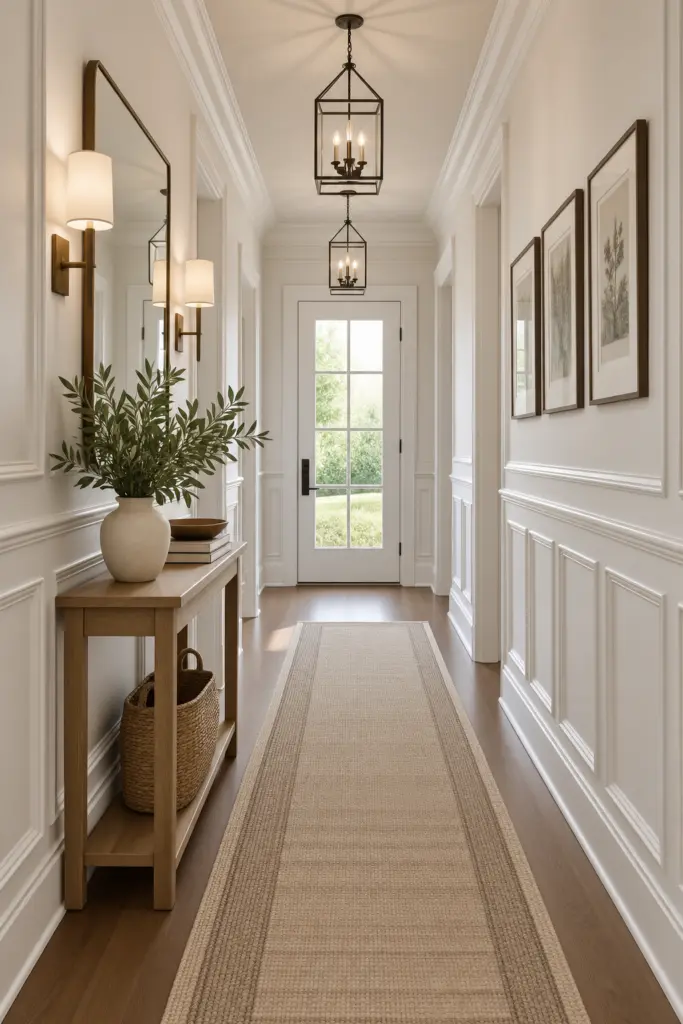
Narrow Entryway with Simple Raised Panels
A narrow entryway benefits from decorative details that add interest without making the walls feel crowded. Simple raised panels provide depth while preserving a clean, orderly appearance.
We should choose relatively slim molding profiles and avoid oversized furniture that restricts movement. A narrow console, a wall-mounted mirror, and a streamlined ceiling light provide function without sacrificing valuable floor space.
Painting the panels and surrounding trim in the same light color helps maintain visual continuity. This makes the hallway feel brighter and allows the architectural details to remain subtle.
Entryway Wainscoting with a Wooden Bench
Combining wainscoting with a wooden bench creates an entrance that is both decorative and practical. The paneling provides a finished backdrop, while the bench offers a convenient place to sit, remove shoes, or set down a bag.
We can choose a natural oak bench for a light Scandinavian-inspired interior or a darker wood finish for a traditional farmhouse look. Woven baskets underneath help keep shoes and accessories organized.
To protect the wall from everyday wear, durable paint and washable finishes are particularly useful in busy family homes.
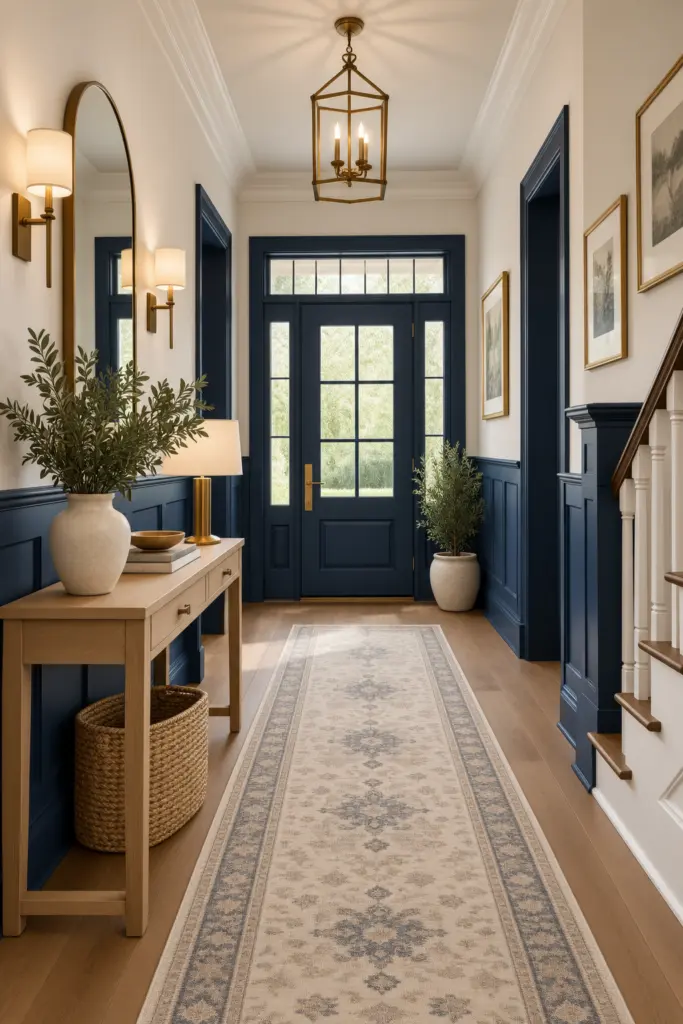
Navy Blue Wainscoting for a Sophisticated Foyer
Navy blue creates a confident, elegant entrance. Its rich tone adds contrast to pale walls and natural wood flooring, making the wainscoting a defining feature rather than a background detail.
We can pair navy panels with brass lighting, framed artwork, and a light-colored runner. White upper walls help preserve brightness, while a wooden console introduces warmth.
For a more contemporary interpretation, we can use flat-front panels or understated rectangular molding. The restrained design allows the color to become the main decorative feature.
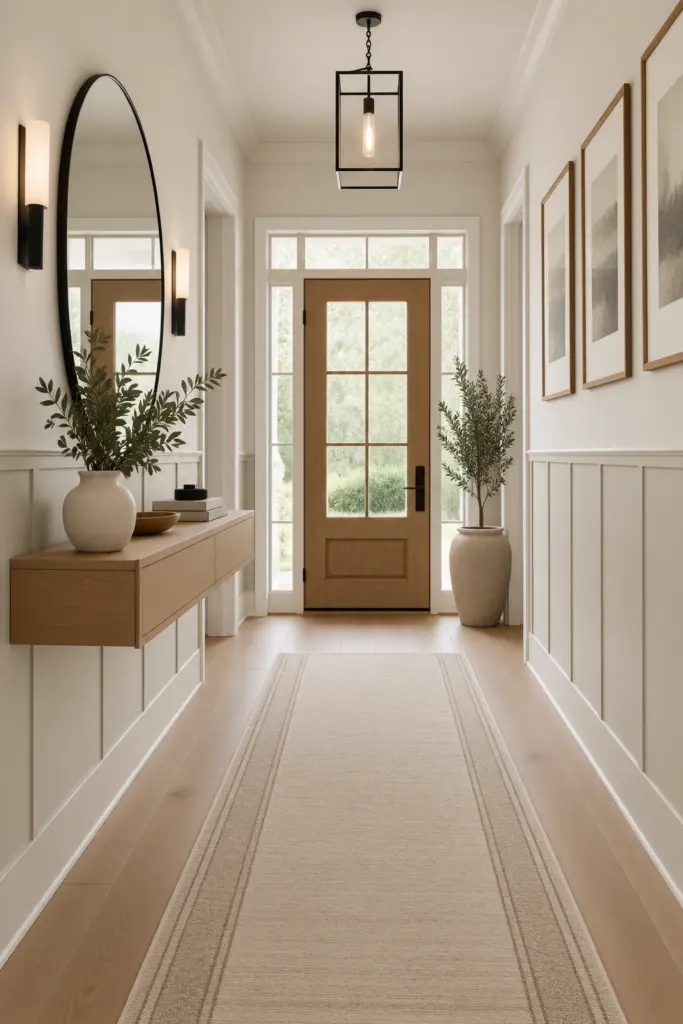
Minimalist Entryway with Flat Wall Panels
Minimalist wainscoting demonstrates that wall paneling does not need elaborate molding to look beautiful. Flat panels with narrow joints offer a subtle architectural finish suited to contemporary homes.
We can keep the palette limited to warm white, pale oak, and black accents. A floating console and a simple mirror maintain an uncluttered appearance, allowing the panel lines to provide most of the visual interest.
This design is particularly effective when we want an entryway that feels modern, calm, and easy to maintain.
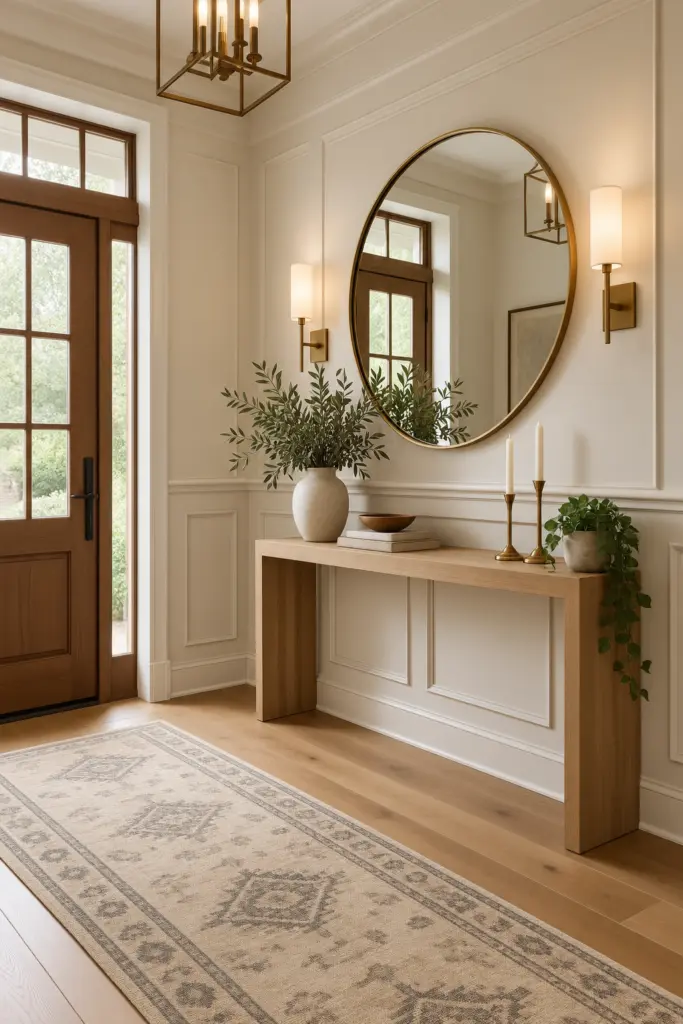
Wainscoting with a Statement Round Mirror
A round mirror introduces a pleasing contrast against the straight lines of rectangular wall panels. Its curved silhouette softens the geometry of wainscoting and creates a natural focal point above a console table.
We can choose a thin brass frame for a refined look or a dark metal frame for contemporary contrast. Positioning the mirror at a comfortable viewing height also makes it useful for checking our appearance before leaving home.
A pair of wall sconces or a carefully placed table lamp can complete the arrangement, providing balanced lighting and a welcoming glow.
Entryway Wainscoting with Picture Frame Molding
Picture frame molding is ideal for creating an elegant entryway with traditional architectural character. Rectangular trim sections establish a rhythmic pattern across the walls and provide a sophisticated backdrop for furniture and artwork.
We can use evenly spaced panels along the hallway, adjusting their width to accommodate doorways and corners. Matching the molding to the wall color creates a subtle effect, while contrasting paint makes the panel shapes more prominent.
The key is consistency. Balanced spacing and aligned horizontal rails help the finished wall look professionally designed.
Black Wainscoting for Bold Modern Contrast
Black wainscoting introduces a striking, contemporary character. It works particularly well in entrances with good natural light, pale flooring, and restrained furniture.
We can combine black lower panels with warm white walls, oak accents, and a large mirror to keep the overall design balanced. Matte finishes often look more understated than high-gloss paint and help emphasize the geometry of the molding.
For smaller foyers, using black on a single feature wall or a limited section of paneling can create the same dramatic effect without making the entrance feel enclosed.
Sage Green Wainscoting with Natural Textures
Sage green offers a gentle alternative to darker greens. Its muted character pairs naturally with cream, light oak, linen, and woven accessories.
We can introduce sage paneling along the lower walls and decorate the upper section with botanical artwork or a simple round mirror. A neutral rug and ceramic accessories add texture without overwhelming the palette.
This combination works especially well in modern farmhouse, cottage-inspired, and contemporary organic interiors. It creates a fresh, relaxed entrance that feels connected to nature.
Traditional Entryway with White Wainscoting and Wood Floors
White wainscoting and wood flooring form a classic combination that remains relevant across decorating styles. The crisp paneling balances the richness of hardwood, while the natural grain introduces warmth.
We can select medium or dark oak flooring for contrast or pale wood for a lighter, Scandinavian-inspired result. A traditional console table, framed artwork, and a patterned runner complete the entrance without making it feel overly formal.
This pairing is particularly useful when we want architectural character that will remain attractive even as furniture and accessories change over time.
Entryway Wainscoting with a Console Table
A console table provides a natural anchor for a wainscoting feature wall. Its horizontal shape contrasts with the vertical and rectangular lines of the paneling, creating a balanced composition.
We can style the surface with a table lamp, a decorative bowl for keys, and a small vase. Above the table, a mirror or one large artwork piece prevents the wall from appearing too busy.
In compact entryways, a narrow console or floating shelf offers useful storage while preserving clear circulation space.
Full-Height Wainscoting for a Refined Contemporary Look
Full-height panel molding extends architectural detail beyond the lower portion of the wall, creating a more continuous and formal appearance. This treatment is particularly effective in tall entry halls or spaces with prominent staircases.
We can keep the molding and wall surface in a single color to emphasize shadow lines rather than contrast. Carefully selected artwork, understated lighting, and simple furniture ensure the space remains visually balanced.
Because full-height paneling can dominate a room, we should plan the panel dimensions around doors, windows, and other fixed features before installation.
Wainscoting with a Staircase Feature Wall
A staircase offers an excellent opportunity to extend wainscoting into a larger architectural feature. Matching the paneling to the staircase trim connects the entryway and upper level, creating a cohesive design.
We can use white raised panels alongside oak treads and dark metal balusters for a balanced combination of traditional and contemporary elements.
The layout requires careful planning because the molding may follow the angle of the staircase. Aligning the panels with the stair stringer and surrounding trim helps the installation look intentional.
Cream Wainscoting for a Timeless Neutral Entryway
Cream wainscoting brings warmth to interiors where bright white might feel too stark. Its subtle undertones work beautifully with beige walls, natural wood, aged brass, and soft neutral fabrics.
We can introduce a console table in a medium wood finish and add a textured runner to create a layered but restrained entrance. Gentle lighting enhances the warm tones and emphasizes the shadows created by the molding.
This approach is especially suitable for traditional homes and transitional interiors that combine classic architectural details with contemporary accessories.
Vertical Board-and-Batten Wainscoting
Vertical board-and-batten wainscoting emphasizes height and gives an entryway a clean, structured appearance. The repeating vertical lines create visual rhythm without requiring intricate decorative profiles.
We can paint the boards in soft white, pale greige, or muted green, depending on the desired atmosphere. A simple bench, practical wall hooks, and a durable rug help the design serve everyday needs.
For a contemporary finish, consistent board spacing and slim battens are often more effective than oversized decorative trim.
Luxury Entryway with Wainscoting and Brass Lighting
Brass lighting brings a refined glow to an entryway with decorative wall panels. Its warm metallic finish complements white, beige, navy, and green wainscoting, adding detail without introducing another dominant color.
We can install matching wall sconces on either side of a mirror or use a statement pendant to illuminate the entrance. A marble-topped console and carefully chosen artwork reinforce the polished atmosphere.
The most successful luxury interiors rely on proportion and quality rather than excessive decoration. Allowing the paneling and lighting to remain visible keeps the entrance sophisticated.
Rustic Entryway with Wainscoting and Natural Wood
Natural wood adds texture and character to a wainscoting entryway. Whether we choose reclaimed timber, rustic oak, or a simple wooden bench, its grain softens the crisp geometry of painted wall panels.
We can complete the look with woven baskets, a vintage-inspired lantern, and a neutral runner. The combination feels welcoming and practical, especially in homes where the entrance connects directly to an outdoor area.
To prevent the design from appearing overly rustic, we can balance distressed finishes with clean panel profiles and uncluttered accessories.
Small Foyer with Wainscoting and a Built-In Bench
A built-in bench makes a small foyer more functional while allowing wainscoting to become part of the overall architecture. Integrating the bench with the lower wall treatment creates a cohesive appearance and reduces the need for additional furniture.
We can add concealed shoe storage, a few hooks, and a compact cushion for comfort. Keeping the surrounding walls light and the accessories minimal helps the space feel open.
Before installation, we should check the available depth and ensure there is enough room to enter and leave comfortably. Good circulation is essential in a compact entrance.
Modern Entryway with Geometric Wainscoting
Geometric wainscoting offers a fresh interpretation of traditional wall paneling. Instead of relying exclusively on standard rectangles, the design may incorporate elongated frames, asymmetrical arrangements, or carefully proportioned linear patterns.
We can use this treatment in contemporary interiors where the walls need architectural interest without elaborate ornamentation. A restrained color palette allows the geometry to stand out, while simple furniture prevents visual competition.
The design should be planned around the room’s proportions. Repeating a consistent visual rhythm usually produces a more polished result than combining too many unrelated shapes.
Elegant Hallway Wainscoting with Framed Artwork
Framed artwork adds personality to an entryway with classic wainscoting. Black-and-white photographs, botanical prints, and understated landscapes all work well against white or neutral wall panels.
We can position artwork above the paneling or create a carefully arranged gallery wall along a longer hallway. Matching frame finishes helps the display feel coordinated, while wall sconces highlight the artwork and improve nighttime lighting.
For the best result, we should leave enough space between the molding and picture frames. The artwork should complement the panel pattern rather than compete with it.
How to Choose the Best Wainscoting for Your Entryway
Selecting the right wainscoting involves more than choosing an attractive panel style. We should consider the size of the entrance, the existing architecture, the amount of natural light, and the practical demands of daily use.
Choose the Right Wainscoting Style
Different panel treatments create different visual effects.
- Raised-panel wainscoting: Ideal for traditional, classic, and transitional interiors.
- Board-and-batten wainscoting: Works beautifully in modern farmhouse, cottage, and casual contemporary homes.
- Picture frame molding: Creates a refined architectural appearance with clean rectangular outlines.
- Flat-panel wainscoting: Suits minimalist and modern interiors.
- Full-height panel molding: Makes a statement in tall foyers and spacious entrance halls.
The best option is one that complements the home’s existing trim, doors, flooring, and overall decorating style.
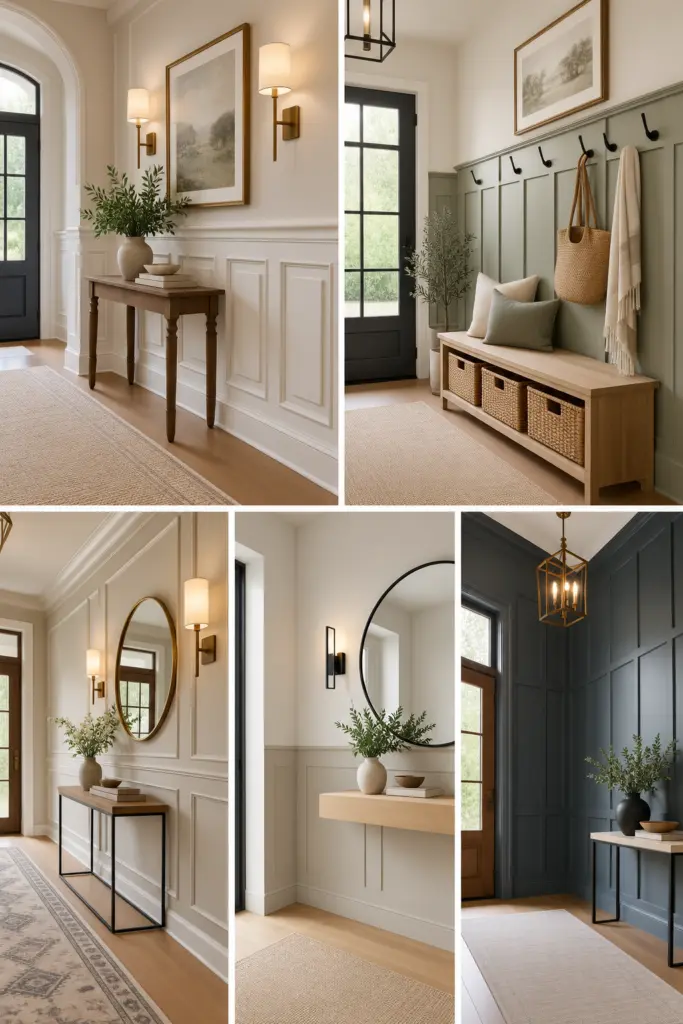
Select a Complementary Color Palette
Color determines whether the wainscoting blends into the background or becomes the main focal point.
White and cream create a bright, timeless appearance. Beige and greige offer warmth, while navy, forest green, and charcoal introduce contrast. Sage green works particularly well in relaxed interiors with natural materials.
Before committing to a paint color, we should test samples under both natural and artificial lighting. Undertones can look noticeably different throughout the day.
Get the Height and Proportions Right
Traditional wainscoting often covers approximately the lower third of a wall, but there is no universal measurement that suits every entryway. The ideal height depends on ceiling height, door trim, furniture, and the desired visual effect.
In compact spaces, lower paneling can preserve an open appearance. Taller walls may accommodate higher panels or full-height molding.
We should also consider the spacing between panels. Consistent widths and balanced margins create a professional finish, particularly around corners and doorways.
Use Durable Materials and Finishes
Entryways experience frequent contact from bags, shoes, coats, and everyday movement. Choosing durable materials helps preserve the appearance of the wall treatment.
Painted MDF is commonly used for interior decorative molding, while solid wood may suit projects that require a traditional material. Moisture-resistant materials are worth considering in entrances exposed to wet coats and shoes.
For painted surfaces, a durable washable finish can simplify cleaning. The appropriate product will depend on the wall material, preparation, and manufacturer’s recommendations.
Combine Wainscoting with Functional Decor
The best entryways balance style and everyday practicality. A mirror can make a compact entrance feel brighter, while a console provides a convenient place for keys and small essentials.
Benches and baskets help organize shoes and bags. Wall hooks offer accessible storage, and runners protect high-traffic flooring while introducing color and texture.
We should avoid overcrowding the space. A few well-chosen pieces usually create a more welcoming entrance than a collection of unrelated accessories.
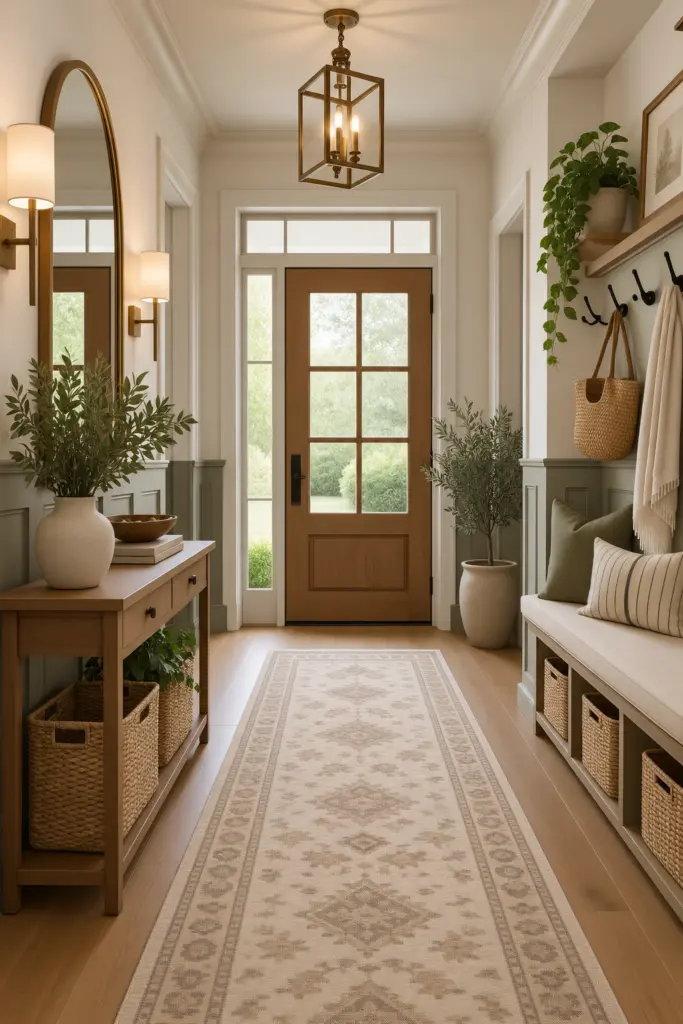
Wainscoting can transform an ordinary entrance into a stylish, welcoming introduction to the home. Whether we prefer crisp white panels, warm beige molding, dramatic navy walls, or contemporary geometric designs, the right treatment adds depth and architectural character.
The most successful designs balance panel proportions, complementary colors, durable finishes, and practical furniture. By choosing details that suit the home’s existing architecture, we can create an entryway that feels cohesive rather than simply decorated.
From a compact foyer with a built-in bench to a grand entrance with full-height paneling, these 25 modern wainscoting entryway ideas offer inspiration for creating a space with lasting charm, character, and everyday functionality.
For more trendy wainscoting ideas see our 21+ Charming Wainscoting Bathroom Ideas.